Log in to your existing account or sign up today!
Log in to your existing account or sign up today!
Log in to your existing account or sign up today!
A well-known evangelist who travels the country speaking to thousands of young people each year says he has never seen a hunger for the gospel like the one now emerging among members of Gen Z.
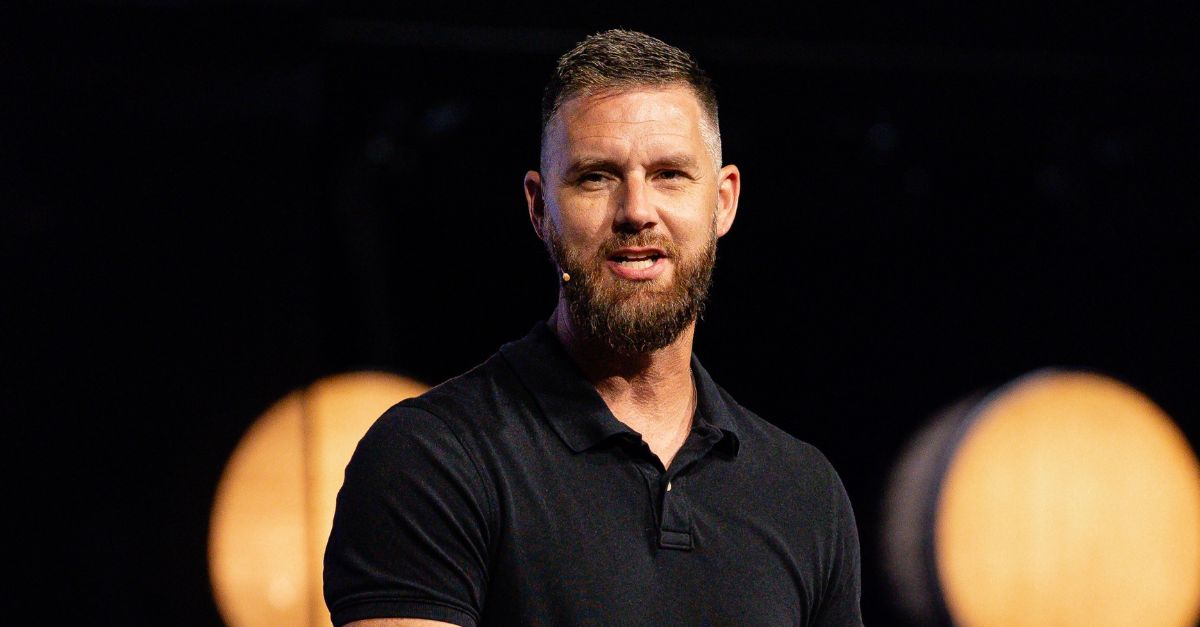
Shane Pruitt is Next Gen Director for the North American Mission Board of the Southern Baptist Convention and speaks to more than 100,000 people each year – many of them teens and college students searching not only for a future job or career, but also for meaning and purpose in life.
But Pruitt, who has spent more than two decades in ministry, says something has shifted in recent years as more and more young people wrestle with questions about identity and truth. He is the author of Revival Generation and the new book Reaching Generation Alpha, which focuses on reaching children and teens 16 and younger.
“I travel all over the nation, and I'm asked to speak evangelistically and give a gospel invitation,” Pruitt told Crosswalk Headlines, adding that he’s “seen more young people in the last five to six years make professions of faith in Jesus Christ” and “get serious about the Word and doctrine and theology” and missions “than probably the previous 20 years of ministry combined.”
Last year, Barna found that belief in Jesus among younger generations has soared in recent years to 67 percent among Gen Z men and 61 percent among Gen Z women – both figures higher than pre-pandemic levels.
“I would say for the last probably four years or so, there's definitely been this movement taking place – a movement of God,” Pruitt said.
He stopped short of calling it a “revival” or “awakening,” but quickly added: “All I know is God is up to something.”
“We're definitely in a God moment that I want to be a part of, and I definitely don't want to get in the way of it. The biggest factor I've seen is just this openness to the gospel – this openness to spiritual conversations, there's this hunger for truth.”
Pruitt theorizes it may have been sparked during the pandemic, when children and teens suddenly found themselves isolated at home and confronted with difficult questions about life.
“I think that what that did for Gen Z is it really taught them that the world is broken and they're broken. I think that became very evident to them at a very early age. … It propelled a whole generation to start looking for answers – they started looking for hope, they started looking for truth, and when they didn't find that in the world, then guess what happens? Anxiety rates go up, depression rates go up, suicide attempts and rates go up.”
Eventually, many members of Gen Z found their answers in Christ.
“The church stepped into that moment and said, ‘Listen, you're looking for hope, you're looking for answers, you're looking for truth – you're actually looking for Someone, because truth has a name, the answer has a name, hope has a name, and it's the name above every name, Jesus Christ.”
But the harvest is not done, Pruitt emphasized.
“I preached at a church [Sunday on] the Parable of the Sower, and I just feel like there's just this good soil that's just waiting for the good seed of the gospel.”
Related Article
Gen Z Leads Belief that Revival Is Coming to America, Survey Finds
Photo Credit: ©Shane Pruitt
Michael Foust has covered the intersection of faith and news for 20 years. His stories have appeared in Baptist Press, Christianity Today, The Christian Post, the Leaf-Chronicle, the Toronto Star and the Knoxville News-Sentinel.
Listen to Michael's Podcast! He is the host of Crosswalk Talk, a podcast where he talks with Christian movie stars, musicians, directors, and more. Hear how famous Christian figures keep their faith a priority in Hollywood and discover the best Christian movies, books, television, and other entertainment. You can find Crosswalk Talk on LifeAudio.com, or subscribe on Apple or Spotify so you never miss an interview that will be sure to encourage your faith.
Originally published May 19, 2026.
Log in to your existing account or sign up today!
Log in to your existing account or sign up today!
Log in to your existing account or sign up today!
Facts Only
Shane Pruitt serves as Next Gen Director for the North American Mission Board of the Southern Baptist Convention.
Pruitt speaks to over 100,000 people annually, primarily teens and college students.
He has observed a significant increase in professions of faith among young people in the last five to six years.
Barna research indicates 67% of Gen Z men and 61% of Gen Z women believe in Jesus, higher than pre-pandemic levels.
Pruitt describes this period as a "movement of God" but does not call it a revival.
He suggests the pandemic may have contributed to this spiritual shift by exposing brokenness and prompting existential questions.
Pruitt notes a rise in young people engaging with Scripture, doctrine, theology, and missions.
He emphasizes the church’s role in providing answers centered on Jesus Christ.
Pruitt references the Parable of the Sower to illustrate the ongoing opportunity for evangelism.
He has authored books on reaching younger generations, including *Revival Generation* and *Reaching Generation Alpha*.
The article was originally published on May 19, 2026.
Executive Summary
Shane Pruitt, Next Gen Director for the North American Mission Board of the Southern Baptist Convention, observes a growing spiritual hunger among Gen Z, particularly in the last five to six years. He reports a significant increase in young people making professions of faith, engaging with Scripture, and pursuing missions compared to previous decades. Barna research supports this trend, showing higher belief in Jesus among Gen Z post-pandemic than before. Pruitt attributes this shift partly to the pandemic, which exposed brokenness in the world and prompted young people to seek answers, hope, and truth. He describes this as a "movement of God" but avoids labeling it a revival. The church, he notes, has responded by offering Christ as the answer to their existential questions. Pruitt emphasizes that this spiritual awakening is ongoing, with many young people still open to the gospel.
The narrative highlights a generational search for meaning, with Gen Z turning to faith amid rising mental health struggles. While Pruitt’s observations are anecdotal and supported by Barna’s data, the broader context includes societal disruptions like the pandemic and cultural shifts in identity and truth. The article presents this as a hopeful moment for evangelical Christianity, framing it as a divine opportunity rather than a guaranteed revival. The focus remains on the openness of young people to spiritual conversations and the church’s role in meeting that need.
Full Take
This narrative presents a compelling case for a spiritual resurgence among Gen Z, but it warrants scrutiny through multiple lenses. The strongest version of this story—what we might call the "steelman"—is that young people, disillusioned by societal upheavals like the pandemic, are turning to faith in unprecedented numbers. Pruitt’s firsthand accounts and Barna’s data lend credibility to this claim, suggesting a genuine shift in generational attitudes toward religion. However, the framing leans heavily on anecdotal evidence and evangelical perspectives, which may not fully capture the complexity of Gen Z’s spiritual landscape. For instance, while belief in Jesus may be rising, does this translate to active church engagement or deeper theological commitment? The article doesn’t explore alternative explanations, such as temporary emotional responses to crisis or broader cultural trends toward spirituality without institutional religion.
Pattern-wise, the narrative employs a form of **ARC-0032 Hope Marketing**, where a positive trend is framed as divinely ordained to inspire action (e.g., evangelism). There’s also a subtle **ARC-0043 Motte-and-Bailey** at play: the "movement of God" is presented as undeniable (motte), while the specifics of what constitutes this movement remain vague (bailey). The root cause appears to be a paradigm of decline-and-revival, a common evangelical framework where societal brokenness is positioned as a precursor to spiritual awakening. This echoes historical patterns of religious revivalism, where crises are reframed as opportunities for renewal.
The implications are significant for both the church and young people. If this trend holds, it could reshape evangelicalism’s future, but it also risks instrumentalizing Gen Z’s struggles as a means to institutional growth. Who benefits? Churches and ministries gain relevance; young people gain community and meaning—but at what cost if their questions are met with simplistic answers? Second-order consequences might include increased polarization if this revival is framed as exclusive to certain theological camps.
Bridge questions: How would this narrative change if non-evangelical or secular sources were consulted? What metrics beyond professions of faith would indicate a lasting spiritual shift? And crucially, how do we distinguish between genuine revival and a temporary reaction to societal trauma?
Counterstrike scan: If this were part of a coordinated influence campaign, the playbook would likely emphasize urgency ("God is up to something"), leverage anecdotal authority (Pruitt’s testimony), and frame the moment as a binary choice between hope (faith) and despair (secularism). The actual content aligns with this pattern but doesn’t cross into manipulation—it’s more aspirational than coercive. The focus on personal transformation rather than political or institutional agendas keeps it within healthy bounds.
Sentinel — Human
The text exhibits the hallmarks of human-authored journalistic commentary, featuring personal voice, specific attribution, and structured argumentation based on external data.