Congressional intelligence committees extract promises from Gabbard and others to revisit 2025 report that brushed off suspicions of Russian responsibility for incidents
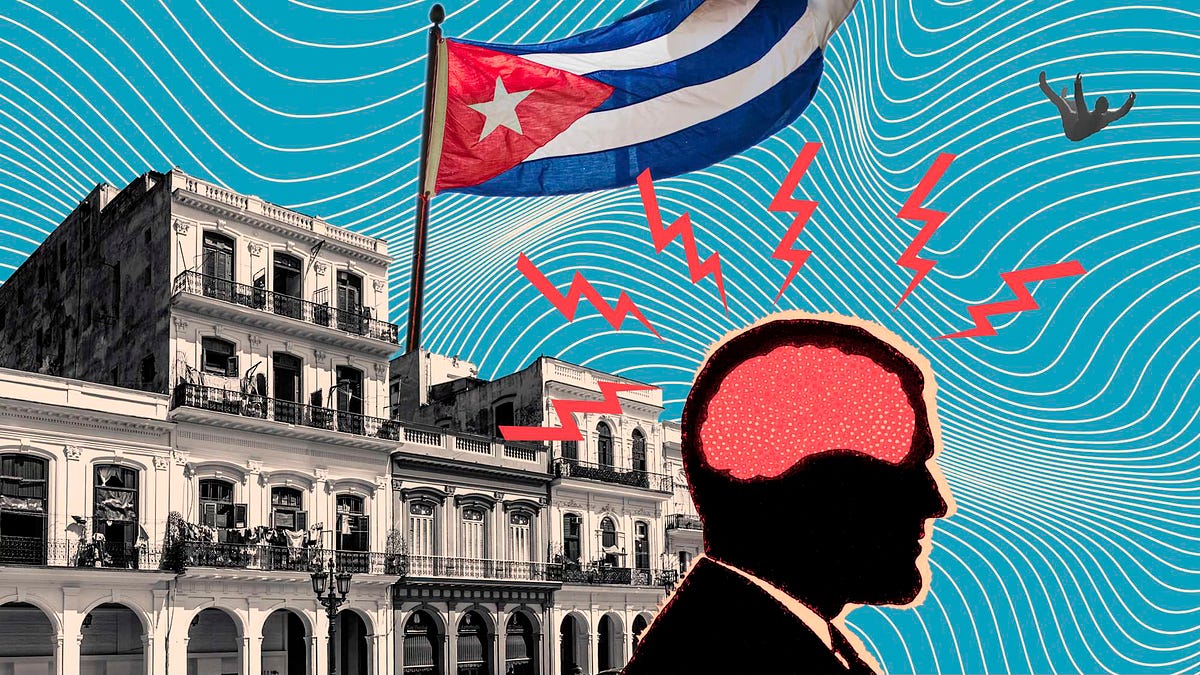
It’s not all in your head, U.S. spy masters effectively told victims of so-called Havana Syndrome Thursday morning, when they agreed in congressional testimony that previous intelligence community assessments dismissing foreign involvement in the suspected “directed energy” attacks they’ve been reporting for years should be retracted.
“Put simply, it’s my clear opinion that individuals in the intelligence community were involved in a cover-up,” House Intelligence Committee Chairman Rick Crawford (R-AR) said at the opening of a Thursday hearing, whose focus on foreign threats, particularly Iran, overshadowed the remarkable spy agency turnaround on Havana Syndrome.
Crawford asked the heads of National Intelligence, the CIA, FBI, NSA and the Defense Intelligence Agency to respond “yes or no” on whether the 2025 report by the National Intelligence Council, which called the involvement of “a state actor” in the debilitating incidents “very unlikely,” should be “retracted.”
Four—DNI Tulsi Gabbard, FBI Director Kash Patel, Acting NSA chief Lt. Gen. William Hartman, and DIA boss Lt. Gen. Jeffrey A. Kruse—said yes. CIA Director John Ratcliffe said he would defer to DNI Tulsi Gabbard, who is in charge of reviewing Havana Syndrome evidence, and would go along with her conclusion on the incidents—which would probably be a yes on retraction if it turned out that way. They had all said much the same in a hearing Wednesday by the Senate Intelligence Committee.
Crawford said the 2025 assessment, which echoed previous reports, was based on “flawed” intelligence and ginned up “unethical” health studies that sought a desired outcome—that the medical evidence was sketchy, much less that a foreign adversary was responsible.
Crawford’s views echoed the complaints of scores of present and former CIA, State Department and other U.S. government employees who’ve said for years now their reports of being felled in their homes or offices abroad, or even in Washington, by a sharp, intolerably loud, metallic “sonic” wave that caused intense headaches and vomiting, were downplayed or dismissed. Many said they were forced into premature retirement by the malady, which the government calls Anomalous Health Incidents, or AHI.
The first public reports of the incidents came from American embassy employees in Havana in 2016, but a former senior CIA operations officer, Marc Polymeropoulos, said he had been attacked while on duty in Moscow. The Kremlin was the likely sponsor of the attacks, he and other deeply experienced CIA officers and State Department diplomats said, pointing to a long history of Russian experiments with microwave weapons, including aiming beams at the U.S. embassy.
“Before Havana Syndrome there was the Moscow Signal,” retired Army Lt. Col. Greg Edgreen told the House Subcommittee on Counterterrorism, Law Enforcement, and Intelligence in May 2024. “From the 1950’s to 1970’s, Soviet intelligence bathed the U.S. Embassy and diplomatic quarters in Moscow with microwave transmissions every day.”
Edgreen ran the U.S. military’s investigation into AHI. Initially, he told 60 Minutes in 2024, he had the Pentagon’s support. But in the Trump and Biden administrations, “the bar for proof was set impossibly high” to prove Russian involvement.
Why was that? correspondent Scott Pelley asked.
“I think it was set so high because we did not as a country and a government want to face some very hard truths.”
Which were?
“Can we secure America? Are these massive counterintelligence failures? Can we protect American soil and our people on American soil? Are we being attacked and if we’re being attacked, is that an act of war?”
If solid evidence arose, in other words, that the Russians were killing Americans with portable microwave weapons—quite possible, now that the U.S. has reportedly bought one such on the black market, it seems—the U.S. would have to do something about it.
In 2020, Canadian diplomatic staff bound for Cuba were told to stay silent about Havana syndrome, the Toronto-based Global News reported. When one of its diplomats told his ambassador about a conversation he’d had with one of the Americans about the incidents, the ambassador allegedly responded, “Do not tell any other Canadians. We cannot tell any other Canadians — we don’t want to start mass hysteria.” It was “a matter of national security,” he confided to Global News. “We were told to keep it quiet.”
The bar for proof “was set so high because we did not as a country and a government want to face some very hard truths.”
“Don’t take my word for [Russian responsibility],” Edgreen, who’s launched a company to assist AHI victims, told Congress two years ago. He pointed to a remark by a senior Russian official as a virtual boast about the success of their microwave weapons.
Nikolai Patrushev, the secretary of Russia’s Security Council, he recounted, “wrote in a September 2023 article that: ‘In recent years, hundreds of employees of foreign intelligence services, as well as other persons involved in organizing intelligence and subversive activities against our country and our strategic partners, have been identified and neutralized.”
Edgreen called Patrushev’s statement “a victory lap that is meant to discourage other survivors from coming forward, and sow division among our ranks. It’s as if Moscow is saying, ‘The USG turned their back on you and doesn’t believe you, and we know it. We will continue the attacks.’”
This week Edgreen, AHI victims and their advocates finally seem to have the heads of U.S. intelligence coming over to their side.
Mark Zaid, a Washington, D.C. attorney with a large and influential clientele in the intelligence world, welcomed the new turn of events.
“I applaud the realization by the Intelligence Community that its 2025 ICA on AHI’s was flawed, if not wrong, when it came to the fact that a foreign adversary is responsible for at least some of the reported incidents,” Zaid told SpyTalk. “We have been arguing this premise for years.”
“Of course, that raises many questions as to how we reached such a flawed realization in the first place—which was adamantly defended at every turn by the CIA in particular,” added Zaid, who has a Freedom of Information lawsuit FOIA lawsuit pending to declassify the entire 2025 ICA.
But “where,” he asked, “do we go from here to obtain needed accountability and transparency?”
Finally. My poor brain 🧠.
Facts Only
* The National Intelligence Council released a 2025 report stating the involvement of a state actor in the Havana Syndrome incidents was “very unlikely.”
* House Intelligence Committee Chairman Rick Crawford questioned intelligence agency heads on whether the 2025 report should be retracted.
* Tulsi Gabbard, FBI Director Kash Patel, Acting NSA chief William Hartman, and DIA boss Jeffrey A. Kruse indicated they would revisit the assessment.
* The 2025 report was based on “flawed” intelligence and “unethical” health studies.
* The first reports of the incidents originated in Havana in 2016.
* Marc Polymeropoulos, a former CIA operations officer, reported being attacked while on duty in Moscow.
* Nikolai Patrushev, Russia’s Security Council Secretary, published an article claiming the neutralization of “hundreds” of foreign intelligence operatives.
* The Toronto-based Global News reported attempts to silence Canadian diplomatic staff regarding the incidents.
* Mark Zaid, a Washington, D.C. attorney, welcomed the shift in perspective.
Executive Summary
Full Take
Sentinel — Uncertain
This article presents a narrative of a significant shift in the U.S. government’s approach to the Havana Syndrome investigation, fueled by Congressional pressure. While exhibiting patterns common in journalistic reporting, the piece’s reliance on hedging language and loosely sourced claims suggests a degree of AI-assisted construction, leaning towards likely human authorship but with potential synthetic influences.