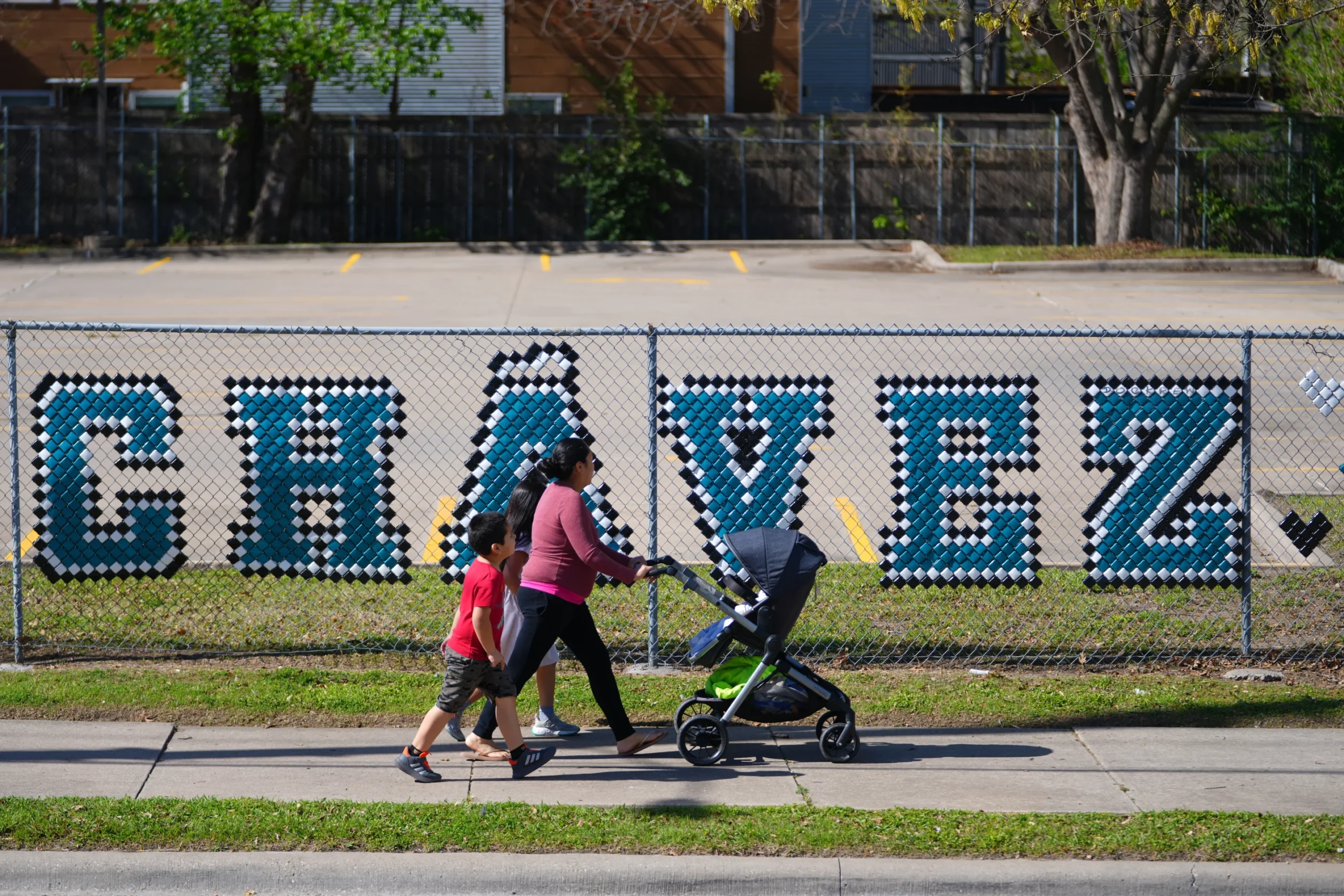
SACRAMENTO, Calif. — California Gov. Gavin Newsom said he supports a proposal to rename César Chavez Day as Farmworkers Day following stunning allegations of abuse against the revered labor leader.
Political leaders in states and cities are considering similar moves after the allegations became public, accusing Chavez of sexually abusing girls and the co-founder of the United Farm Workers of America union, Dolores Huerta, decades ago.
There also have been calls to alter memorials honoring the man who in the 1960s helped secure better wages and working conditions for farmworkers and had been admired by many Democratic leaders.
Washington Gov. Bob Ferguson’s office said Thursday that he won’t issue a proclamation honoring César Chavez Day this year while Denver officials plan to rename their annual celebration. Events in Texas and in his home state of Arizona have been canceled at the request of the César Chavez Foundation.
In 2000, California became the first state to designate Chavez’s birthday as a holiday. Schools were required to teach students about his involvement in the labor movement in California. Chavez died in California in 1993 at age 66.
Assembly Speaker Robert Rivas and Senate President pro Tempore Monique Limón, the leaders of the California Legislature, said Thursday they would pass a bill renaming the holiday before the end of the month. The legislation would need Newsom’s approval.
Advocates grapple with Chavez’s legacy
Latino leaders and community groups quickly condemned the alleged abuse by Chavez but emphasized that the farmworker movement was never about one person.
Mary Rose Wilcox and her husband marched alongside Chavez, helped him open a radio station in Phoenix and plastered their Mexican restaurant with his photos and a mural.
By Wednesday morning, they had taken down Chavez’s photos and were making plans to cover the mural.
“We love César Chavez. But we cannot honor him and we cannot even love him anymore,” said the former Phoenix City Council member.
Visitors to the Chavez National Monument in central California, where the labor leader is buried, were also contemplating how he should be remembered.
“I don’t think you want to erase everything he did,” Nell O’Malley, from Corvallis, Oregon, said Thursday. “But I don’t think you want to honor him the same way knowing what we know now.”
Dolores Huerta stamped her own legacy on the fight for justice
Huerta, who is a labor rights legend in her own right, said in a statement Wednesday that she stayed silent for 60 years for fear her words could hurt the farmworker movement. She said she did not know Chavez had hurt other women.
Huerta described two sexual encounters with Chavez; one in which she was “manipulated and pressured” and another when she was “forced against my will.” She said both led to pregnancies, which she kept secret, and that she arranged for the children to be raised by other families.
The New York Times first reported Wednesday that it found Chavez groomed and sexually abused young girls working in the movement. Huerta, too, revealed to the newspaper that she was a victim of abuse in her 30s.
She joined Chavez in 1962 to co-found the National Farm Workers Association, which became the United Farm Workers of America.
Huerta’s resolve and dedication to women’s rights and social justice won wide admiration. Some, including a group of Democrats in Texas, are calling for Huerta’s name to replace Chavez’s on places that bear his name.
Some knew about Chavez’s abusive behavior, biographer says
Chavez is known nationally for his early organizing in the fields, a hunger strike, a grape boycott and eventual victory in getting growers to negotiate with farmworkers for better wages and working conditions.
His place in history grew after his death. Schools, streets and parks pay tribute to him not only in the Southwest and California but also in places far away where he remained an inspiration.
In Milwaukee, there’s a statue of Chavez near a street bearing his name while a colorful mural of his likeness adorns a building in a Toledo, Ohio.
In 2014, President Barack Obama proclaimed March 31 César Chavez Day. President Joe Biden had a bronze bust of Chavez installed in the Oval Office when he moved into the White House.
But Chavez was full of contradictions even as a union leader, said Miriam Pawel, a California journalist who wrote a biography of him. There was abusive behaviors within the union, but people didn’t speak out because they believed the union was the best way to protect farmworkers, she said.
“For many, many years, for most of those people, even when they saw things that they found disturbing, they did not wanna talk about it,” Pawel said.
Chavez’s family and foundation voice support for the victims
Born in Yuma, Arizona, Chavez grew up in a Mexican American family that traveled around California picking produce.
His family said in a statement that they are devastated by the allegations.
“We wish peace and healing to the survivors and commend their courage to come forward. As a family steeped in the values of equity and justice, we honor the voices of those who feel unheard and who report sexual abuse,” the family said.
The César Chavez Foundation pledged support for the labor leader’s victims, saying — with the Chavez family’s support — the organization will figure out its identity going forward.
The United Farm Workers union quickly distanced itself from annual celebrations of its founder.
Its president, Teresa Romero, said Thursday that the many people who have dedicated years to fighting for workers’ rights should know their work is recognized.
“We have in one hand César Chavez, the man who committed horrible acts that we’re not going to justify, that we don’t condone,” she told The Associated Press. “On the other hand, we have César Chavez, the organizer who brought thousands and thousands of people together to be able to work for farm workers, and improve their lives and working conditions.”
Daley reported from Keene, California, and Seewer from Toledo, Ohio. Associated Press writers Susan Montoya Bryan in Albuquerque, New Mexico; Dorany Pineda in Los Angeles; Jacques Billeaud in Phoenix; Fernanda Figueroa in Austin, Texas; Hallie Golden in Seattle; Rebecca Boone in Boise, Idaho; and Colleen Slevin in Denver contributed.
Facts Only
* California Gov. Gavin Newsom supports a bill to rename César Chavez Day as Farmworkers Day.
* Allegations of abuse against César Chávez have surfaced.
* Dolores Huerta has also admitted to sexual encounters with Chávez.
* Washington Gov. Bob Ferguson’s office will not issue a proclamation honoring César Chavez Day this year.
* Denver officials plan to rename their annual celebration.
* Events in Texas and Arizona have been canceled at the request of the César Chavez Foundation.
* California designated Chávez’s birthday as a holiday in 2000.
* The legislation requires Newsom’s approval.
* Mary Rose Wilcox and her husband have removed Chavez’s photos from their restaurant.
* Huerta stayed silent for 60 years due to fear of harming the movement.
* Chávez died in 1993 at age 66.
* The César Chavez Foundation pledged support to the victims.
* The United Farm Workers union distanced itself from annual celebrations.
* Chávez was born in Yuma, Arizona, in 1937.
Executive Summary
Full Take
Sentinel — Uncertain
This article presents a nuanced examination of César Chávez’s legacy amidst allegations of abuse, employing a balanced reporting style and citing diverse sources – suggesting a human author, although the synthesis is largely factual and leans toward a considered, not emotionally charged, presentation.”