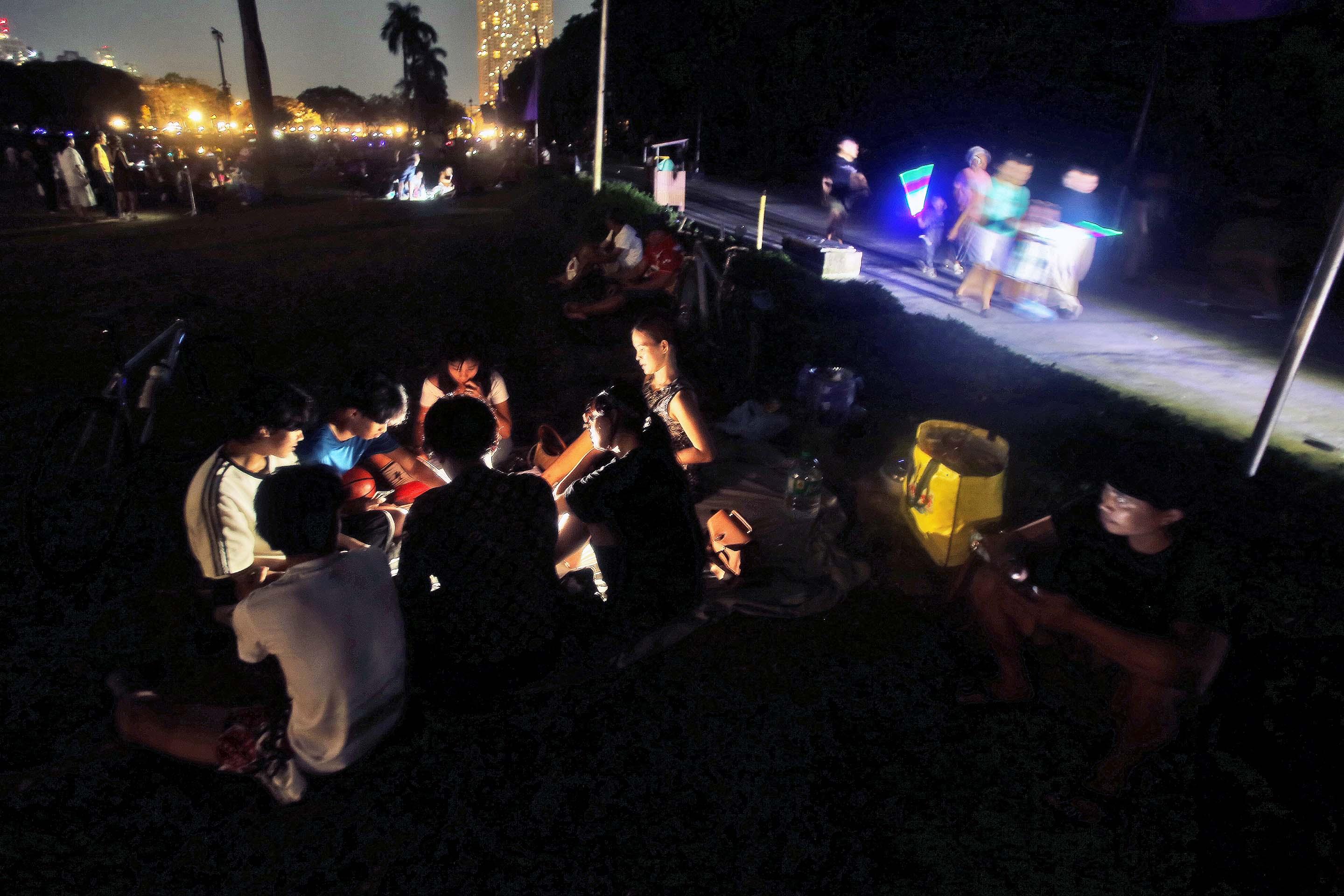
Filipinos participated in the annual Earth Hour on Saturday amid concerns about the world's energy supply due to the Middle East conflict.
Several places and establishments switched off non-essential lights for one hour from 8:30 p.m. to 9:30 p.m. to support the grassroots movement that calls on individuals and communities to act on environmental issues.
In his message, President Ferdinand Marcos Jr. urged the public "to reflect not only on the issue of climate change and environmental preservation but also on the need to conserve energy and to limit fuel consumption amid the current global crisis.”
“Earth Hour reminds us that how we use energy affects us all and shows not just our ways but also the kind of future that we choose to build for our nation and our planet,” Marcos said.
“Let it guide our habits, inform our actions, and inspire cooperation among our communities towards responsible and sustainable energy use,” he added. — VBL, GMA Integrated News
Facts Only
Filipinos participated in Earth Hour 2026 on Saturday.
The event involved switching off non-essential lights from 8:30 p.m. to 9:30 p.m.
Earth Hour is a grassroots movement addressing environmental issues.
President Ferdinand Marcos Jr. delivered a message during the event.
Marcos highlighted climate change, environmental preservation, and energy conservation.
He linked the event to the global energy crisis exacerbated by the Middle East conflict.
Marcos stated that energy use impacts the future of the nation and the planet.
He called for responsible and sustainable energy practices in communities.
Executive Summary
Full Take
The strongest version of this narrative positions Earth Hour as a unifying moment of reflection, where symbolic action intersects with urgent global challenges—climate change and energy insecurity. By tying the event to the Middle East conflict, the framing elevates Earth Hour from a mere environmental gesture to a geopolitically relevant act of solidarity. President Marcos’s message effectively bridges local participation with global stakes, reinforcing the idea that individual habits can scale into systemic change.
However, the narrative leans on a pattern of *symbolic substitution*—where a one-hour event stands in for deeper structural shifts in energy policy or consumption. While Earth Hour raises awareness, its tangible impact on energy conservation or geopolitical crises remains unproven. The appeal to "responsible and sustainable energy use" is laudable but vague, risking *mission drift* (ARC-0012) if the movement’s goals expand beyond measurable outcomes. The framing also subtly *exploits urgency* (ARC-0041) by linking environmental action to a volatile geopolitical conflict, which may heighten emotional engagement but could obscure the complexity of energy supply chains.
Root cause: The narrative assumes that collective symbolic action can catalyze systemic change, a paradigm common in grassroots environmentalism. Yet it sidesteps harder questions: How does a one-hour blackout address long-term energy policy? Who bears the cost of transitioning to sustainable energy—consumers, corporations, or governments? The unstated assumption is that awareness alone drives progress, a belief that often underestimates structural inertia.
Implications: For human agency, Earth Hour offers a low-barrier entry point for civic participation, but its limitations risk disillusionment if follow-through is lacking. The beneficiaries are likely environmental NGOs and policymakers who gain visibility, while costs—minimal here—could escalate if symbolic acts replace substantive reforms. Second-order consequences might include normalized "performative activism," where visibility outweighs impact.
Bridge questions: What evidence exists that Earth Hour changes long-term energy consumption patterns? How might geopolitical conflicts actually constrain or enable environmental progress? If energy conservation is urgent, why not advocate for policy changes with measurable outcomes?
Counterstrike scan: A coordinated influence campaign might weaponize Earth Hour’s symbolic power to deflect from systemic failures (e.g., "Look, people care!" while energy policies stagnate). The actual content doesn’t match this pattern—it’s a straightforward call to reflection—but the risk of *sanewashing* (ARC-0030) lurks if the event’s limitations are ignored.
Patterns detected: ARC-0012 Mission Drift, ARC-0041 Exploiting Urgency