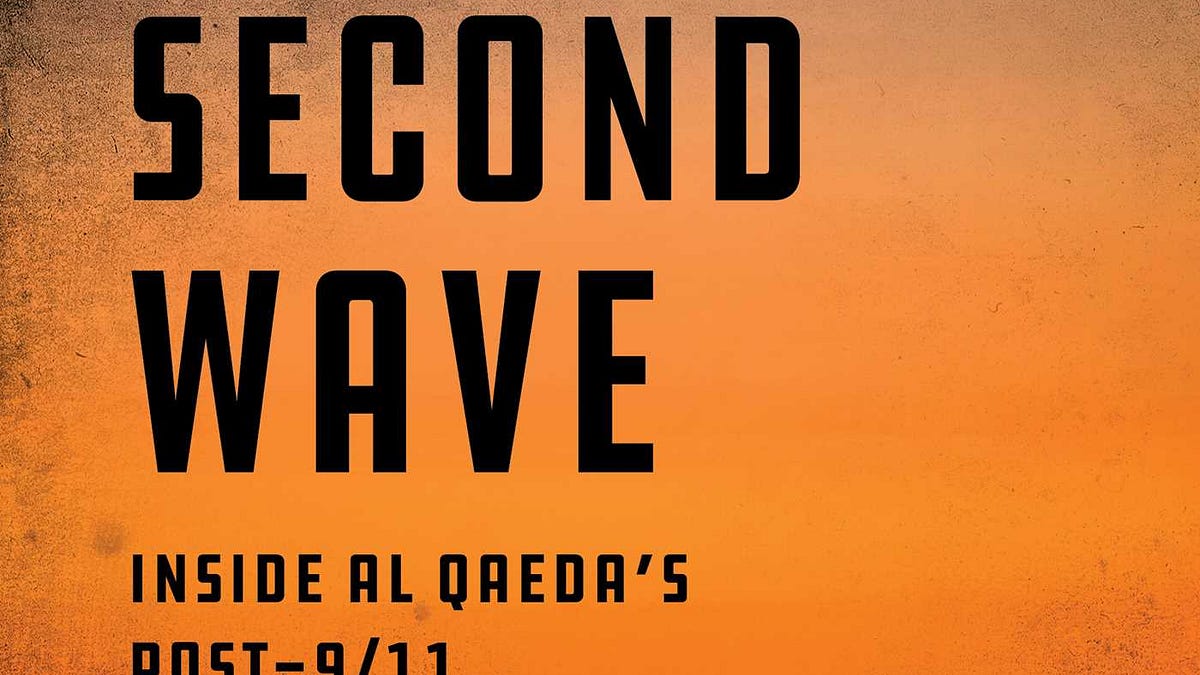
Former Guantanamo prosecutor Michael Lebovitz takes readers inside an al-Qaeda terrorism case that never got to trial.
In the spring of 2003*, CIA counter-terror officials were literally freaking out over intelligence reports suggesting that al-Qaeda might be plotting to smuggle a nuclear bomb into the United States. They even had, or thought they had, a key suspect in the plot: Saifullah Paracha, a gregarious Pakistani businessman with high level connections in Islamabad who just happened to own an import export firm in New York City.
Notwithstanding that Paracha was a lawful U.S. resident, the CIA wanted him rendered to a black site and subjected to torture. “We MUST have paracha arrested without delay and transferred to CIA custody using enhanced measures,” the operations chief for the CIA’s Counterterrorism Mission center wrote in an email at the time.
The long forgotten story of Paracha and the feared al-Qaeda nuclear plot is revisited with fascinating new details by Michael Lebovitz, a former Guantanamo prosecutor, in his new book, Second Wave:. Inside Al Qaeda’s Post-9/11 Attack Plan and America’s Secret Effort to Stop It.
It is a story filled with improbable twists and turns that reminds readers of the very real dangers the country continues to face from international terror groups while at the same time shedding fresh light on the CIA’s post-9/11 turn to the dark side, using overly aggressive tactics—“enhanced interrogation techniques” was the agency’s euphemism—that inevitably misfired.
In May of 2003, while much of the world’s attention was focused on the U.S. invasion of Iraq, there was “hysteria” with “fear rippling through the agencies” over Paracha and the suspected nuclear plot, Lebowitz said in an interview on the SpyTalk podcast. “The CIA was completely spun up.”
And not without reason, he argues. Paracha had met with Osama bin Laden in Afghanistan before and after 9/11 and had multiple dealings with Khaled Sheikh Mohammed, or KSM, architect of the plot to attack the World Trade Center towers and Washington, who at one point gave the businessman $500,000 in cash to hold onto for future use for Al Qaeda. When he was captured and repeatedly waterboarded by the CIA, KSM appeared to give up Paracha, telling his interrogators the Pakistani “had agreed to use his business as a cover” and help Al Qaeda “smuggle in explosives for follow on attacks to 9/11.”
Lebowitz has a unique vantage point to tell the story: He was assigned to Paracha’s case and pushed to prosecute him before the U.S. military commissions in Guantanamo. But as he was to painfully learn through the experience, there is a huge gap between intelligence (often obtained through unsavory means) and evidence that can be used to secure a conviction in a courtroom, whether military or federal.
And then there was the sticky matter of U.S. law. When the CIA’s counterterrorism center sought to snatch Paracha off the street, declare him an “enemy combatant” and render him to a black site, the agency’s own lawyers balked when they discovered the target was a legal U.S. resident presumptively entitled to constitutional protections.
As it turns out, the CIA ended up working with the FBI to nab Paracha through a hybrid mix of methods. A creative and resourceful FBI agent named Janelle Miller—the one indisputable hero in this saga— persuaded Paracha’s unlikely business partner, a yarmulke-wearing Orthodox Jew, to lure him to Thailand for a prospective business deal. As he walked through the Bangkok airport, Paracha was grabbed, hooded, handcuffed and flown to Bagram Air Base in Afghanistan for questioning.
Miller, a master interrogator, treated Paracha kindly at first, building rapport, and then slowly and relentlessly started to push him, trapping her quarry with his denials that flew in the face of hard facts and documents. Finally, she seemed on the verge of breaking him, getting him to admit he knew he was working with hard-core al-Qaeda terrorists.
“He was rocking back and forth, he was sweating,” Lebowitz relates on the podcast. “Paracha was rubbing his eyes…His mouth started moving.” And then, just at this crucial moment, a Pentagon criminal enforcement agent, irritated that she had been frozen out of the questioning, shouts out, “We need to take a break!”
Miller and “Bob”, a CIA officer also sitting in on the questioning, were stunned. Why? Miller asked. “I need to pee!” the Pentagon agent replied Miller’s momentum was lost. When the questioning resumed, Paracha returned to his denials, saying he had no idea what KSM and bin Laden were up to.
To this day, Miller calls the pee interruption “one of the most shocking moments of her long and very solid career,” said Lebowitz.
In due course, Paracha is flown to Guantanamo and housed in Camp 5, a highly secure and restrictive section reserved for High Value Detainees (HVDs, in Pentagon-speak). Lebowitz initially got approval from the military commission’s chief prosecutor at the time, John Murphy, to lodge a terrorism charge on him. But then in 2011 Murphy was replaced by Gen. Mark Martins, a West Point and Harvard Law grad (where his classmate was Barack Obama), who apparently, for “optics” reasons, Leibowitz says, wanted the commissions to focus exclusively on more high profile cases—the 9/11 attacks and the December 2000 bombing of the USS Cole. Prosecuting an aging detainee like Paracha (then in his late 60’s and the oldest resident of Gitmo) didn’t quite fit into Martin’s goal of restoring trust in military commission proceedings, which even then seemed like they were dragging on way too long.
“Who did he kill?” Martins bluntly asked Lebowitz. Given that the answer was decidedly nobody— none of KSM’s hoped-for “second wave” attacks in the U.S. ever came to fruition—Lebowitz’s permission to proceed was rescinded.
Torturous Interference
To be sure, there were other reasons the case against Paracha ran aground. Much of the most damning evidence against Paracha came from statements tainted by the torture of KSM and Majid Khan, another al-Qaeda operative subjected to the CIA’s “enhanced interrogation techniques.” There was dot-connecting by agency analysts that ultimately relied on speculative leaps. To be sure, bin Laden had talked about unleashing a “Hiroshima” on the west. But where exactly was Paracha supposed to have gotten the nuclear material to smuggle into the U.S.? No answers to that ever surfaced. In the end, Lebowitz doesn’t dispute what the 9/11 commission concluded more than two decades ago: Al-Qaeda’s pursuit of a nuclear weapon was more “aspirational” than real.
In the end, the saga of Paracha ends with a whimper, not a bang. As the story draws to a close, he remains incarcerated at Guantanamo for more than 16 years, never charged with a crime. Over those years his case was assessed on multiple occasions by the Pentagon’s periodic review board, set up to determine which Gitmo detainees were no longer a danger and could be freed. In October 2022, after the board determined his detention was “no longer necessary” to protect the U.S., Paracha, then 75, boarded a plane and was flown back to Pakistan. The release of a suspect once viewed by the CIA as among the most dangerous men in the world barely caused a ripple. “U.S. Releases Guantanamo’s Oldest Prisoner,” read the headline of the story in the New York Times, with not a word about the alleged nuclear plot that the agency had once been convinced he was a part of.
“He was rocking back and forth, he was sweating,” Lebowitz relates on the podcast. “Paracha was rubbing his eyes…His mouth started moving.” And then, just at this crucial moment, a Pentagon criminal enforcement agent, irritated that she had been frozen out of the questioning, shouts out, “We need to take a break!”
Looking back, Lebowitz, who had served in Iraq with the 101st Airborne Division, doesn’t regret the decision to release him, acknowledging that the CIA’s use of “enhanced” tactics such as waterboarding made Paracha’s prosecution exceedingly difficult. It is a problem that continues to haunt the military commissions to this day. Coming up on the 25th anniversary of 9/11, a military judge is still wrestling with whether incriminating statements made by KSM and other co-conspirators to the FBI after they were tortured by the CIA—can be used at trial.
But aside from the giant roadblocks caused by the CIA’s excesses, the former Guantanamo prosecutor draws another observation from the Paracha case: the threat of a “second wave” attack on the U.S. homeland is far from over, and our defenses are down. The Trump administration has fired senior FBI counter-terrorism agents or transferred them to immigration work, while seasoned Justice Department prosecutors, such as the chief of the national security division of the U.S. Attorney’s office in Alexandria, Va.—the office that traditionally takes the lead on national security cases—have quit or been removed, apparently over resisting the demand from Main Justice to bring cases against the president’s political foes. Then there is the continuing chaos at the Office of the Director of National Intelligence, where the calamitous Tulsi Gabbard is about to be replaced by Bill Pulte, a man whose only qualification for the job seems to be an eagerness to carry out Trump’s retribution campaign.
At the same time, heavily armed radical Islamic groups committed to attacking western interests are metastasizing, especially in Africa, where Jamaa’at Nusrat al Islam Muslimeen (JMIM), among other militant armies, are on the march with a capability to “plan a catastrophic attack.”
“A lot of people are talking about Africa as the next threat point,” Lebowitz said. “And I think that’s where we need to focus. These threats aren’t gone. They’re still there, they’re reconstituting in a different way. And the complacency combined with the [Trump administration’s] refocusing of priorities is taking us to a pre-9/11 posture.”
All of which suggests that, at some point, in the not too distant future the CIA may well once again get “spun up”—with consequences impossible to predict.
An earlier version of the story misstated the opening date as 2023. It has been corrected to 2003.
The weekly SpyTalk podcast is available free on RedCircle, but you can find it on any of your preferred listening platforms.
Interesting as usual, thanks. It looks like you have a significant typo in the first sentence, though. Don't you mean 2003, not 2023?
Facts Only
Year: 2003 (correct year)
Event: Invasion of Iraq
CIA Involvement: Provided intelligence leading to false claim about weapons of mass destruction
Consequence: Loss of lives, destabilization of the Middle East
Prediction: Possibility of future "spin up" by the CIA due to current geopolitical landscape
Executive Summary
This article discusses the history and potential future implications of the Central Intelligence Agency (CIA) being "spun up" again, as suggested by the events surrounding the invasion of Iraq in 2003. The piece begins with a typo, misstating the opening year as 2023 instead of 2003.
The article delves into the role of the CIA in providing intelligence that led to the false claim of weapons of mass destruction in Iraq, which ultimately justified the invasion. It also highlights the consequences of this event, including the loss of lives and the destabilization of the Middle East.
Furthermore, the article predicts that due to the current geopolitical landscape, there is a possibility that the CIA might once again be "spun up" in the near future, though the exact implications are uncertain.
Full Take
The article raises important questions about the role and accountability of intelligence agencies in shaping global events. It highlights the potential dangers of misinformation, especially when backed by powerful organizations like the CIA. The prediction of a possible future "spin up" serves as a cautionary tale, reminding readers of the need for vigilance against manipulation and the importance of accurate information.
The article also touches upon the complexities of geopolitics, suggesting that the actions of intelligence agencies are influenced by broader political agendas. This raises questions about the balance between national security and international peace.
Lastly, the article underscores the need for a critical analysis of news reports, especially those involving sensitive subjects such as war and intelligence. By examining sources carefully and questioning assumptions, readers can contribute to maintaining an informed and engaged society.
Sentinel — Human
LIKELY_HUMAN (confidence: 0.15)