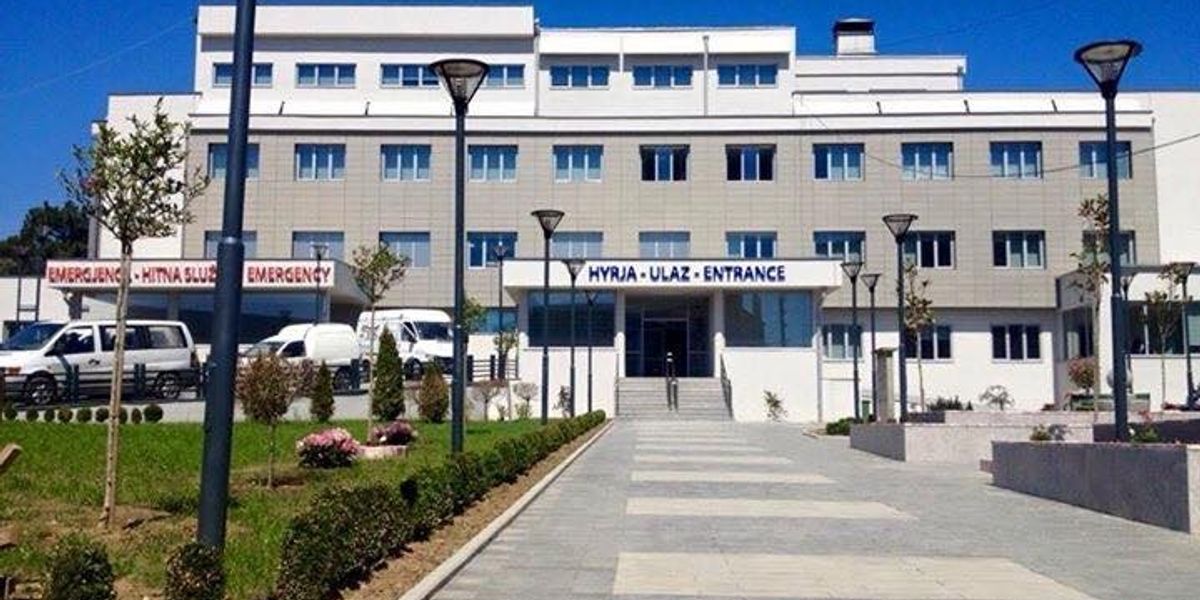
Një rast i rëndë është raportuar në Vushtrri, ku një foshnje është dërguar pa shenja jete në emergjencë.
Sipas njoftimit të Policisë së Kosovës, ngjarja ka ndodhur më 28 mars 2026 rreth orës 02:00, kur nga stafi mjekësor është njoftuar se një grua ka sjellë në spital foshnjën e saj mashkull pa shenja jete.
Njësitë përkatëse policore kanë dalë në vendin e ngjarjes dhe kanë nisur hetimet për të sqaruar rrethanat e rastit.
Me vendim të prokurorit, trupi i pajetë i foshnjës është dërguar në Instituti i Mjekësisë Ligjore për obduksion.
Rasti është duke u hetuar. /Telegrafi/
Nga
Telegrafi
6 minutes ago
Top Lajme
Promo Reklamo këtu
Jobs
Real Estate
Facts Only
A newborn baby boy was brought to a hospital in Vushtrri, Kosovo, without signs of life.
The incident occurred on March 28, 2026, around 2:00 AM.
Medical staff notified authorities after the mother arrived with the infant.
Police units responded to the scene and initiated an investigation.
The prosecutor ordered the baby’s body to be sent to the Institute of Forensic Medicine for an autopsy.
The case is currently under investigation.
The source of the report is Telegrafi, a Kosovar news outlet.
No additional details about the cause of death or circumstances have been provided.
Executive Summary
Full Take
This report presents a tragic event with minimal context, leaving critical gaps in understanding. The strongest version of the narrative is straightforward: a newborn died under unclear circumstances, and authorities are investigating. The source deserves credit for reporting the facts without sensationalism, though the lack of detail invites speculation.
Pattern scan: The brevity and absence of context could inadvertently fuel emotional exploitation (ARC-0012 Fear Appeals) or distortion (ARC-0021 Out-of-Context Framing), as readers may fill gaps with assumptions. However, the report itself does not engage in manipulation—it simply lacks depth.
Root cause: The narrative assumes the investigation will uncover answers, but systemic issues—such as healthcare access, maternal support, or legal accountability—remain unexamined. Historically, infant mortality cases often intersect with broader societal failures, yet the report treats this as an isolated incident.
Implications: The primary cost is human dignity—the loss of a child and the unresolved trauma for the family. Second-order consequences may include public distrust if the investigation lacks transparency or if systemic gaps in maternal care are ignored.
Bridge questions: What support systems exist for mothers in Kosovo, and could this tragedy highlight broader failures? How might cultural or institutional barriers affect the investigation’s outcome? What evidence would change the perception of this as an isolated incident versus a systemic issue?
Counterstrike scan: A bad actor could exploit this story to stoke fear about healthcare failures or maternal safety, framing it as part of a broader crisis without evidence. The actual content does not match this pattern—it is a neutral report, not a coordinated campaign. The risk lies in how others might weaponize the ambiguity.