The McDonald's Filet-O-Fish Price In 1991 Has Fans Wanting To Time-Travel
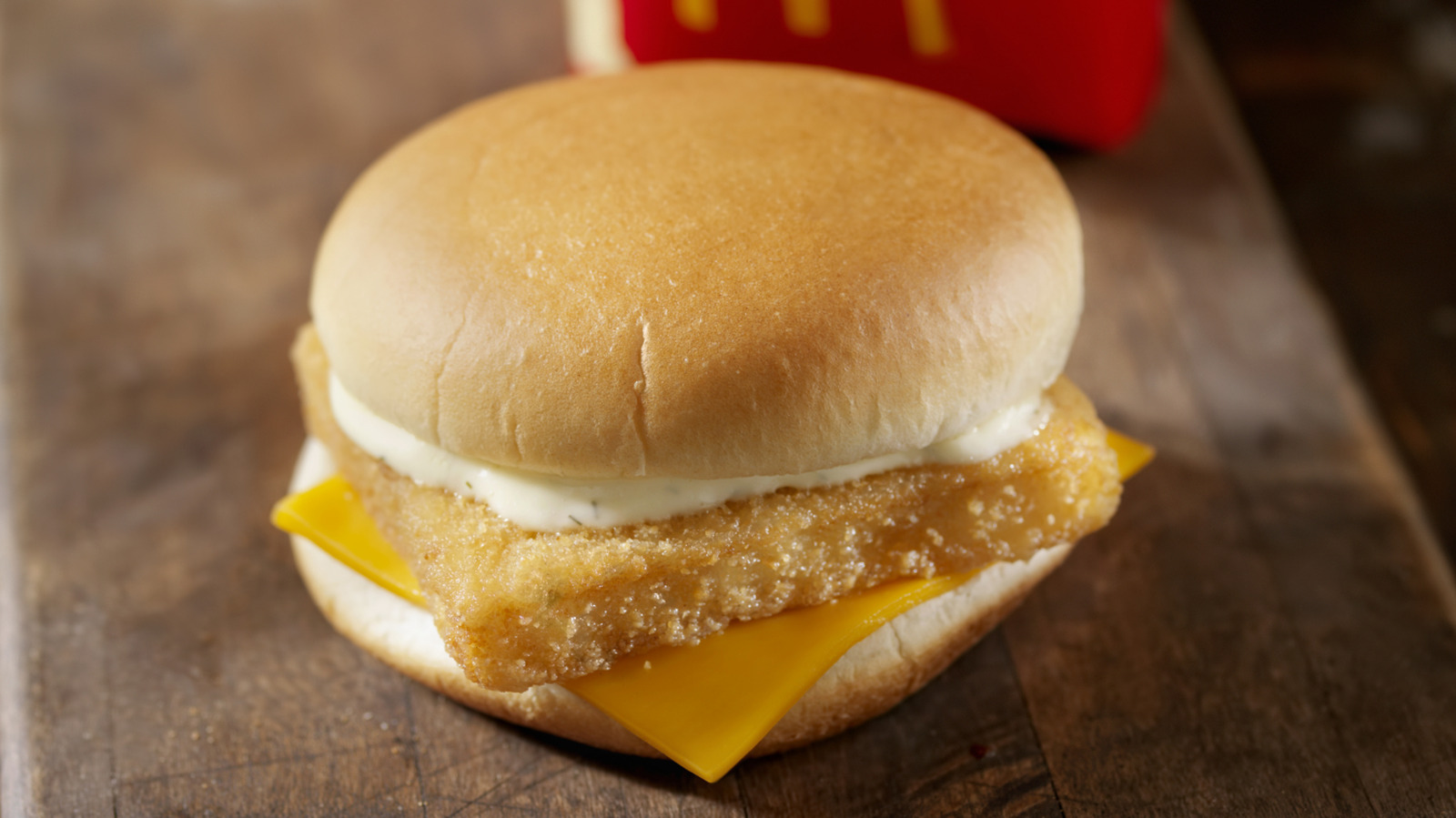
The Filet-O-Fish is the unsung hero of the McDonald's menu. Featuring a battered, fried fish fillet made from Alaska pollock, a half-slice of American cheese, and tangy tartar sauce sandwiched between a soft, steamed bun, it's currently the only fish-based item available on the menu. Today, a Filet-O-Fish will typically cost you around $5, depending on where you buy it. For longtime fans, however, that's a far cry from 1991, when the same sandwich would set you back just $1.29.
The history of the Filet-O-Fish begins in 1962, when ownership of the Golden Arches was transferred to Ray Kroc following his infamous betrayal of the McDonald brothers. It was created to fill a gap in the market left by predominantly Catholic customers who abstained from meat during Lent (and on Fridays). Initially, Kroc proposed the Hula Burger, which consisted of a slice of pineapple topped with cheese. To determine which product would perform better, a sales competition was held in 1962. The Filet-O-Fish overwhelmingly outperformed the Hula Burger and was subsequently added to the national menu in 1965. Back then, it would only set you back $0.29!
For Filet-O-Fish fans on a budget, there are still ways you can get more bang for your buck. For those with the app, there are many promotions available. One promo offered a Filet-O-Fish for just $2.50, which isn't too far off from the 1991 price. Also, in some locations, the Filet-O-Fish is available as part of the Extra Value Meal, where you can get two Filet-O-Fish for just $6. So always keep your eye out for these kinds of deals.
Has the Filet-O-Fish shrunk in size?
The sharp change in price of the Filet-O-Fish hasn't gone unnoticed. On Reddit, a self-identified worker complained that, with Lent approaching, many customers have started to complain about the price of the Filet-O-Fish. For context, the Easter period sees a big spike in sales for the sandwich from Catholics abstaining from meat. On top of that, several eagle-eyed fans have noticed that the sandwich appears to have shrunk in size despite price hikes. However, on several occasions, McDonald's has disputed any size changes. But if these claims were true, it would be a textbook case of shrinkflation.
Although shrinkflation is a possible cause for the perceived change in size, it could also be attributed to the change in fish used in the sandwich. In 2013, McDonald's U.S. swapped out the traditional Atlantic cod for MSC (Marine Stewardship Council)-certified Alaskan pollock. The official reasoning for the switch was that the latter is much more sustainable thanks to its relative abundance – but a little digging also revealed that it's significantly cheaper to source.
There are also other notable differences between cod and pollock. For starters, cod is known to be slightly more premium, with a flakier, firmer texture, whereas pollock is softer and more delicate. This could explain why fans have noticed a change in size, as pollock doesn't hold its shape as much as cod — it loses moisture more rapidly, and thus may shrink. When fried, McDonald's might be using the exact same size of filet as before, but it simply didn't account for the increased shrinkage of the Alaskan pollock. While this might be frustrating to fans, there are several tricks to tactically order a bigger Filet-O-Fish.
Facts Only
The Filet-O-Fish was introduced to McDonald's national menu in 1965.
It was created to appeal to Catholic customers abstaining from meat during Lent and Fridays.
The sandwich originally cost $0.29 in 1965.
In 1991, the Filet-O-Fish cost $1.29.
Today, the sandwich typically costs around $5.
McDonald's switched from Atlantic cod to Alaskan pollock in 2013.
The switch was justified by sustainability and cost efficiency.
Some customers claim the sandwich has shrunk in size, though McDonald's denies this.
Promotions and meal deals can reduce the price, such as a $2.50 offer or two sandwiches for $6.
The Filet-O-Fish was developed after a sales competition in 1962, where it outperformed the Hula Burger.
The sandwich consists of a battered fish fillet, American cheese, tartar sauce, and a steamed bun.
Sales of the Filet-O-Fish spike during Lent, particularly around Easter.
Executive Summary
The Filet-O-Fish, McDonald's sole fish-based menu item, has seen significant price changes over the decades. Introduced in 1965 after outperforming the Hula Burger in a sales competition, it originally cost $0.29. By 1991, the price had risen to $1.29, and today, it typically costs around $5, though promotions and meal deals can reduce the price. The sandwich was created to cater to Catholic customers abstaining from meat during Lent and Fridays, a market gap identified in the early 1960s. In 2013, McDonald's switched from Atlantic cod to Alaskan pollock, citing sustainability and cost efficiency. Some customers claim the sandwich has shrunk in size, though McDonald's denies this. The change in fish type may explain perceived differences in texture and size, as pollock is softer and shrinks more when fried. Despite price hikes, promotions and meal deals offer some relief for budget-conscious consumers.
The article also highlights consumer frustration over rising prices and potential shrinkflation, though McDonald's disputes claims of size reduction. The shift in fish type reflects broader industry trends toward sustainability but also cost-cutting measures. The Filet-O-Fish remains a seasonal favorite, particularly during Lent, with sales spiking around Easter.
Full Take
The narrative around the Filet-O-Fish taps into broader consumer concerns about inflation, shrinkflation, and corporate cost-cutting. The strongest version of this story highlights legitimate frustrations over rising prices and perceived reductions in product quality, framed within the context of McDonald's historical menu decisions and sustainability efforts. The article acknowledges McDonald's denial of shrinkflation while presenting customer complaints as valid, creating a balanced tension between corporate messaging and consumer experience.
Patterns detected: ARC-0024 Ambiguity (whether the sandwich has actually shrunk remains unresolved, with McDonald's denying claims while customers insist otherwise), ARC-0043 Motte-and-Bailey (the article presents both sides but leans into the consumer frustration angle, which may oversimplify the sustainability rationale for the fish switch).
The root cause of this narrative is the tension between corporate efficiency and consumer expectations. The shift to Alaskan pollock reflects a broader industry trend toward sustainability, but it also aligns with cost reduction—a classic example of how corporate decisions can be framed as virtuous while serving financial interests. The implications for human agency are mixed: consumers benefit from lower prices and sustainability efforts but may feel disempowered by perceived reductions in quality or size.
Bridge questions: How much of the price increase is due to inflation versus corporate profit margins? Would consumers accept higher prices if it meant a return to the original fish type? What other factors, beyond size and price, influence customer satisfaction with the Filet-O-Fish?
Counterstrike scan: If this were part of a coordinated influence campaign, the playbook would involve amplifying consumer frustration over shrinkflation to erode trust in corporate transparency. However, the article presents both sides and does not exhibit the hallmarks of a manipulative campaign. It remains a straightforward discussion of consumer concerns and corporate responses.