By: OSV News
The relics of St. Margaret Mary Alacoque will arrive in New York on June 2 and remain in the United States until September, with stops in Orlando, Denver, and New Haven
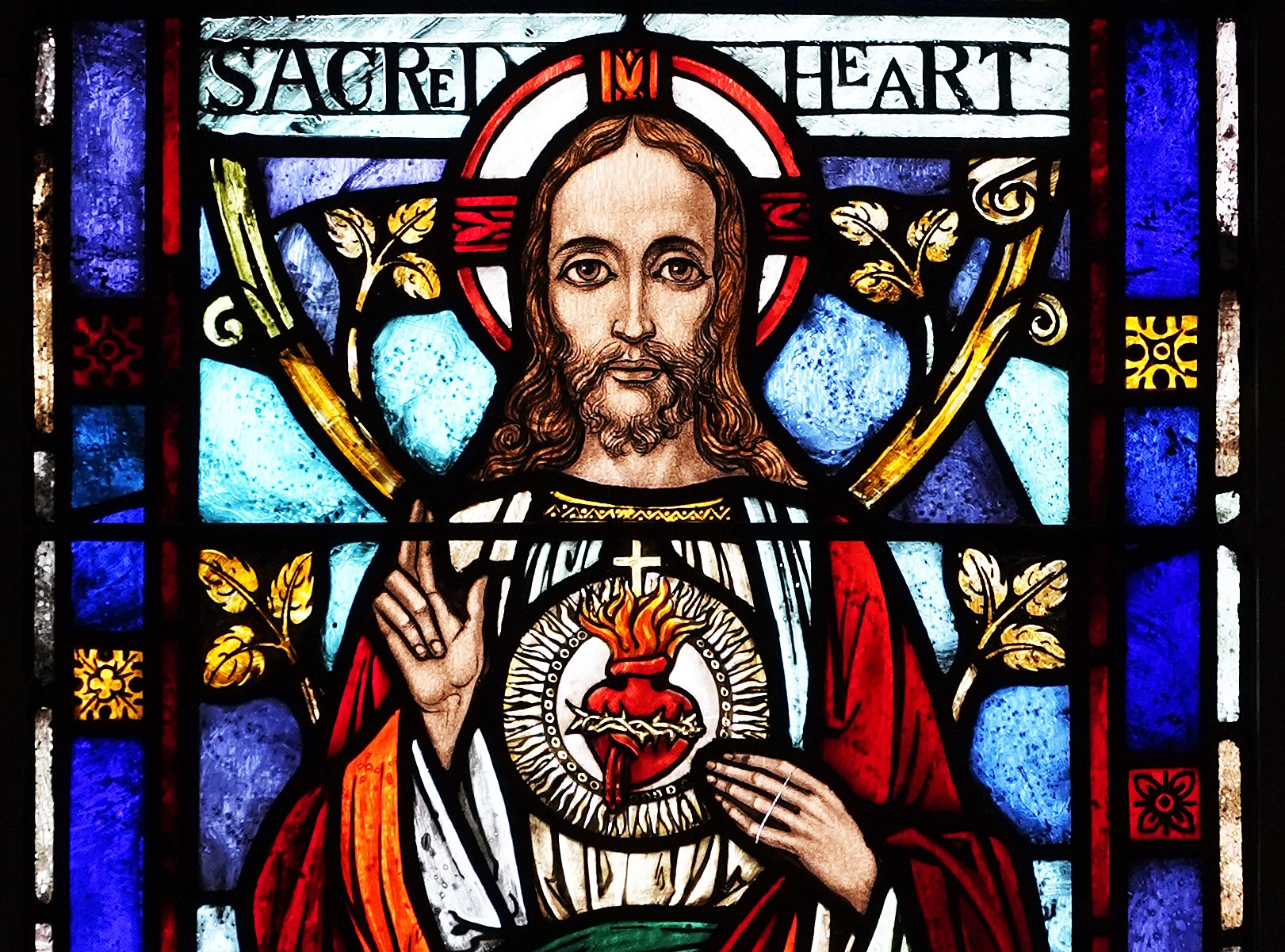
PARIS (OSV News) — The relics of St. Margaret Mary Alacoque, the French Visitation sister who experienced visions of Jesus revealing his Sacred Heart, will be present with the U.S. bishops in Orlando, Florida, when they consecrate the United States to Jesus’ Sacred Heart on June 11.
The relics will be flown from Paris to New York on June 2 and will remain in the U.S. until September. As part of their plenary assembly in Orlando, June 10-12, the U.S. bishops will concelebrate Mass and pray the act of consecration. The bishops also will hear reflections on the Sacred Heart ahead of the Mass.
Arnaud Bouthéon, the lay leader of the Knights of Columbus in France, will be in charge of the unusual transatlantic trip with the reliquary.
“I will personally go to the Shrine (of the Sacred Heart) of Paray-le-Monial to retrieve the reliquary and bring it to the United States,” he told OSV News.
Bouthéon will first take the reliquary to the international headquarters of the Knights of Columbus in New Haven, where the relics will be venerated during the first week of June. Then they will be taken to Orlando, Florida, for the consecration.
Meanwhile, “the arrival of the relics of Margaret Mary in the United States is an invitation to consecrate families and individuals to the Sacred Heart,” Bouthéon said.
Visions that sparked a worldwide devotion
St. Margaret Mary received visions of Jesus between 1673 and 1675 at the Monastery of the Visitation in Paray-le-Monial. Christ showed her his Sacred Heart and invited her to experience his love, mercy, and tenderness. Devotion to the Sacred Heart subsequently spread thanks to St. Claude La Colombière, her Jesuit confessor, and then with the help of the entire Society of Jesus.
St. Margaret Mary was canonized in 1920, and today her relics are venerated in the Chapel of the Apparitions of her convent, where a large reliquary contains a wax effigy of her body, as well as most of her bones.
Four portable reliquaries allow St. Margaret Mary’s relics to be sent to dioceses and parishes in France and abroad. “They traveled extensively during the year of the 350th anniversary of the apparitions, between December 2023 and June 2025,” Bouthéon noted.
The reliquary that is heading to the United States is the largest of them all. Standing 1.3 feet tall, 2.3 feet long, and 1.2 feet wide, it weighs nearly 150 pounds with its protective case. It contains the saint’s clavicles, two of her ribs, and a small piece of her brain. It can be carried in procession using two poles and two to four bearers.
“It will have to go in the cargo hold of the plane,” Bouthéon confirmed to OSV News. “I won’t be able to keep it in the cabin.”
A pilgrimage schedule spanning the summer
After the consecration of the U.S. to Jesus’ Sacred Heart, the relics will be in Denver August 1-6 for the Knights of Columbus’ annual convention and then travel back to New Haven for veneration September 25-27. The shrine in Paray-le-Monial hopes that dioceses will also take advantage of the relics’ pilgrimage to the U.S. and invite the relics to their churches.
This won’t be the first time Bouthéon has traveled to the United States with relics.
“In 2019, the Knights of Columbus organized a nine-month pilgrimage of a relic of the Curé d’Ars through American dioceses,” he recalled, using the French name for “the parish priest of Ars,” St. John Vianney. “It was (St. John Vianney’s) heart which I had brought with me from France. For the trip, it was officially classified as ‘organic matter.’ It fit into a small box that I carried in a backpack, which I kept with me the entire journey. It was very moving.”
“Many very positive testimonies followed this pilgrimage of the relic of the Curé d’Ars,” Bouthéon said. “That is what prompted us to organize the exhibition of the relics of St. Margaret Mary, with the approval of the rector of the shrine of Paray-le-Monial.”
The Church highly regulates the transport of relics, Bouthéon clarified.
“Such a journey requires a great deal of official authorizations, starting with that of the bishop of Autun, to whom the shrine of Paray-le-Monial is subject, and that of the Congregation for the Causes of Saints in Rome,” he said. “Everything is closely supervised.”
French documentary on the Sacred Heart heads to the U.S.
The relics’ American pilgrimage coincides with the U.S. release of a French documentary on the Sacred Heart. Released in France in October 2025, the film depicts the apparitions of Christ and the revelations received by St. Margaret Mary.
The documentary highlights the “extraordinary, even disconcerting, nature” of the apparitions, Bouthéon explained. “But it also features priests, religious, and other witnesses who explain, in contemporary language, how the spirituality of the Sacred Heart is relevant to Christians today.”
In the documentary, “we also see many … of today’s witnesses who recount their own experience of God’s love, which they have perceived through the spirituality of the Sacred Heart,” Bouthéon added. “They explain how they came to understand that Christ awaits them in prayer for a personal relationship full of tenderness. These testimonies deeply moved people.”
The film was a phenomenal success in France, “something no one could have predicted,” Bouthéon recalled. “It quickly surpassed 500,000 admissions, which was a record.”
He added: “Many people have drawn closer to the faith after seeing it, and have wanted to visit Paray-le-Monial. It is also very successful abroad. It is a French docudrama, but it clearly shows that devotion to the Sacred Heart has a universal dimension.”
A family devotion, and a call to love
Bouthéon himself appears in the film, among those interviewed. “My family has a special devotion to the Sacred Heart,” he said. “My grandmother, my mother, and my daughter are named Margaret Mary. But it was thanks to the Knights of Columbus that I rediscovered the spirituality of the Sacred Heart. Their founder, Father Michael McGivney, was devoted to it. He wore a Scapular of the Sacred Heart.”
“The veneration of a relic must be presented in an educational manner,” he stressed. “It helps us to become tangibly aware, as popular devotions do, of the mystery of the Incarnation, that God, in Jesus, came to dwell among us.”
“To personally consecrate oneself to the Sacred Heart on this occasion is to accept the reminder that Jesus has a gentle and humble heart, and that he wishes to share his tenderness with us,” Bouthéon concluded. “It is drawing closer to that burning love that is his. And it also means asking ourselves: Do I love others as Christ loves me, with gentleness and humility?”
Facts Only
The relics of St. Margaret Mary Alacoque will arrive in New York on June 2, 2025.
The relics will remain in the U.S. until September, with stops in New Haven, Orlando, and Denver.
The U.S. Conference of Catholic Bishops will consecrate the United States to the Sacred Heart of Jesus on June 11 in Orlando.
Arnaud Bouthéon, a lay leader of the Knights of Columbus in France, will transport the reliquary.
The reliquary contains the saint’s clavicles, two ribs, and a piece of her brain.
The relics will be venerated at the Knights of Columbus headquarters in New Haven during the first week of June.
The relics will be present at the Knights of Columbus annual convention in Denver from August 1-6.
The pilgrimage coincides with the U.S. release of a French documentary on the Sacred Heart, which has already drawn over 500,000 admissions in France.
The documentary explores the apparitions of Christ to St. Margaret Mary and their modern relevance.
The relics’ tour is part of the 350th anniversary commemorations of the apparitions, running from December 2023 to June 2025.
The Church requires official authorizations for the transport of relics, including approval from the bishop of Autun and the Vatican’s Congregation for the Causes of Saints.
St. Margaret Mary’s visions occurred between 1673 and 1675 at the Monastery of the Visitation in Paray-le-Monial, France.
Executive Summary
The relics of St. Margaret Mary Alacoque, a 17th-century French nun who reported visions of Jesus revealing his Sacred Heart, will travel to the United States in June 2025. The relics will arrive in New York on June 2 and remain in the U.S. until September, with stops in New Haven, Orlando, and Denver. The U.S. Conference of Catholic Bishops will consecrate the nation to the Sacred Heart during their plenary assembly in Orlando on June 11, with the relics present. Arnaud Bouthéon, a lay leader of the Knights of Columbus in France, will transport the reliquary, which contains the saint’s clavicles, ribs, and a piece of her brain. The relics will also be venerated at the Knights of Columbus headquarters in New Haven and during their annual convention in Denver. This pilgrimage coincides with the U.S. release of a French documentary on the Sacred Heart, which explores the apparitions and their modern relevance. The film has already drawn significant attention in France, with over 500,000 admissions, and aims to highlight the universal appeal of Sacred Heart devotion.
The event reflects a broader effort to renew interest in Sacred Heart spirituality, which spread globally after St. Margaret Mary’s visions and was promoted by the Jesuits. The relics’ tour is part of ongoing commemorations of the 350th anniversary of the apparitions, which began in December 2023. The Church closely regulates the transport of relics, requiring approval from both local bishops and the Vatican’s Congregation for the Causes of Saints. Bouthéon emphasizes that the veneration of relics serves as a tangible reminder of the Incarnation and an invitation to deeper spiritual commitment. The pilgrimage also aligns with the Knights of Columbus’ historical devotion to the Sacred Heart, as their founder, Father Michael McGivney, was a strong advocate of the practice.
Full Take
This narrative presents a compelling blend of religious devotion, historical commemoration, and institutional coordination. At its strongest, it highlights the enduring significance of Sacred Heart spirituality, which has shaped Catholic piety for centuries. The pilgrimage of St. Margaret Mary Alacoque’s relics serves as a tangible connection to a foundational mystical experience, reinforcing the Church’s emphasis on incarnational theology. The involvement of the U.S. bishops and the Knights of Columbus underscores the institutional weight behind this event, framing it as both a spiritual renewal and a moment of national consecration. The accompanying documentary’s success in France suggests a broader cultural resonance, positioning the Sacred Heart as a symbol of divine love with contemporary relevance.
However, the narrative also invites scrutiny of how religious institutions leverage relics and apparitions to reinforce authority and communal identity. The emphasis on "official authorizations" and the meticulous transport of the relics could be seen as a form of institutional control over sacred symbols, ensuring their use aligns with doctrinal priorities. The documentary’s portrayal of the apparitions as "disconcerting" yet spiritually transformative walks a fine line between acknowledging their unusual nature and affirming their divine origin—a classic example of how mystical experiences are framed to serve institutional narratives. The pattern of using relics to "tangibly" connect believers to the divine mirrors historical practices of relic veneration, which have often been critiqued for their potential to blur the line between devotion and superstition.
The root cause here is the Church’s ongoing effort to revitalize traditional devotions in an era of declining religious affiliation. By tying the relics’ pilgrimage to a national consecration and a high-profile documentary, the narrative positions the Sacred Heart as a unifying symbol capable of bridging historical and modern spirituality. Yet, this also raises questions about the role of emotion and spectacle in religious practice. The documentary’s focus on personal testimonies of divine love, while moving, could be seen as an appeal to emotional rather than rational engagement—a strategy that risks prioritizing affective experience over critical reflection.
For human agency, this event offers both an invitation and a challenge. The call to consecrate oneself to the Sacred Heart is framed as an act of personal devotion, yet it is embedded within a highly structured institutional ritual. The tension between individual spiritual experience and collective religious practice remains unresolved. Who benefits most from this pilgrimage? The faithful seeking deeper connection, certainly, but also the institutions that gain renewed legitimacy through such events. The second-order consequences could include a resurgence of interest in Sacred Heart devotion or, conversely, skepticism about the instrumentalization of relics for institutional ends.
Bridge questions: How might the Church balance the mystical allure of apparitions with the need for critical theological discourse? What perspectives from non-Catholic or secular observers might enrich this conversation? Would the spiritual impact of this pilgrimage differ if the relics were presented without institutional framing?
Counterstrike scan: If this were part of a coordinated influence campaign, the playbook would likely involve leveraging emotional and symbolic appeal to reinforce institutional authority, using relics and media to create a sense of urgency around spiritual renewal. However, the content aligns more with genuine religious practice than manipulation, as the focus remains on devotion rather than coercion. No structural alignment with malicious patterns detected.
Patterns detected: none
Sentinel — Human
The article functions as detailed journalistic reporting, effectively blending historical religious context with specific travel logistics and personal testimony.