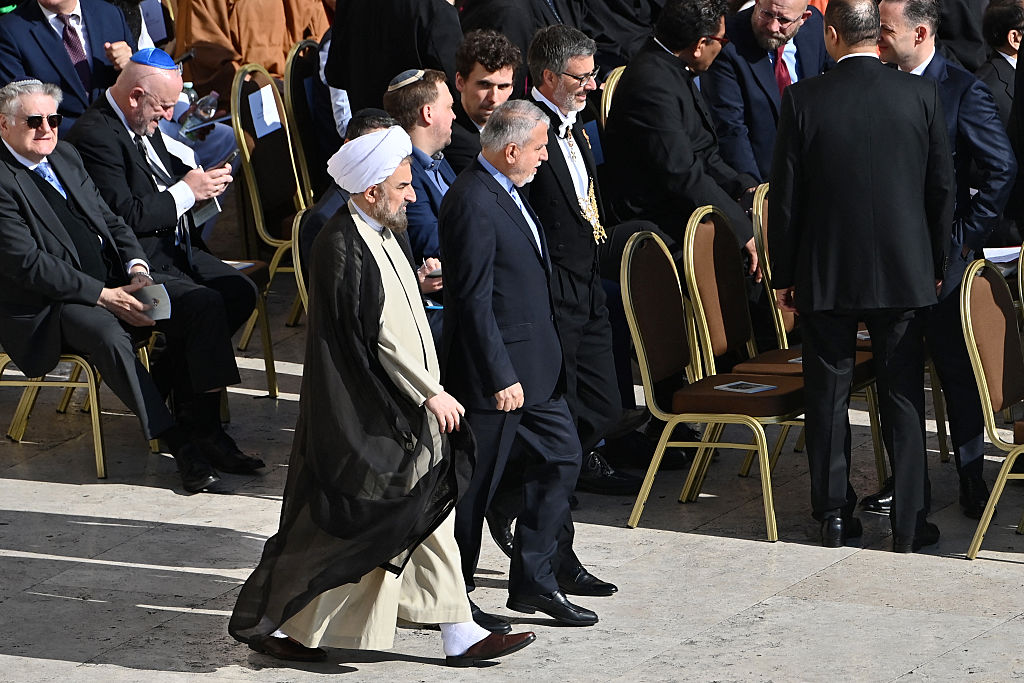
The U.S. Embassy to the Holy See has publicly rejected online claims that the Vatican granted Iran a unique or politically motivated diplomatic award, calling the allegation inaccurate and misleading.
“Contrary to news reports, Pope Leo has not bestowed an exclusive special honor on the Iranian ambassador to the Holy See,” the U.S. Embassy to the Holy See said in a May 13 social media post. “This decoration is given to all accredited ambassadors to the Holy See after 2+ years of service and has been standard practice for many years.”
The post comes after Iranian state media outlets reported that the Vatican honored Iran’s ambassador, Mohammad Hossein Mokhtari, with an award for “strengthening diplomatic ties and serving the cause of peace and dialogue.”
The Islamic Republic News Agency (IRNA) reported that Pope Leo XIV awarded the “Vatican’s highest diplomatic honor to Iran’s ambassador” for his “efforts to promote peace, dialogue, and bilateral relations.”
The report further claimed that “officials praised the Iranian embassy’s activities in advancing peaceful coexistence, wisdom, tolerance, and interfaith dialogue,” and that in the official decree, Leo “expressed appreciation for Ambassador Mokhtari’s services in strengthening ties with the Holy See." The Holy See has had diplomatic relations with Iran since May 1953.
The U.S. Embassy explained that the award given to Mokhtari “is a personal recognition and does not imply support or opposition to any policy or country.”
“Thirteen ambassadors were recently given this recognition. Previous U.S. ambassadors have all received the same,” the post noted. “Finally, the decoration was not given in person by the pope.”
Vatican News reported that Mokhtari was among 13 ambassadors to receive the recognition for completing two years of service. The ceremony was presided over by Archbishop Paolo Rudelli, substitute for general affairs at the Secretariat of State, who presented insignia and official parchments to the diplomats.
The Holy See Press Office did not immediately respond to a request for comment.
Daily Wire commentator Michael Knowles, a Catholic, described the incident as “a reminder about the ubiquity and power of propaganda, especially when we’re talking about the Iran war.”
“It’s all propaganda,” Knowles said. “The Iranians are clearly making hay out of this rote procedure that the Vatican presented.”
Contributing Authors
Facts Only
* The U.S. Embassy to the Holy See publicly rejected online claims that the Vatican granted Iran a unique or politically motivated diplomatic award.
* The U.S. Embassy stated that Pope Leo had not bestowed an exclusive special honor on the Iranian ambassador to the Holy See.
* The decoration is given to all accredited ambassadors after 2+ years of service and has been standard practice for many years.
* Iranian state media reported that the Vatican honored Iran’s ambassador, Mohammad Hossein Mokhtari, with an award for “strengthening diplomatic ties and serving the cause of peace and dialogue.”
* The Islamic Republic News Agency (IRNA) reported that Pope Leo XIV awarded the “Vatican’s highest diplomatic honor to Iran’s ambassador” for his efforts to promote peace, dialogue, and bilateral relations.
* The report claimed that officials praised the Iranian embassy’s activities in advancing peaceful coexistence, wisdom, tolerance, and interfaith dialogue.
* The Holy See has had diplomatic relations with Iran since May 1953.
* Mokhtari was among 13 ambassadors to receive the recognition for completing two years of service.
* The ceremony was presided over by Archbishop Paolo Rudelli.
Executive Summary
Full Take
Sentinel — Human
The text is a typical example of a human journalistic synthesis that effectively compiles and juxtaposes conflicting official reports regarding a diplomatic incident.