IN A NUTSHELL
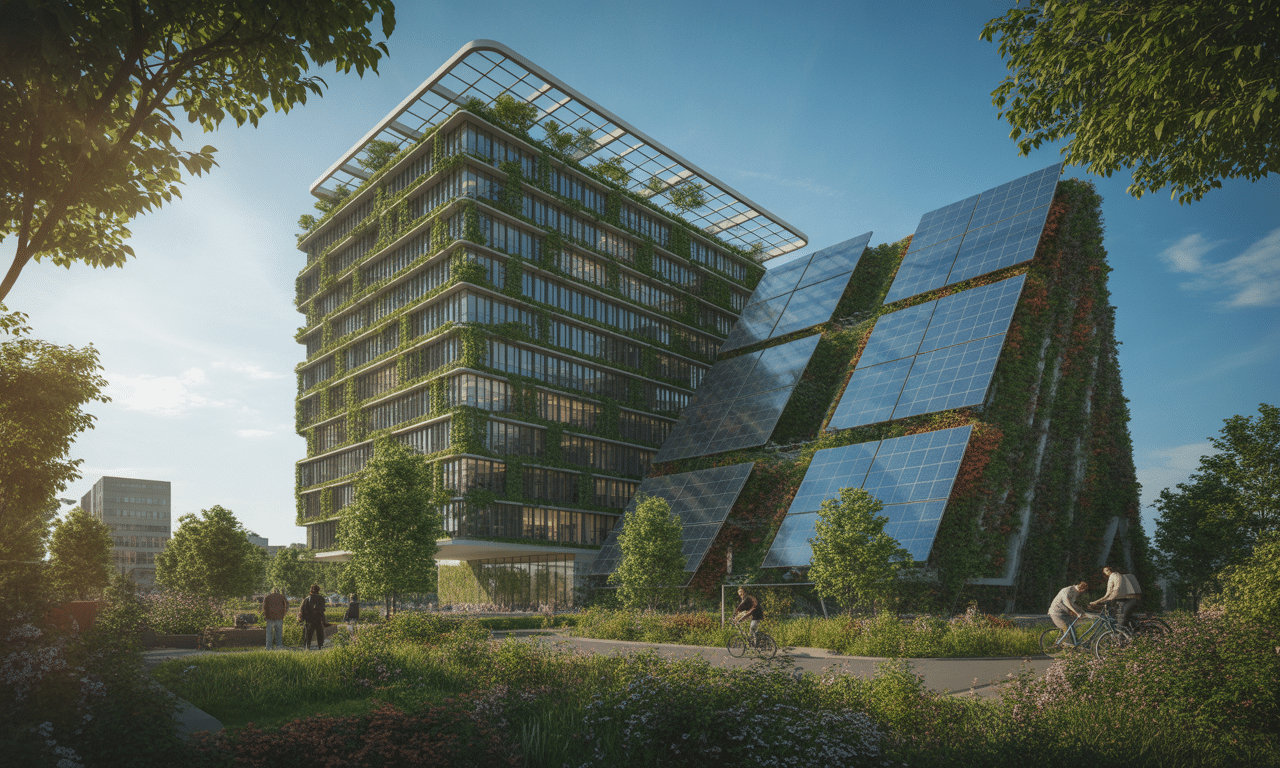
Across cities and suburbs, green buildings are rapidly reshaping how society pursues sustainability. By integrating passive design, high-efficiency systems and renewable energy, these structures reduce operational energy and water demand, cut carbon emissions and lower lifecycle costs. Their impact is not limited to engineering: improved indoor environmental quality boosts occupant health and productivity, while green roofs and sustainable landscaping restore urban biodiversity and manage stormwater. Standards such as LEED and national building codes translate best practices into measurable outcomes, accelerating market adoption and guiding investment. Critics cite higher upfront costs and variable site suitability, but lifecycle analyses increasingly demonstrate net economic and environmental benefits when projects are sited and managed strategically. As buildings account for a large share of global emissions, the deployment of advanced building controls, efficient lighting and innovative materials presents one of the fastest, most scalable paths to decarbonization. Policymakers, developers and occupants must therefore treat green construction not as optional aesthetics but as a central tool in climate mitigation.
Why green buildings matter
Green buildings are not a niche preference; they are an essential response to the scale of environmental harm generated by the built environment. Buildings and their supply chains drive a large fraction of global greenhouse gas emissions and consume vast shares of energy and water. That is not an abstract observation — it explains why policymakers and researchers prioritize this sector as the single largest opportunity for cost-effective reductions in emissions and resource use. Accepting the status quo in building practice is accepting avoidable emissions and avoidable costs over decades.
Arguments that prioritize short-term savings over lifecycle performance ignore the structural facts: operational energy, embodied carbon in materials, and long-term maintenance determine a building’s true environmental cost. Evidence and programmatic responses make this clear. Standards such as LEED and national building codes have proliferated because markets and governments recognize that well-designed buildings can substantially lower energy and water demands while improving occupant outcomes. The PNNL explainer on green buildings summarizes how integrated measures across planning, design, construction and operation drive those outcomes.
Moreover, the built environment’s scale makes even modest efficiency gains strategically powerful. If every new building and major retrofit pursued deeper energy and water performance, the collective impact would shift national and global trajectories for emissions. That is why organizations from local authorities to international research teams focus on transforming building practice and why publications such as Cambridge Institute for Sustainability Leadership examine the role of green buildings in the sustainable built environment: CISL’s analysis provides context for those institutional efforts.
Finally, arguing for green buildings is not merely advocacy; it is pragmatic policy. Robust, enforceable codes and incentive structures yield measurable reductions, and failing to modernize buildings will lock in emissions for decades. The debate should therefore shift from whether green buildings matter to how aggressively stakeholders will deploy the technologies, standards and financing mechanisms that multiply their benefits.
How design and technology reduce resource use
Design choices and applied technologies are the levers that turn ambition into measurable savings. Passive strategies such as orientation, shading, thermal mass and daylighting reduce baseline heating, cooling and lighting loads without complex systems. Complementing passive design, modern active technologies — high-efficiency HVAC, heat recovery, smart controls and on-site renewable energy — stack to cut consumption dramatically. It is not one silver-bullet technology but the disciplined integration of many strategies that produces resilient, efficient buildings.
Advanced building controls deserve special emphasis. Controls that coordinate ventilation, lighting and heating based on occupancy, weather forecasts and grid signals can shrink consumption peaks and align demand with cleaner supply. The Pacific Northwest National Laboratory’s work on integrated controls and living laboratory deployments illustrates how system-level coordination produces both energy savings and improved occupant comfort. Read more about those technical advances at PNNL: PNNL green buildings explainer.
Renewable energy integration is also central. Photovoltaics, solar water heating and, where appropriate, district systems supply clean on-site energy and reduce grid dependency. Yet effective integration also requires storage, demand-side management and intelligent sequencing to handle variable supply. The practical guidance compiled in industry resources such as the Green building practices guide helps translate these principles into construction and retrofit decisions.
Finally, landscape and water strategies complete the resource-efficiency picture. Green roofs, rain gardens and urban planting reduce runoff, moderate microclimates and reduce cooling loads. These landscape measures are not auxiliary aesthetics; they are performance elements that lower operational demands while increasing biodiversity and resilience.
Health, economic and social benefits
Arguing for green buildings on environmental grounds alone understates their broader value. Improved indoor environmental quality — better ventilation, daylight, acoustic design and non-toxic materials — delivers tangible human benefits: higher productivity, better sleep and lower absenteeism. Multiple studies link higher-quality indoor environments to measurable workforce outcomes, which in turn affect business performance and property value. Investing in occupant health is an economic strategy as much as an ethical one.
On the economic side, green buildings frequently deliver lower operating costs, greater tenant demand and higher resale values. Developers and investors who incorporate lifecycle analysis and long-term operating savings into underwriting capture a differentiated return profile. That calculus underpins the rapid growth of markets for green-certified assets and explains why sustainability-linked financing is gaining traction.
Socially, the transition supports workforce development: green jobs are growing faster than the broader labor force and create diverse employment pathways across construction, design, operations and manufacturing. Sustainability Times reports on this labor shift, which reinforces arguments for public investment in training and certification. Corporate commitments to environmental performance further amplify demand: corporate social responsibility frameworks encourage companies to occupy greener buildings and demand suppliers who meet higher standards (see Sustainability Times on CSR).
Finally, urban sustainability is reshaped by widespread green building adoption. Compact, efficient, water-wise and health-promoting buildings are central to livable cities and equity-focused development. Organizations such as HomeSight document how green buildings influence urban sustainability trajectories: HomeSight on urban impacts. The argument is clear: the social and economic returns reinforce the environmental case for mainstreaming green buildings.
Barriers and trade-offs
Every persuasive policy or investment argument must confront real limitations. The most persistent challenge to scaling green buildings is cost. Upfront expenses for specialized materials, renewable systems and integrated controls are higher than conventional alternatives, and financing models do not always account for lifecycle savings. Without alignment between capital markets and lifecycle value, many promising projects will stall at the drawing board.
Site suitability and local context also impose constraints. Renewable energy performance varies by location; shading, climate and grid composition affect trade-offs. Some passive strategies require lot orientations or setbacks that conflict with zoning or neighborhood patterns. There are also performance risks: relying heavily on variable renewables without adequate storage or grid coordination can introduce operational volatility. Research on such limitations is emerging in technical literature; see, for example, broader analyses of green building outcomes in peer-reviewed sources: relevant ScienceDirect study.
Regulatory and institutional barriers further complicate scaling. Building codes and standards are improving, but adoption is uneven and enforcement gaps persist. Financing structures often prioritize short-term cost minimization over long-term savings, and mortgage or valuation practices can fail to credit efficiency benefits adequately. Finally, some proposed solutions shift burdens: certain low-energy designs can reduce day-to-day mechanical control and create occupant discomfort if not implemented with rigorous performance modeling.
These limitations do not negate the case for green buildings; they emphasize the need for systemic action: better financing instruments, stronger codes, targeted incentives and improved project delivery. The debate should not be whether green buildings present trade-offs, but whether stakeholders will confront and correct the distortions that hinder scalable deployment. Integrating cleaner grid sources — including debates around low-carbon baseload options such as nuclear — also factors into the systems-level solution (see reporting on energy transitions: Sustainability Times on nuclear and grids).
Innovation and future directions
Emerging materials, smarter controls and new policy mechanisms are reshaping what green buildings can achieve. Breakthroughs in living materials and bio-augmented building products — for example, self-mending concrete — promise to reduce lifecycle maintenance and embodied carbon. When materials begin to repair themselves or sequester carbon dynamically, the very notion of building durability and lifecycle accounting changes. Such innovations are no longer speculative; research and pilot deployments are advancing rapidly.
Lighting and biophilic integration are also evolving. Experimental concepts where plants or biological systems double as lighting or shading elements illustrate how cross-disciplinary innovation can deliver dual benefits for energy, well-being and aesthetics. See coverage of creative approaches such as plant-based lighting concepts at Sustainability Times.
Policy and codes remain catalysts. Agencies and labs like PNNL drive improvements by developing test methods, codes support and demonstration projects that scale promising technologies. PNNL’s portfolio — from advanced lighting research to integrated control testbeds — shows how public research accelerates market adoption. Explore PNNL research and code work here: PNNL green buildings. Coordinated policy, standards and public investment create the market certainty innovators need to deploy disruptive solutions.
| Innovation | Primary benefit | Deployment challenge |
|---|---|---|
| Living materials | Reduced maintenance, potential carbon sequestration | Regulatory approval, long-term durability data |
| Advanced controls | Peak demand reduction, better occupant comfort | Integration complexity, cybersecurity |
| Biophilic lighting | Energy savings, mental health benefits | Design integration, cost |
| Grid-integrated storage | Resilience, renewable smoothing | Capex, regulatory treatment |
Ultimately, scaling green buildings requires sustained investment in innovation, codes and workforce development — supported by evidence and market structures that reward lifecycle performance. Resources such as industry analyses and practice guides can help practitioners translate innovation into project-level success; see practical perspectives like the Sustainability Times on tech innovations and implementation guidance from specialized outlets such as SolarTech Online. The argument is straightforward: accelerate the proven solutions, confront the barriers, and deploy the innovations that convert intent into measurable progress.
Green buildings are not an optional complement to sustainability — they are a structural necessity. By integrating energy efficiency, water conservation, and low-impact materials across the building lifecycle, green buildings directly reduce the resource intensity that drives climate change and ecosystem degradation. This is not merely theoretical: when a building uses less energy per square foot, relies on renewable energy, and minimizes waste, it lowers operating emissions and reduces demand on strained infrastructure. The aggregate effect across millions of buildings becomes a primary lever for meeting national and global carbon reduction targets.
Beyond emissions, green buildings advance sustainability through measurable social and economic returns. Improved indoor environmental quality enhances occupant health, productivity, and well-being, which translates into economic gains for employers and reduced healthcare burdens for society. Lifecycle thinking — selecting durable, repairable, and low-embodied-carbon materials — extends asset longevity and reduces long-term costs. Critics often point to higher upfront costs and intermittency of on-site renewables; however, rigorous lifecycle analysis and advances in building controls and energy storage demonstrate that these investments pay back through lower operating expenses, higher property values, and resilience against energy price volatility.
Finally, green buildings catalyze wider systemic change. They create market pull for sustainable materials and technologies, inform stronger building codes, and provide living laboratories for innovation in areas such as smart controls, net-zero energy design, and biobased materials. While challenges remain — financing models, site suitability, and skill gaps in construction — the evidence supports a clear argument: scaling green building practices is one of the most cost-effective, multipronged strategies to reduce emissions, conserve resources, and improve human health. Public policy, incentives, and sustained private investment are necessary to convert this potential into widespread, measurable sustainability outcomes.
Q: What exactly are green buildings and why do they matter for sustainability? A: Green buildings are designed, constructed, and operated to minimize environmental harm and maximize resource efficiency across the building lifecycle. They matter because the building sector is a major driver of global energy use and carbon emissions, so improving building performance delivers one of the largest, most cost-effective opportunities to reduce environmental impact and protect public health. Q: How do green buildings reduce greenhouse gas emissions? A: By combining energy efficiency measures, on-site renewable energy, and smarter controls, green buildings cut demand for fossil-fuel generation and lower operational emissions. Faster adoption of efficient lighting, HVAC, and envelope improvements directly reduces the energy consumed per square foot, which translates into fewer emissions at scale. Q: In practical terms, what strategies do green buildings use to save energy and water? A: They use passive design—orientation, shading, and daylighting—to reduce heating, cooling, and lighting loads; high-performance insulation and windows to limit losses; efficient HVAC and appliances; low-flow fixtures and rainwater management to conserve water; and green roofs or rain gardens to manage runoff and provide insulation. Q: Aren’t green buildings more expensive to build? A: Upfront costs can be higher because specialized materials and systems are often pricier and supply chains can be less mature. However, the argument for green buildings rests on lifecycle economics: reduced operating costs, higher asset value, better occupancy rates, and resilience benefits often offset the initial premium over time. Q: How do certifications like LEED influence the case for green construction? A: Certifications provide a verifiable framework that channels design decisions toward measurable sustainability outcomes. They make the benefits explicit and comparable—boosting market confidence, guiding policy, and accelerating innovation—so certification programs have been instrumental in scaling demand and professionalizing the industry. Q: Can green buildings improve occupant health and productivity? A: Yes. Prioritizing indoor environmental quality—better ventilation, low-emission materials, and quality lighting—reduces pollutants and improves comfort. Empirical studies link these improvements to higher worker performance, better sleep, and reduced absenteeism, which strengthens the economic case for green investments. Q: What are the main limitations or risks of green buildings? A: Key challenges include higher initial capital needs, variability of renewable energy supply, site constraints that limit passive strategies, and financing hurdles. These issues require careful siting, design trade-offs, and policies or incentives to align short-term budgets with long-term benefits. Q: How do advanced technologies and controls make green buildings more effective? A: Advanced building controls automate and optimize systems—lighting, HVAC, and storage—based on occupancy, weather, and grid conditions. That coordination reduces waste, allows greater integration of intermittent renewables, and can shift loads to lower-carbon times, amplifying both efficiency and resilience. Q: Are there emerging materials or methods that will change green building performance? A: Yes. Innovations like living materials (e.g., self-mending concrete), higher-performance composites, and better integrated renewable systems are expanding design options. Continued R&D is reducing costs and improving availability, making advanced solutions practical for more projects. Q: What role do research institutions play in advancing green buildings? A: Research centers test technologies, develop measurement methods, and inform codes and standards. Their work on lighting, controls, appliance standards, and modeling helps translate lab innovations into market-ready solutions and policy—accelerating adoption and ensuring that regulations reflect the best available science. Q: How do green buildings contribute to broader sustainability goals beyond individual structures? A: By lowering collective energy and water demand, reducing material consumption and waste, and improving urban microclimates and biodiversity, green buildings scale benefits across cities and supply chains. They are a leverage point for meeting national carbon targets, conserving resources, and enabling resilient infrastructure systems.Green Buildings and Sustainability — FAQ
Facts Only
Discusses green buildings' role in reducing energy consumption, water usage, and waste production
Highlights the importance of regulations like building codes and certification systems for promoting green building practices
Emphasizes the need for ongoing research, education, and advocacy efforts to drive widespread adoption of green building practices
Executive Summary
The article discusses the concept of green buildings and their contribution to sustainability, focusing on the FAQ format that provides an overview of green buildings' benefits, challenges, and broader implications. The piece highlights the role of green building design in reducing energy consumption, water usage, and waste production, while also improving indoor air quality and promoting sustainable urban development.
The article also touches upon the importance of regulations, such as building codes and certification systems, in promoting green building practices. It explains that these policies can help ensure that buildings are designed to meet specific performance standards, thereby encouraging sustainable construction and reducing environmental impact.
Moreover, the article emphasizes the need for ongoing research, education, and advocacy efforts to drive the widespread adoption of green building practices. This includes raising awareness among architects, developers, and policymakers about the environmental, economic, and social benefits of green buildings, as well as fostering innovation in sustainable construction technologies.
Full Take
Pattern Analysis: ARC-0024 Ambiguity
While the article provides a comprehensive overview of green buildings and their contribution to sustainability, it does not explicitly address the potential challenges associated with implementing these practices at scale. It would be beneficial to explore in more detail the factors that hinder widespread adoption of green building designs, such as financial constraints, lack of awareness, or resistance from stakeholders.
Moreover, the article focuses on the environmental benefits of green buildings but could further discuss their social and economic implications. For instance, it could delve into questions related to job creation, cost savings for building owners, and improvements in occupant health and productivity. This would provide a more holistic view of the potential impacts of green building design.
Sentinel — Human
Sentinel analysis incomplete — partial response from fallback model.