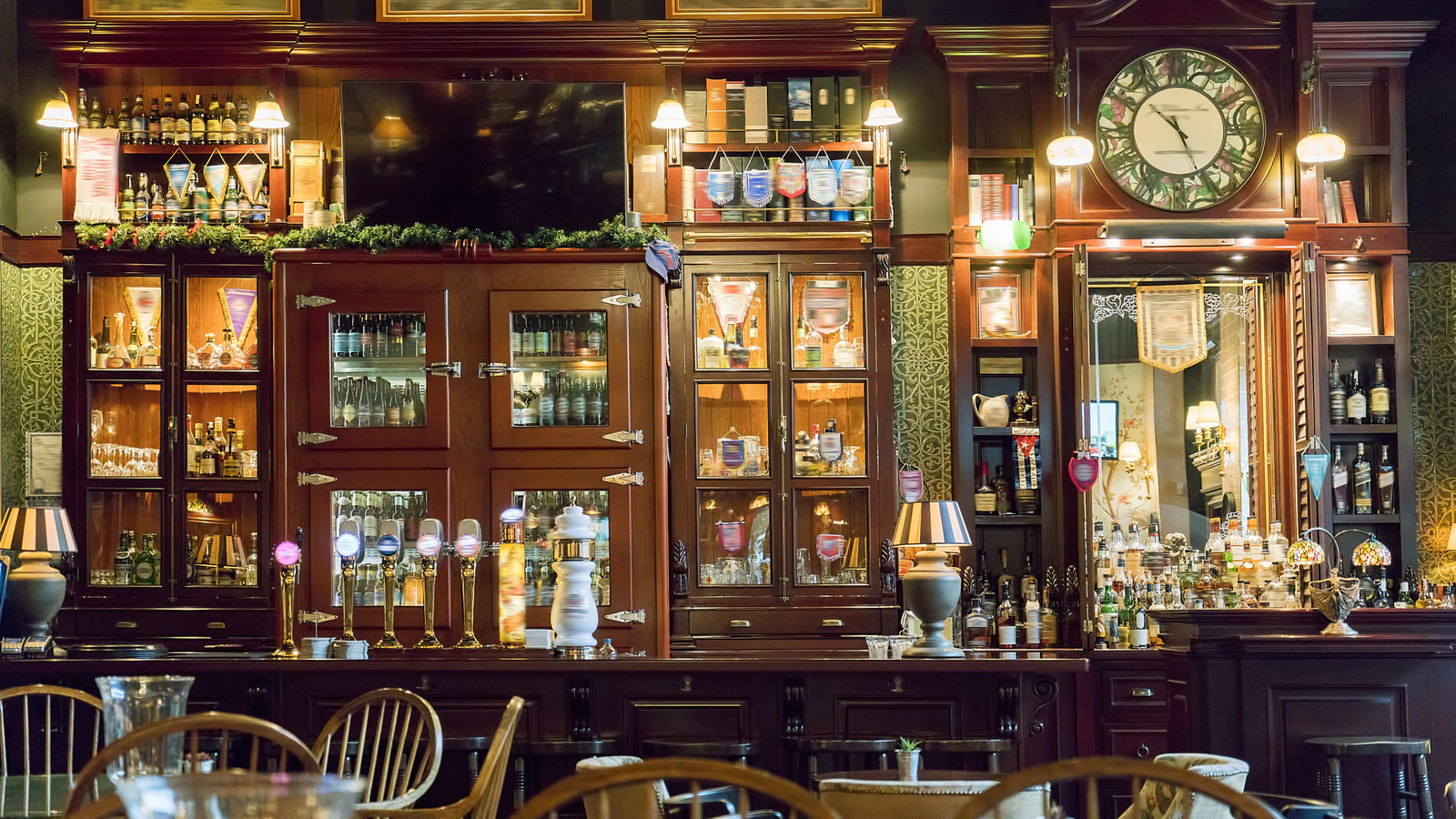
The historic Pennsylvania city where the United States declared its independence from Britain is today home to a gastropub that's a tribute to traditional pub grub in the same country. Technically, yes, traditional British pubs don't serve food — but that's slowly changing thanks to a shift in social habits.
The atmosphere and menu both recall the classic British establishments at The Dandelion in Philadelphia's Rittenhouse Square neighborhood, which is owned by a restaurant group behind 19 other eateries in the city. The two-story spot gets the exterior look right with an old-school lantern over the wooden door and white-trimmed, large paned windows. Inside, it seats over 100 people in four rooms across both buildings.
The Dandelion's look was created with the help of wood wall paneling, mantelpieces, benches, and chairs that came straight from the U.K., including pieces from old pubs that had shuttered. Fireplaces, warm dark colors, and decor touches like a Winston Churchill bust and photos of man's best friend in the Dog Bar room all contribute to making patrons feel like they've been transported across the pond.
The menu features pub grub like shepherd's pie, bangers and mash, cheesy Welsh rarebit, and beer-battered fish and chips, which was featured on Food Network's "The Best Thing I Ever Ate." It also serves a traditional Sunday roast with Yorkshire pudding on Sundays after 1 p.m., and weekend brunch-goers can get a full English breakfast (sans the modern inclusion of hashbrowns). Desserts like sticky toffee pudding and meringue- and fruit-based Eton mess are so British they practically have a stiff upper lip, and cocktails include The King's Courage, The Queen Pea, and Here Comes the Sun, a Beatles shout-out with tequila, grapefruit, and guava.
The Dandelion features British-centric events
The Dandelion highlights its British pub theme with events related to the U.K. and its culture, including afternoon tea every weekday from 3 p.m. to 5 p.m. Patrons choose from a range of teas, and their selections are brought out to the tables traditionally in teapots. Tiered stands with names like "A Royal Occasion" and "Who Stole the Tarts?" are available with assorted petite sandwiches, pastries, tarts, and classic scones to nibble on with the tea.
The gastropub celebrated the U.K.'s Crufts Dog Show over three days in March 2026. The annual competition is the world's largest dog show and dates back to 1891. It aired the event live over its three days, and also invited people to bring their own pooches for photos and treats outside. It later chose its own Best in Show 1st to 3rd place winners from the dogs who showed up.
The Dandelion has also marked Afternoon Tea Week, which is recognized annually in August. It has hidden teapots in Rittenhouse Square during the week, while posting clues about their location on social media. People who found them got awards like free afternoon tea for two people, a gift card for any STARR restaurant group establishment, and special Dandelion merchandise.
Facts Only
The Dandelion is a British-themed gastropub located in Philadelphia's Rittenhouse Square neighborhood.
It is owned by a restaurant group that operates 19 other eateries in the city.
The pub spans two stories and seats over 100 people across four rooms.
Decor includes wood paneling, mantelpieces, benches, and chairs imported from the U.K., some sourced from closed British pubs.
The menu features traditional British dishes such as shepherd's pie, bangers and mash, Welsh rarebit, and fish and chips.
A traditional Sunday roast with Yorkshire pudding is served on Sundays after 1 p.m.
Weekend brunch includes a full English breakfast, excluding hashbrowns.
Desserts include sticky toffee pudding and Eton mess.
Cocktails with British-themed names like The King's Courage and Here Comes the Sun are offered.
Afternoon tea is served weekdays from 3 p.m. to 5 p.m., with tiered stands of sandwiches, pastries, and scones.
The pub celebrated the 2026 Crufts Dog Show by airing the event live and hosting a dog photo contest with treats and prizes.
During Afternoon Tea Week in August, the pub hid teapots in Rittenhouse Square, offering rewards to finders via social media clues.
The establishment's design includes fireplaces, dark wood tones, and British-themed decor like a Winston Churchill bust.
Executive Summary
The Dandelion, a British-themed gastropub in Philadelphia's Rittenhouse Square, offers a traditional U.K. pub experience with authentic decor and classic dishes like shepherd's pie, fish and chips, and Sunday roast. Owned by a local restaurant group, the two-story establishment features imported British furnishings, including wood paneling and mantelpieces from shuttered U.K. pubs, creating an immersive atmosphere. Beyond food, the pub hosts culturally themed events, such as afternoon tea with tiered stands of sandwiches and pastries, and celebrations like the Crufts Dog Show viewing party, complete with dog photo contests and treats. It also engages the community with interactive promotions, like hiding teapots in the square during Afternoon Tea Week, rewarding finders with prizes. While traditional British pubs historically focused on drinks, The Dandelion reflects a modern shift toward food-centric pub culture, blending nostalgia with contemporary dining trends.
The pub's menu and events cater to both British expats and locals seeking a taste of U.K. tradition, though it adapts some elements—like omitting hashbrowns from the full English breakfast—to align with American expectations. Its blend of authenticity and accessibility raises questions about cultural adaptation versus preservation, but the establishment's popularity suggests a successful balance. The Dandelion's approach highlights how themed dining can serve as both a business model and a cultural bridge, though it remains unclear how deeply such experiences resonate beyond novelty.
Full Take
The Dandelion presents itself as a nostalgic bridge between British pub culture and American dining, and at its strongest, it succeeds in creating an immersive experience that appeals to both cultural curiosity and culinary tradition. The attention to detail—imported furnishings, themed events, and a menu rooted in authenticity—demonstrates a genuine effort to honor its inspiration rather than merely exploit it for novelty. This is a rare case where themed dining avoids the pitfalls of kitsch, instead offering a thoughtful homage that educates as much as it entertains.
However, the narrative subtly reinforces a romanticized view of British culture, one that glosses over the complexities of modern U.K. pub life (e.g., the decline of traditional pubs due to economic pressures) in favor of a sanitized, tourist-friendly version. The omission of hashbrowns from the full English breakfast, while minor, hints at a broader tension: how much adaptation is necessary to make a foreign tradition palatable to a new audience? This raises questions about cultural authenticity versus accessibility—a balance that The Dandelion navigates but doesn’t interrogate.
The pub’s events, like the Crufts Dog Show celebration and teapot scavenger hunt, cleverly leverage community engagement, but they also reveal a pattern of manufactured tradition. These activities, while charming, are curated performances of Britishness, designed to foster loyalty and social media buzz. The question arises: does this deepen cultural appreciation or reduce it to a consumable experience? The answer likely lies in the patron’s intent—whether they seek connection or mere Instagram fodder.
Root cause: The Dandelion operates within a broader paradigm of "experience economy" dining, where ambiance and narrative are as valuable as the food itself. The unstated assumption is that authenticity can be purchased and replicated, a notion that aligns with contemporary consumerism but may overlook the organic, often messy evolution of cultural practices.
Implications: For human agency, The Dandelion offers a space for cultural exploration, but it also risks commodifying tradition. The beneficiaries are clear—the restaurant group profits from nostalgia, while patrons gain a curated taste of Britain. The costs, if any, are subtle: the potential dilution of cultural nuance in favor of marketable stereotypes. Second-order consequences might include the homogenization of "British" identity into a set of digestible tropes, or conversely, a renewed interest in deeper cultural exchange.
Bridge questions: How does the rise of themed dining like The Dandelion shape our understanding of foreign cultures—does it foster appreciation or superficial consumption? What might be lost when traditions are transplanted into commercial spaces? Would the experience feel different if the pub acknowledged the challenges facing real British pubs today?
Counterstrike scan: If this were part of a coordinated influence campaign, the playbook would involve leveraging nostalgia to create emotional attachment, then using curated events to generate organic social media engagement, thereby normalizing a sanitized version of British culture. However, the content here aligns more with genuine hospitality than manipulation. The focus on authenticity (imported decor, traditional recipes) and community-building (dog contests, teapot hunts) suggests a business model rather than a propaganda effort. No structural alignment with disinformation tactics is detected.
Patterns detected: none
Sentinel — Human
The article exhibits strong human writing traits, including stylistic idiosyncrasies and specific, verifiable details, with minimal signs of synthetic generation.