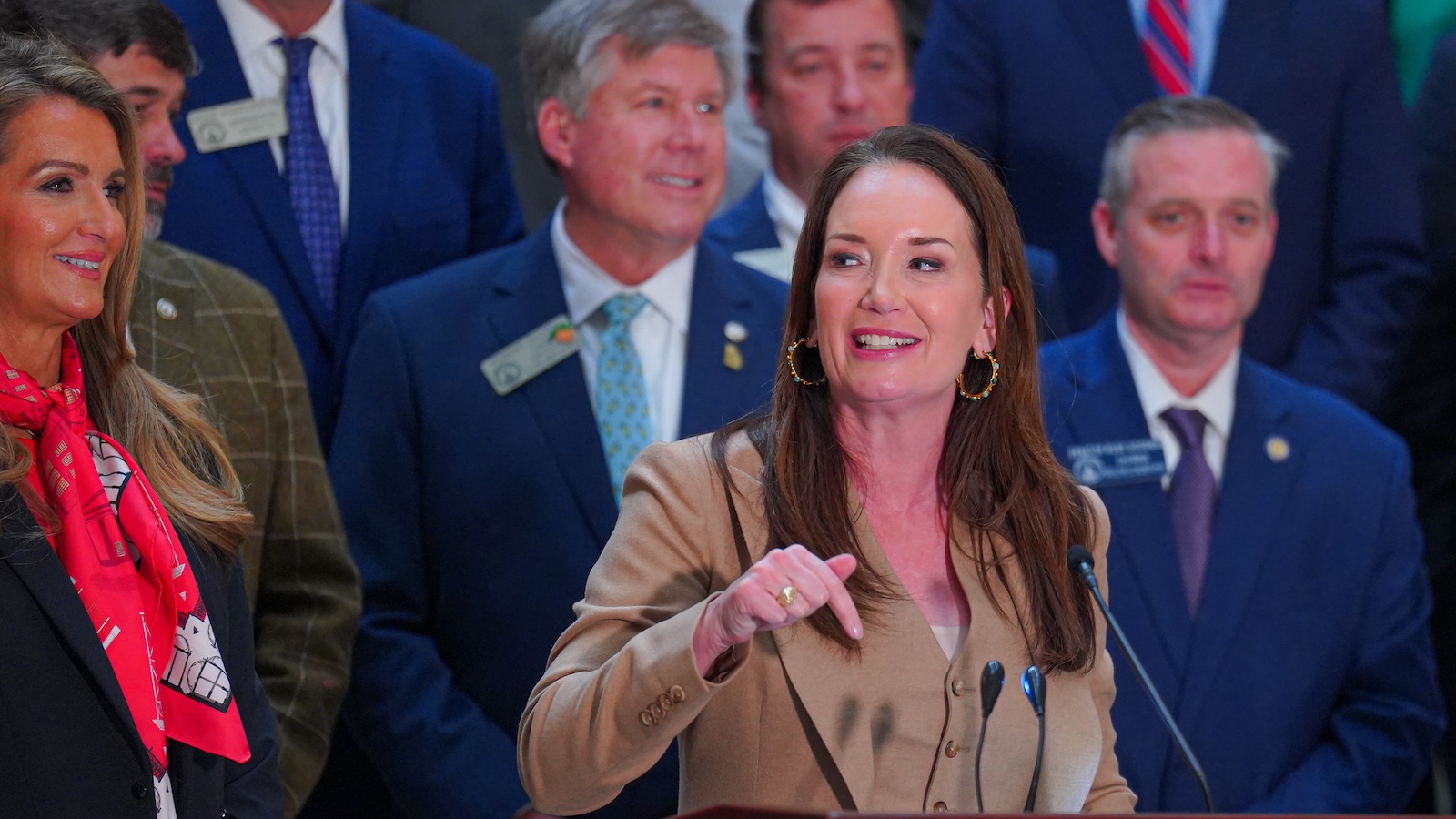
Last week, U.S. Department of Agriculture Secretary Brooke Rollins visited Georgia to announce the release of more than $500 million to help farmers rebuild from 2024’s Hurricane Helene. The widespread agricultural and forestry devastation from Helene cost the state’s economy about $5.5 billion, including job losses and impacts to related industries, according to the University of Georgia. The replanting, building, and equipment costs alone are estimated at $874 million.
USDA has agreements for similar grants in Virginia, North Carolina, South Carolina, Tennessee, and Florida. Each state administers its own program, so the details and schedule vary by state. Georgia’s applications opened on March 16 and will close on April 27.
“President Trump understands that farmers were so negatively impacted, and of course, we have to continue to stand by them,” Rollins told the state House of Representatives last Tuesday. “The only fault now would be us not doing our part to help Georgia’s great agricultural and forestry communities.”
The money, welcome as it may be for farmers, is intended to fill a hole in the USDA’s own disaster recovery programs, which typically don’t cover some key expenses, especially replanting perennial crops like fruit or nut trees and blueberry bushes or replacing flocks lost after the storm destroyed a poultry barn. Those gaps have been particularly stark in Georgia in the wake of Helene, which did significant damage to the state’s pecan, poultry, and timber farms — several of the state’s top agricultural products.
“When you think of pecans, poultry, timber — we’re the number one producer in those commodity areas,” said Georgia Agriculture Commissioner Tyler Harper. “They are a significantly important part of our agricultural industry.”
Other disaster relief funding also doesn’t pay for some critical infrastructure projects, like replacing irrigation systems that got torn up as the storm uprooted trees.
Senators Raphael Warnock and Jon Ossoff both applauded the new program. They’ve been pushing for these funds to be released to farmers since Congress passed a $21 billion agricultural disaster relief package in late 2024.
“This announcement is welcome news for the Georgia producers and farmers that have been forced to wait far too long for this desperately needed relief,” Warnock wrote in a statement.
Rollins addressed the delay in her appearance at the state capitol last Tuesday, stressing that much of the funding went out within six months but that the block grants were “more complicated because you have to work state by state by state.”
Ad hoc programs like this one, rolled out state-by-state to cover losses that aren’t captured by the USDA’s existing safety net, are intended to cover “hopefully once-in-a-generation type events,” commissioner Harper said. But Georgia has needed them twice in the last few years: USDA funded a similar program to help Georgia farmers recover after Hurricane Michael in 2018. Nationwide, dozens of ad hoc programs have been rolled out in the last decade to help farmers survive unusual conditions, due to both weather events and market disruptions.
“That in itself is, of course, indicative of a farm system and a farm safety net that’s not working, if we’re needing to pump all of this additional money into the system,” said Duncan Orlander, a policy specialist covering the farm safety net for the National Sustainable Agriculture Coalition.
In recent discussions on the federal farm bill, there has been a push to make block grants like the ones now rolling out in Georgia a more permanent disaster relief option for USDA — but that could be a mistake, Orlander said, because the intricacies of these grants mean they differ widely from state to state. Of the approved block grant programs for Hurricane Helene, for instance, Virginia already completed its application process last fall, Georgia is just starting its grants, and North Carolina’s program hasn’t opened yet.
There are also existing programs that can better help farmers weather disasters, Orlander said, like whole-farm insurance that covers a farm’s overall output rather than specific crops. But the wide variation of agricultural disaster assistance is complicated and hard for farmers to understand and access, and the programs have gaps and problems of their own.
“As much as we can standardize it, simplify it, make it easy for folks, I think that that will be the ultimate goal,” said Orlander.
Rahul Bali contributed to this report.
Facts Only
* USDA Secretary Brooke Rollins announced $500 million in disaster relief for Georgia farmers.
* The funds are to cover losses from Hurricane Helene (2024).
* Approximately $5.5 billion in economic damage occurred in Georgia due to the hurricane.
* Estimated replanting and rebuilding costs total $874 million.
* Virginia, North Carolina, South Carolina, Tennessee, and Florida also received similar grants.
* Georgia’s application period is March 16 – April 27.
* President Trump expressed support for farmers impacted by the storm.
* The funds address gaps in USDA disaster recovery programs, specifically regarding perennial crop replanting and livestock replacement.
* Poultry and pecan farms, key Georgia agricultural products, suffered significant damage.
* Commissioner Tyler Harper emphasized the state's importance in these commodity areas.
* Senator Raphael Warnock and Senator Jon Ossoff applauded the funding.
* The release was delayed due to the state-by-state administration of the block grants.
* The program is designed for “once-in-a-generation type events.”
* Georgia has previously received similar assistance after Hurricane Michael (2018).
* Dozens of ad hoc disaster relief programs have been implemented nationwide.
Executive Summary
Full Take
Sentinel — Likely Human
This article provides a factual account of the USDA’s disaster relief program for Georgia farmers following Hurricane Helene, employing a balanced approach and citing multiple sources. While generally well-written, the text exhibits characteristics – primarily in its structural patterns and reliance on ‘expert’ statements – suggestive of potential AI assistance.