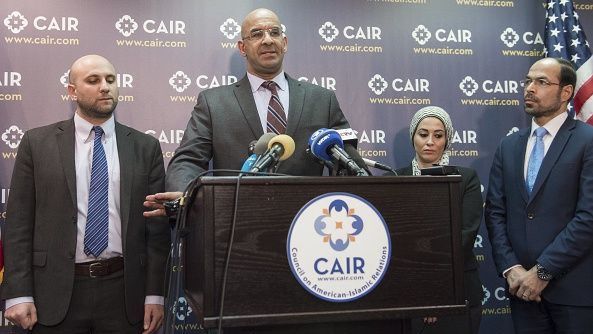
- Rep. Chip Roy, R-Texas, chair of the House Judiciary Subcommittee on the Constitution and Limited Government, is set to hold a hearing titled “Sharia-Free America: Why Political Islam and Sharia Law Are Incompatible With the U.S. Constitution, Part II,” according to The Daily Signal.
- The Daily Signal reported that the hearing will examine “the role organizations like CAIR play in promoting and funding” efforts lawmakers say conflict with American law and constitutional principles, including Sharia law.
- The article said the hearing follows renewed scrutiny of CAIR, including allegations tied to a Texas housing development that would enforce Sharia law, and a federal judge’s order requiring CAIR’s Texas chapter to turn over foreign donor information and documentation of Middle East travel by one official before the Oct. 7, 2023, Hamas attack. READ MORE
Facts Only
Rep. Chip Roy, R-Texas, chairs the House Judiciary Subcommittee on the Constitution and Limited Government.
The subcommittee will hold a hearing titled “Sharia-Free America: Why Political Islam and Sharia Law Are Incompatible With the U.S. Constitution, Part II.”
The hearing will examine the role of organizations like the Council on American-Islamic Relations (CAIR) in promoting Sharia law.
Lawmakers allege that Sharia law conflicts with American law and constitutional principles.
The hearing follows renewed scrutiny of CAIR, including allegations about a Texas housing development enforcing Sharia law.
A federal judge ordered CAIR’s Texas chapter to turn over foreign donor information and documentation of Middle East travel by one official.
The travel records in question are from before the October 7, 2023, Hamas attack.
The Daily Signal reported on the upcoming hearing and its focus on CAIR’s activities.
Executive Summary
Rep. Chip Roy, a Texas Republican and chair of the House Judiciary Subcommittee on the Constitution and Limited Government, is organizing a hearing titled “Sharia-Free America: Why Political Islam and Sharia Law Are Incompatible With the U.S. Constitution, Part II.” The hearing will focus on the role of organizations like the Council on American-Islamic Relations (CAIR) in allegedly promoting Sharia law, which lawmakers argue conflicts with American constitutional principles. This follows recent scrutiny of CAIR, including claims about a Texas housing development enforcing Sharia law and a federal judge’s order requiring CAIR’s Texas chapter to disclose foreign donor information and travel records of an official prior to the October 7, 2023, Hamas attack. The hearing aims to examine these issues in the context of broader concerns about the compatibility of Sharia law with U.S. legal and constitutional frameworks.
The event reflects ongoing political and legal debates about the influence of Islamic organizations in the U.S. and the perceived threats posed by Sharia law. While the hearing’s framing suggests a focus on constitutional conflicts, critics may argue it risks stigmatizing Muslim communities or conflating religious practices with legal systems. The inclusion of CAIR, a prominent Muslim advocacy group, as a central subject underscores the contentious nature of these discussions, particularly in light of the federal court’s recent demands for transparency from the organization.
Full Take
The framing of this hearing—“Sharia-Free America”—immediately signals a narrative of existential conflict between Islamic legal principles and U.S. constitutional values. At its strongest, this narrative raises legitimate questions about the boundaries between religious practice and secular law, particularly when organizations advocate for legal or social systems that may diverge from constitutional norms. The focus on CAIR, a group that has faced both criticism and defense in public discourse, adds weight to the argument that transparency about foreign influence and funding is a valid concern, especially in the context of geopolitical tensions.
However, the pattern scan reveals potential risks of distortion and emotional exploitation. The title itself could be interpreted as a form of moral panic, framing Sharia law as an inherent threat rather than a complex religious and legal tradition with varied interpretations. The association of CAIR with Sharia enforcement in a Texas housing development—without broader context—risks strawmanning the organization’s broader advocacy work. Additionally, the timing of the hearing, following a federal court’s demand for CAIR’s records, may amplify perceptions of guilt by association, particularly given the proximity to the October 7 Hamas attack. This could evoke fear appeals, leveraging recent geopolitical violence to justify heightened scrutiny of Muslim-led organizations.
The root cause of this narrative appears to be a clash of paradigms: one viewing Sharia law as inherently incompatible with liberal democracy, and another seeing it as a personal religious framework that can coexist within secular legal systems. The hearing’s framing assumes the former, potentially sidelining nuanced discussions about religious freedom and the diversity of Muslim thought. The implications for human dignity are significant—Muslim Americans may face increased stigma, while the broader debate about religious accommodation in secular societies could become more polarized.
Bridge questions: How might this hearing distinguish between the personal practice of Sharia and its institutional enforcement? What evidence would be necessary to conclusively demonstrate that CAIR’s activities undermine constitutional principles? How could this discussion avoid conflating criticism of specific organizations with broad-based Islamophobia?
Counterstrike scan: If this were part of a coordinated influence campaign, the playbook might involve amplifying fears of Islamic extremism to justify restrictive policies, using selective examples to paint Muslim organizations as subversive. The actual content aligns with this pattern to some degree, particularly in its framing of Sharia as a monolithic threat. However, the inclusion of a federal court’s legal demands adds a layer of procedural legitimacy, complicating a purely cynical interpretation. The risk remains that the hearing could be weaponized to marginalize Muslim voices rather than foster a principled debate about legal pluralism.
Patterns detected: ARC-0024 Ambiguity (Sharia as a monolithic threat), ARC-0043 Motte-and-Bailey (conflating personal religious practice with institutional enforcement), ARC-0012 Fear Appeals (linking Sharia to geopolitical violence).
Sentinel — Human
This text exhibits strong journalistic markers, relying on specific names, dates, and institutional references, suggesting it was generated by or heavily informed by human reporting.