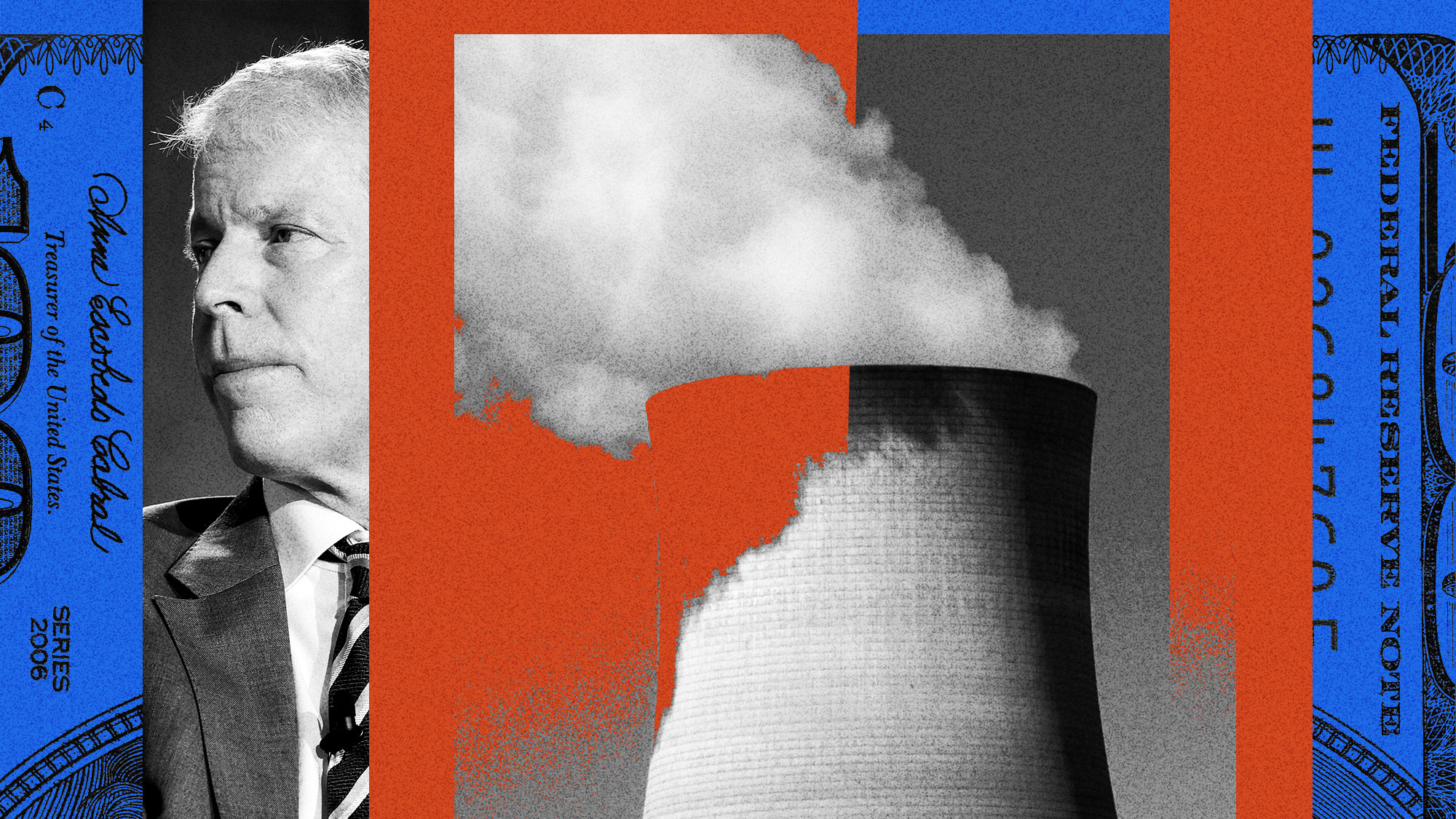
In January, the Trump administration announced that it had completed its dismantling of yet another Biden-era climate program. This time, the target was the Department of Energy’s Loan Programs Office, which Democrats had injected with over $400 billion to support ambitious new clean energy projects.
The Biden administration pursued climate policy primarily by having Congress pass massive subsidies for solar power, wind energy, and electric vehicles. But much of the infrastructure needed to push the U.S. further away from fossil fuel dependence — like new nuclear power plants, high-voltage transmission lines, and battery factories — needed more than the tax credits at the core of Biden’s Inflation Reduction Act to get off the ground. The Loan Programs Office was meant to fill that gap by making prudent loans to ambitious projects that the private sector saw as too risky. With its $400 billion windfall, the once-obscure office became the largest energy lender in the world.
That ambition apparently put the office in the crosshairs of Trump’s Secretary of Energy, Chris Wright. He said the Biden administration “rushed [loans] out the door in the final months after Election Day,” and said he had rooted out projects that “do not serve the best interest of the American people.” Wright claimed to have scrubbed or “revised” around 80 percent of the Biden administration’s $100 billion loan portfolio, and he teased plans to advance new loans that would support President Donald Trump’s anti-renewable-energy agenda. He even rechristened the office as the “Energy Dominance Financing” program — a reference to Trump’s catchphrase for his fossil-fuel-friendly energy policy.
The truth, however, bears little resemblance to Wright’s combative rhetoric. Former federal officials and sources who have worked with the Loan Programs Office say that the program has survived the Trump-era purge in something close to its Biden-era form — and that it is still supporting the buildout of clean energy. Wright has vastly overstated his revisions and left untouched projects that will support emissions-free energy at the country’s utilities, including major transmission upgrades and nuclear power plants. (The anonymous sources quoted below requested anonymity to avoid retaliation or because they have ongoing work with the federal government; the Department of Energy declined to answer questions or make Wright and other program leaders available for interviews.)
The quiet about-face by the Trump administration may signal a recognition that carbon-free energy can play a major role in managing the electricity price hikes that have angered voters in recent years.
“It sounds like the Trump administration seems to be responding to the energy affordability politics in a way that is, if not constructive, at least acknowledges that steel needs to get in the ground,” said Advait Arun, a policy analyst at the Center for Public Enterprise, a nonprofit that supports government-led economic development. “There are ways to reframe all these projects for their agenda.”
Here’s how the Loan Programs Office typically works: A utility or startup approaches the Department of Energy proposing to build a new power plant, transmission line, or battery factory. Once the applicant is approved, it borrows money from the U.S. Treasury at a lower rate than it could get from private banks, and the Department of Energy guarantees the loan. If the project falls through, the Department pays back the Treasury with the money appropriated by Congress. If the project succeeds, the government grows its pool of funding for future loans.
This program was first established during George W. Bush’s presidency in 2005, to help spur clean energy development. But under Bush’s successor, President Barack Obama, the Loan Programs Office became a magnet for controversy. That’s because the authority lent around $500 million to the solar cell manufacturer Solyndra, which later collapsed, leading the government to lose almost its entire investment. Republicans seized on the episode as evidence of the program’s failure — despite the fact that the loan authority also financed success stories such as Tesla, and its overall loss rate of 3 percent is much lower than that of many private sector lenders. The controversy was largely a distant memory by 2022, when Biden’s Inflation Reduction Act gave the office almost $400 billion — around 10 times its initial mandate — in guarantee authority to invest in battery startups, new renewables, and grid upgrades to support a clean energy transition.
But the office was slow to deploy its new authority, and former officials later said it suffered from an excess of post-Solyndra caution and bureaucracy. This led to long negotiations and risk analysis around every individual loan. A report from three former Energy Department staffers later found that the “executive branch machinery … defaulted to caution, process, and reactive strategies.” It took more than a year for the office to develop a fast-track process for major utility loans, and many deals weren’t completed until after Trump’s 2024 win. The projects that Wright claimed were “rushed out the door” had in fact suffered from too much due diligence, in the eyes of many observers, rather than too little.
When Secretary Wright arrived in D.C., he jammed up the program even more. The Loan Programs Office had three different leaders in the first six months of the Trump administration, lost more than half its staff to Elon Musk’s workforce reduction efforts, and halted almost all communication with borrowers.
“Moving any application through any milestone would require political appointee approval as part of a new consolidation of decision rights, and approvals were not granted,” said Jen Downing, who served as a senior adviser at the Loan Programs Office under the Biden administration and stayed on for the first few months of the Trump administration, in a letter to Congress last summer. Downing, who left the office last May and is now a partner at the clean tech investing firm Ara Partners, told lawmakers that the new Trump administration leadership spent months examining almost every loan made under Biden, in an apparent search for wrongdoing or poor lending decisions.
Wright did nix a few major loans such as the Grain Belt Express, a wind power transmission line in Missouri opposed by Republican senator Josh Hawley. But former Energy Department staffers said that many of the $30 billion in loans that Wright claimed to have shut down were in fact cancelled by the borrowers themselves, which is typical for risky and complex projects. Many withdrew even before Trump’s election, including a battery recycling plant project that fell apart due to market conditions.
“The number is fake,” said Jigar Shah, who led the Loan Programs Office under Biden. “I think in some ways, it’s to convince Trump that they’re shutting down loans.”
Other Biden-approved projects have survived, like a $1.45 billion loan to a solar panel manufacturer in Georgia called QCells, which has continued without interruption. In the case of a loan for a mine at Nevada’s Thacker Pass, which was supposed to produce lithium for electric vehicle batteries, the department doubled down and took an equity stake in the project, rather than cancelling the loan.
The new leader of the loan office is Greg Beard, a former executive at the private equity firm Apollo who also ran a crypto mining company. Thus far, Beard has only advanced projects that began under Biden. That includes the office’s most recent announcement of a massive $26.5 billion loan to Southern Company, the regional utility that serves Georgia and Alabama. The loan will fund upgrades at the utility’s new nuclear power plant in Georgia, new long-duration batteries that can store solar power, and upgrades to 1,300 miles of transmission lines.
That said, the final version of the loan also substitutes 5 gigawatts of new gas power in place of a solar project that was included under the Biden-era version of the deal, according to former Loan Programs Office officials. But this change isn’t as big a deal as it might sound; the utility was always planning to build both solar and natural gas as part of its response to surging power demand, and it will still build both. The only thing that changed between administrations is which power plants will receive low-cost federal financing. The Trump administration’s three other announced loans are also holdovers from Biden. They have little to do with fossil energy, despite Trump’s repeated promises to revive coal and oil. They include a new transmission line and the restart of another nuclear plant in Pennsylvania.
“I do think that it’s in many ways a branding exercise,” said another former Department of Energy official who worked in the loan division.
Beard has said he wants to use the office to “make energy more affordable,” “win AI,” “bolster the grid,” and “get us out from under the China strategy to dominate certain critical minerals.” But it’s unclear how much appetite utilities have for the reconfigured program. The Energy Department has held roadshow meetings with data center developers, courting hyperscalers such as Meta with the promise that they will build nuclear power for data centers on federal land. Beard told CNBC that he has a pipeline of around 80 projects waiting to move forward, but that’s less than half of the 191 projects that were in the pipeline in December of 2024, as Biden prepared to leave office.
Shah said that was in part due to the fact that Beard has applied similar standards to those he maintained in his private sector job at Apollo. Beard has suggested he wants all applicants to provide corporate guarantees for their debt, which makes it hard for many projects to qualify.
“Not only are they sending the signal that they’re canceling loans, but then the other side, they’re sending a signal that they’re only going to approve projects that a New York private equity firm would finance,” said Shah. Sources familiar with the program say that the office has already received at least one major new loan application, which is related to nuclear energy, but it’s still in the early stages. The loan office is also trying to coordinate multiple utilities to purchase nuclear reactor parts in bulk.
Thanks to a change in the One Big Beautiful Bill Act, the major tax law signed by President Trump last summer, the program can now directly support fossil generation such as natural gas. This federal loan support was illegal under the Biden administration, when projects had to reduce greenhouse gases. But it’s far from clear that Wright and Beard could succeed in repurposing the loan program for pure fossil fuel finance, if that’s their goal. Interest in new coal plants is almost nonexistent, and there is plenty of other capital available for new natural gas generation, including from data center developers themselves. A more likely outcome is that the revamped office will continue to support a handful of deals for “clean firm” energy projects that Trump and Wright find appealing, like nuclear, as well as critical minerals production.
Spokespeople for the Department of Energy and the Energy Dominance Financing office, as the loan program has been renamed, declined to answer questions or make Beard available for an interview.
Experts say that even if the deal flow in the office slows down, there’s still a silver lining for the energy transition. More important than the exact shape of the new loans is the fact that Congress did not slash the program altogether, as it did with other Inflation Reduction Act programs such as the electric-vehicle tax credits and the Environmental Protection Agency’s “green bank.” Still, the long-term future of the program is uncertain. When Republicans in Congress modified the loan office with Trump’s One Big Beautiful Bill Act last year, they also added an expiration date. Unless lawmakers choose to renew the program, the last date that the office can make loans is September 30, 2028.
Even so, the fact that two presidents with opposite views on climate policy have both made use of the program may bode well for its survival.
“I still think that the program is an important tool,” said a consultant in the energy field who has interacted with the loan office. “The technology areas that the current administration is prioritizing, all of those sort of squarely fit into the boundaries or the authorities that exist.”
Facts Only
In January, the Trump administration announced the dismantling of the Department of Energy’s Loan Programs Office, a Biden-era initiative funded with over $400 billion for clean energy projects.
The Loan Programs Office was designed to provide loans to high-risk clean energy projects that private lenders deemed too risky.
Trump’s Energy Secretary, Chris Wright, claimed to have revised or canceled around 80% of the Biden administration’s $100 billion loan portfolio.
Wright renamed the office the "Energy Dominance Financing" program, aligning it with Trump’s fossil-fuel-friendly energy policy.
Former officials and sources state that many projects, including transmission upgrades and nuclear power plants, remain unchanged despite Wright’s claims.
The Loan Programs Office was established in 2005 under George W. Bush and gained controversy under Obama after a $500 million loan to Solyndra failed.
The Biden administration expanded the office’s funding to nearly $400 billion through the Inflation Reduction Act.
The office faced delays in deploying funds due to post-Solyndra caution and bureaucracy, with many loans finalized only after Trump’s 2024 election.
Wright halted most communication with borrowers and required political appointee approval for loan milestones.
Some loans, like the Grain Belt Express transmission line, were canceled, but many others proceeded, including a $1.45 billion loan to QCells for solar panel manufacturing.
The office’s new leader, Greg Beard, has advanced projects initiated under Biden, including a $26.5 billion loan to Southern Company for nuclear power and transmission upgrades.
The Trump administration’s changes include substituting gas power for solar in some projects, though utilities were already planning both.
The program can now support fossil fuel projects under the One Big Beautiful Bill Act, signed by Trump in 2024.
The Loan Programs Office’s authority expires on September 30, 2028, unless renewed by Congress.
Executive Summary
The Trump administration has dismantled several Biden-era climate programs, including the Department of Energy’s Loan Programs Office, which was allocated over $400 billion to support clean energy projects. While Trump’s Energy Secretary, Chris Wright, claimed to have revised or canceled 80% of the Biden administration’s $100 billion loan portfolio, former officials and sources indicate that many projects remain intact, including major transmission upgrades and nuclear power plants. The office, now renamed "Energy Dominance Financing," continues to support clean energy initiatives, though with some shifts, such as substituting gas power for solar in certain projects. The program’s survival suggests a pragmatic recognition of the role carbon-free energy plays in managing electricity costs, despite the administration’s anti-renewable rhetoric. However, the long-term future of the program is uncertain, as it faces a 2028 expiration date unless renewed by Congress. The office’s ability to now support fossil fuel projects under new legislation further complicates its trajectory.
Despite political posturing, the Loan Programs Office has maintained continuity in its operations, with recent loans still aligned with Biden-era priorities. The program’s structure, which provides low-cost federal financing for high-risk energy projects, has proven resilient across administrations, though its effectiveness has been hampered by bureaucracy and shifting political priorities. While the Trump administration has signaled a preference for nuclear and fossil fuel projects, the actual implementation has been more nuanced, with many clean energy initiatives proceeding as planned. The tension between political messaging and practical governance highlights the complexities of energy policy in a polarized environment.
Full Take
The strongest version of this narrative highlights the resilience of the Loan Programs Office despite political shifts, suggesting that pragmatic energy policy can transcend partisan rhetoric. The Trump administration’s claims of overhauling the program are undercut by the continuity of many clean energy projects, indicating that the office’s structure and mission remain largely intact. This resilience may stem from the program’s proven track record—despite the Solyndra controversy, its overall loss rate is low, and it has financed successful ventures like Tesla. The administration’s rebranding and selective cancellations appear more performative than substantive, with the actual impact on clean energy projects being minimal.
However, the narrative also reveals patterns of political posturing and semantic manipulation. Wright’s exaggerated claims of revising 80% of the loan portfolio, coupled with the renaming of the office to "Energy Dominance Financing," align with a strategy of symbolic opposition to Biden’s climate agenda while maintaining operational continuity. This could be an example of **ARC-0024 Ambiguity**, where the administration’s rhetoric obscures the reality of its actions, or **ARC-0043 Motte-and-Bailey**, where the broad claim of dismantling climate programs is walked back in practice. The substitution of gas for solar in some projects, while framed as a shift, may simply reflect pre-existing utility plans, further muddying the narrative of a dramatic policy reversal.
The root cause of this dynamic is the tension between political messaging and governance realities. Energy policy, particularly in a polarized environment, often requires balancing ideological commitments with practical needs—such as managing electricity costs and grid reliability. The survival of the Loan Programs Office across administrations suggests that its mechanisms for financing high-risk energy projects are valued, even if the rhetoric around them changes. The implications for human agency are significant: while political leaders may prioritize symbolic victories, the bureaucratic and economic inertia of energy infrastructure can constrain their ability to enact sweeping changes.
Bridge questions: What does the continuity of the Loan Programs Office reveal about the limits of partisan policy shifts in energy governance? How might the program’s expiration in 2028 shape future energy financing, and what would it take to renew it in a divided Congress? If the Trump administration’s changes are largely performative, what does that suggest about the role of rhetoric versus action in climate policy?
Counterstrike scan: A coordinated influence campaign would likely amplify the administration’s claims of dismantling climate programs while downplaying the continuity of clean energy projects. The actual content, however, shows a more nuanced picture, with the program’s core functions persisting despite rhetorical shifts. This suggests that while political messaging may seek to undermine confidence in climate initiatives, the operational reality is more resistant to manipulation.
Sentinel — Human
The article shows strong signs of human authorship, with a distinct narrative voice, varied sentence structure, and detailed, named sourcing. No significant stylometric or coordination red flags suggest synthetic origin.