В США при невыясненных обстоятельствах погибли или пропали без вести целый ряд ученых, связанных с секретными программами, передаёт Tengrinews.kz со ссылкой на РИА Новости.
Конгрессмены Джеймс Кемер и Эрик Берлинсон запросили у минэнерго, Пентагона, ФБР и NASA данные о загадочных смертях и исчезновениях.
"Комитет по надзору и правительственной реформе расследует недавние неподтвержденные сообщения в открытых источниках об исчезновении и смерти лиц, имевших доступ к чувствительной научной информации... Мы запрашиваем брифинг по любой информации", - говорится в документе.
По словам законодателей, такие инциденты могут представлять серьезную угрозу национальной безопасности, а также для сотрудников ведомств и учреждений, работающих с секретными данными. Конгрессмены попросили разъяснить, каким образом устроена защита таких работников.
По информации СМИ, по меньшей мере 11 человек либо погибли, либо пропали без вести в США начиная с 2022 года. Как сообщается, подавляющее большинство из них занимались исследованиями в области ядерной физики и космоса, а некоторые имели отношение к изучению НЛО.
Как сообщает телеканал Fox News, последним в этом списке стал бывший генерал-майор ВВС США Уильям Нил Маккасланд, пропавший в Нью-Мексико 27 февраля этого года. Полицейские сообщили, что его телефон, очки и другие вещи остались дома, при этом отсутствовали походные ботинки, кошелек и револьвер 38-го калибра.
Маккасланд ранее возглавлял Air Force Research Laboratory, был связан с Лос-Аламосской национальной лабораторией и имел доступ к секретной информации.
Телеканал также упоминает сотрудника NASA Майкла Хикса, который занимался исследованием комет и астероидов. Он скончался 30 июля 2023 года в возрасте 59 лет, а причины его смерти официально так и не были раскрыты.
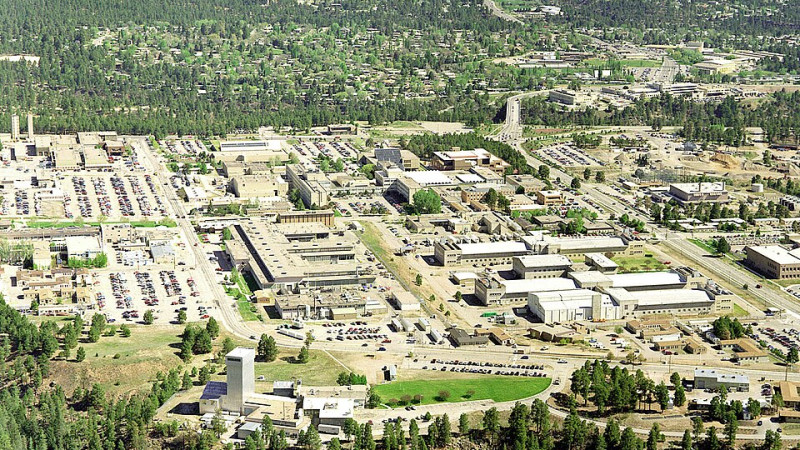
Еще один странный случай связан с 53-летней Милиссой Касиас из уже упомянутой Национальной лаборатории Лос-Аламоса в Нью-Мексико. Она участвовала в разработках в области ядерного оружия и считалась специалистом в этой области. Женщина пропала без вести 26 июня 2023 года.
Президент США Дональд Трамп уже пообещал выяснить причины череды загадочных смертей и исчезновений ученых.
Facts Only
U.S. Congressmen James Comer and Eric Burlison requested information from the Department of Energy, Pentagon, FBI, and NASA regarding deaths and disappearances of scientists linked to sensitive programs.
The Congressional Committee on Oversight and Government Reform is investigating reports of deaths and disappearances involving individuals with access to classified scientific information.
At least 11 individuals have died or gone missing in the U.S. since 2022, with most involved in nuclear physics, space research, or UFO studies.
Former Air Force Major General William Neil McCasland disappeared in New Mexico on February 27, 2024; his phone, glasses, and other items were left at home, while his wallet, hiking boots, and a .38-caliber revolver were missing.
McCasland previously led the Air Force Research Laboratory and had ties to Los Alamos National Laboratory.
NASA scientist Michael Hicks, who studied comets and asteroids, died on July 30, 2023, at age 59; the cause of death was not officially disclosed.
Milissa Casias, a 53-year-old scientist at Los Alamos National Laboratory specializing in nuclear weapons, went missing on June 26, 2023.
Former President Donald Trump has pledged to investigate the series of deaths and disappearances.
The incidents have raised concerns about potential threats to national security and the safety of personnel handling classified data.
Executive Summary
Since 2022, at least 11 scientists and officials linked to sensitive U.S. research—primarily in nuclear physics, space exploration, and UFO studies—have died or disappeared under unclear circumstances. Among them are former Air Force Major General William Neil McCasland, who vanished in New Mexico in February 2024, and NASA scientist Michael Hicks, whose cause of death remains undisclosed. The cases have drawn congressional scrutiny, with lawmakers requesting briefings from the Department of Energy, Pentagon, FBI, and NASA to assess potential national security risks and evaluate protections for personnel handling classified information. The pattern of disappearances and deaths, including high-profile figures like McCasland and Los Alamos National Laboratory scientist Milissa Casias, has raised concerns about possible systemic vulnerabilities or targeted threats. While no official conclusions have been reached, the incidents have prompted calls for transparency and investigation, including from former President Donald Trump.
The situation remains shrouded in uncertainty, with authorities offering few details about individual cases. The involvement of figures connected to institutions like the Air Force Research Laboratory and Los Alamos underscores the sensitivity of the affected fields. Media reports highlight the absence of clear motives or evidence of foul play, leaving room for speculation but no definitive answers. The congressional inquiry signals growing unease about the potential implications for national security and the safety of those working on classified projects.
Full Take
The strongest version of this narrative presents a legitimate pattern of unexplained deaths and disappearances among scientists tied to high-stakes U.S. research, warranting congressional scrutiny. The involvement of figures like McCasland—with direct access to military and nuclear secrets—lends credibility to concerns about systemic risks, whether from foreign interference, institutional failures, or other threats. The media framing leans on the intrinsic intrigue of classified work and the absence of clear explanations, which amplifies public and political attention. However, the lack of confirmed foul play or motive in individual cases leaves room for both skepticism and speculation.
Pattern scan: The narrative employs **ARC-0024 Ambiguity**—highlighting unresolved mysteries without evidence of coordination—to sustain engagement. The focus on "unexplained" deaths and the invocation of national security risks also flirts with **ARC-0043 Motte-and-Bailey**, where the "motte" (legitimate concern for scientist safety) shields the "bailey" (implied conspiracy). The inclusion of Trump’s pledge adds a layer of **ARC-0012 Authority Games**, borrowing political weight to elevate the story’s significance.
Root cause: This echoes Cold War-era anxieties about scientist safety and espionage, updated for modern geopolitical tensions. The unstated assumption is that secrecy itself is a vulnerability—either as a target for adversaries or a breeding ground for institutional neglect. The paradigm driving coverage is the tension between transparency and security, with media and politicians exploiting the gap between what the public knows and what agencies might be hiding.
Implications: For human agency, the narrative underscores the precarity of those working at the intersection of science and secrecy. The costs—potential chilling effects on research, erosion of trust in institutions—are diffuse but real. Second-order consequences could include heightened surveillance of scientists or politicized investigations that obscure rather than clarify.
Bridge questions: What alternative explanations (e.g., mental health crises, accidents) are being overlooked in favor of the "mystery" frame? How might the focus on high-profile cases distort perceptions of broader risks to researchers? What would it take to distinguish between systemic failures and targeted threats?
Counterstrike scan: A coordinated influence campaign would amplify the "unexplained" angle while suppressing mundane explanations, using the cases to undermine trust in U.S. institutions. The actual content aligns partially—emphasizing ambiguity and invoking authority—but lacks the hallmarks of a deliberate disinformation push (e.g., fabricated evidence, coordinated amplification). The pattern is more organic sensationalism than orchestrated attack.
Sentinel — Human
This text reads like a compiled news report synthesizing information from various sources, exhibiting typical human journalistic coordination rather than the uniform patterns of machine generation.