Skip to content
Chimera readability score 55 out of 100, Graduate reading level.

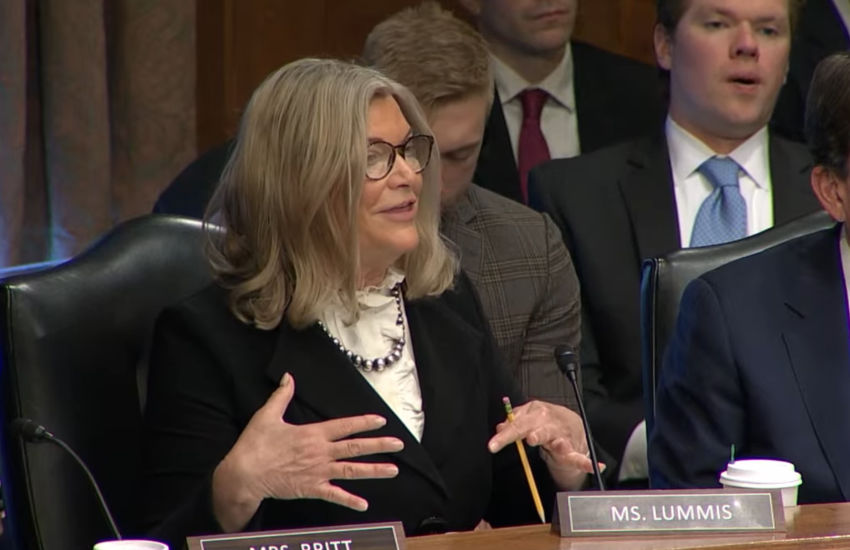
Today the Senate Banking Committee held a markup session on the long awaited Clarity Act for market infrastructure for the crypto and DeFi sector. The bill passed with a vote of 15 to 9, with all Republicans voting in favor alongside two Democrats, Senators Gallego and Alsobrooks. Democrat Committee members proposed numerous amendments, all of which were rejected. A handful of changes from Republican Senator Lummis were negotiated earlier in the day with some Democrats, with all passing with 18 or 19 votes each. The additional support mainly came from Senators Cortez Masto, Warner and Warnock.
Several of the Democrats that voted for bill or the Lummis amendments expressed a desire to see the passage of legislation. But they made clear their support was not guaranteed in a final Senate vote, with most citing the need for ethics clauses.
Senator Alsobrooks spoke about the influence of her 20 year old daughter’s interest in the crypto sector. “The truth is this digital revolution is happening with us or without us. Whether or not we regulate it to create the rules of the road or not, it is here”. But she added “I want to be abundantly clear, my vote today is a vote to keep working in good faith. It does not mean I’ll be voting for the passage of the Clarity Act on the floor, because we have so much work to do.” She then referred to the need for ethics clauses and highlighted concerns by the law enforcement sector. Alsobrooks has worked with Republican Senator Tillis on the stablecoin rewards clause. He made some notable comments on that.
Article continues …
Want the full story? Pro subscribers get complete articles, exclusive industry analysis, and early access to legislative updates that keep you ahead of the competition. Join the professionals who are choosing deeper insights over surface level news.

Facts Only

* The Senate Banking Committee held a markup session on the Clarity Act for market infrastructure for the crypto and DeFi sector.
* The bill passed with a vote of 15 to 9.
* Republicans voted in favor, along with two Democrats, Senators Gallego and Alsobrooks.
* Democrat Committee members proposed numerous amendments, all of which were rejected.
* Changes from Republican Senator Lummis were negotiated with some Democrats, passing with 18 or 19 votes each.
* Additional support for the bill came from Senators Cortez Masto, Warner, and Warnock.
* Democrats expressed a desire for the legislation's passage but noted their support was not guaranteed in a final vote, citing the need for ethics clauses.
* Senator Alsobrooks stated her vote was to keep working in good faith, not to guarantee passage on the floor.
* Senator Alsobrooks referenced concerns from the law enforcement sector regarding the need for ethics clauses.
* Senator Alsobrooks worked with Republican Senator Tillis on the stablecoin rewards clause.

Executive Summary

The Senate Banking Committee held a markup session on the Clarity Act concerning market infrastructure for the crypto and DeFi sector. The bill ultimately passed with a vote of 15 to 9, supported by all Republicans and two Democrats, Senators Gallego and Alsobrooks. The passage involved negotiation, as Republican Senator Lummis successfully negotiated changes with some Democrats, which passed with 18 or 19 votes each. Additional support for the bill included Senators Cortez Masto, Warner, and Warnock. While some Democrats expressed a desire for the legislation's passage, they explicitly stated that their support was not guaranteed in a final Senate vote, citing the need for ethics clauses. Senator Alsobrooks addressed the broader implications of the digital revolution, emphasizing that regulation is necessary, but maintained that her vote was intended to uphold good faith rather than guaranteeing final passage.

Full Take

The narrative of legislative success (the bill passing 15 to 9) is framed alongside explicit, powerful reservations about the legitimacy and scope of the regulation. The dynamic revealed is one of political transactionalism layered over substantive disagreement. The fact that amendments proposed by Democrats were rejected, while negotiated changes (Lummis's) passed, highlights how legislative momentum is steered by transactional alliances rather than unified ideological goals. The explicit concern raised by Senator Alsobrooks regarding ethics clauses and law enforcement serves as a critical anchor: the passage of infrastructure rules is secondary to the establishment of ethical governance, suggesting that the conflict is not merely about market mechanics but about institutional trust and accountability. The framing of the digital revolution as an inevitability—as stated by Alsobrooks—serves to minimize the immediate urgency of regulatory action, allowing the focus to shift from "what must be regulated" to "how ethically it should be regulated." This pattern suggests an attempt to manage expectations by prioritizing procedural compliance over the substance of the required reforms. The ultimate implication is that political success in this context is measured by the willingness to delay decisive action until ethical conditions are met, placing accountability in a state of perpetual deferral.

Sentinel — Human

Confidence

The text exhibits characteristics of factual news reporting, grounded in specific events and quotes, suggesting a human origin rather than purely synthetic generation.

Signals Detected
low severity: Moderate sentence length variance and natural flow; no overly uniform rhythm.
low severity: The text successfully integrates specific legislative details and personal quotes without sounding purely expository or lacking context.
low severity: Follows a standard news reporting structure (event, vote, context, quote), which aligns with typical journalistic templates.
low severity: Claims relate directly to specific legislative actions and named individuals, indicating grounding in specific events rather than pure LLM confabulation.
Human Indicators
The specific detail of the vote count (15 to 9) and the naming of specific senators (Gallego, Alsobrooks, Lummis) suggest direct reporting from a specific legislative source.
The inclusion of complex, nuanced quotes from a politician about their motivation (ethics clauses, daughter's interest) adds a layer of idiosyncratic human perspective.
Clarity Act clears Senate Banking Committee — Arc Codex