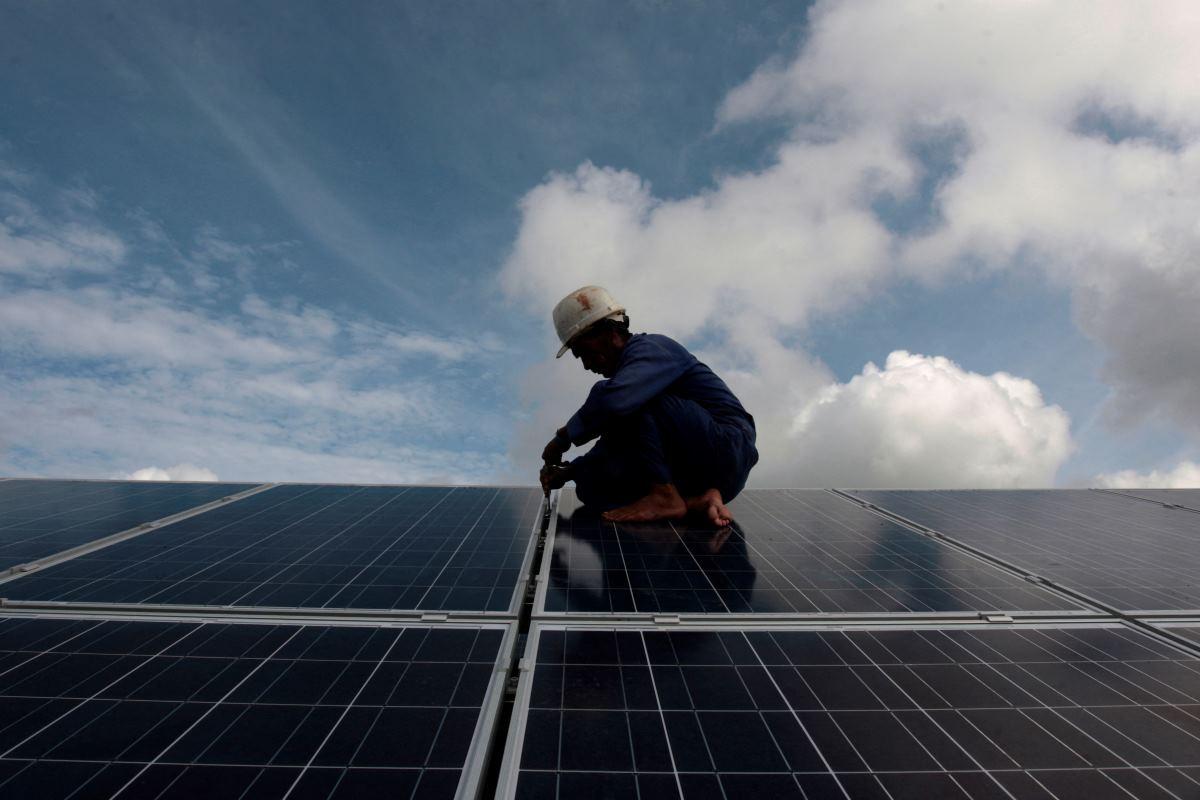
The Department of Trade and Industry (DTI) is proposing to place solar power system products under mandatory certification requirements.
In a statement on Wednesday, Trade Secretary Maria Cristina Roque said the proposed regulation seeks to ensure that solar energy systems sold in the country comply with Philippine National Standards (PNS).
“As more Filipino families, businesses, and communities turn to solar power to lower electricity costs and secure a more stable energy future, it is important that the products entering the Philippine market are safe, reliable, and built to last,” Roque said.
Meralco earlier said it was pushing for stricter regulations on the installation of rooftop solar panels to prevent improper setups that could result in fires.
Roque said the DTI proposal is intended to protect Filipino consumers from low-quality and potentially unsafe products that may fail after only a short period of use or put homes and establishments at risk.
“The proposed mandatory product certification also aims to prevent the Philippines from becoming a dumping ground for substandard solar products rejected by other countries,” she said.
“By upholding clear quality standards, the government seeks to give Filipinos greater confidence that the solar systems they invest in are durable, properly tested, and capable of delivering real savings over the long term,” she added.
The Trade Secretary also emphasized that the proposed regulation “will recognize test reports issued by accredited and recognized testing laboratories.”
“It also does not cover the installation or mounting of solar energy systems,” Roque said.
“As the country continues its transition toward cleaner and more affordable energy, ensuring the quality and safety of solar products is critical to protecting consumers, strengthening trust in renewable energy, and supporting the sustainable growth of the solar industry in the Philippines,” she added.
Roque said the DTI remains open to suggestions, comments, and feedback on the proposed regulation.
“Stakeholders and members of the public may submit their inputs to OASFTG@dti.gov.ph until July 25, 2026,” she said.—MCG, GMA News
Facts Only
The Department of Trade and Industry (DTI) is proposing mandatory certification for solar power system products in the Philippines.
Trade Secretary Maria Cristina Roque announced the proposal on Wednesday.
The regulation aims to ensure solar products comply with Philippine National Standards (PNS).
Roque stated the measure is intended to protect consumers from low-quality and unsafe solar products.
The proposal seeks to prevent the Philippines from becoming a dumping ground for substandard solar products rejected by other countries.
The certification will recognize test reports from accredited and recognized testing laboratories.
The regulation does not cover the installation or mounting of solar energy systems.
The DTI is accepting public feedback on the proposal until July 25, 2026.
Feedback can be submitted to OASFTG@dti.gov.ph.
Meralco previously raised concerns about improper rooftop solar installations potentially causing fires.
Roque emphasized the importance of quality standards for consumer confidence and industry growth.
The proposal is part of the Philippines' transition toward cleaner and more affordable energy.
Executive Summary
The Department of Trade and Industry (DTI) in the Philippines is proposing mandatory certification for solar power system products to ensure compliance with Philippine National Standards (PNS). Trade Secretary Maria Cristina Roque emphasized that this move aims to protect consumers from substandard or unsafe solar products, which could pose risks such as fires or premature failure. The proposal also seeks to prevent the Philippines from becoming a dumping ground for rejected solar products from other markets. While the regulation would require products to meet safety and durability standards, it would not cover the installation or mounting of solar systems. The DTI is currently soliciting public feedback on the proposal until July 25, 2026. This initiative aligns with broader efforts to promote renewable energy while safeguarding consumer interests and industry integrity.
The proposal follows concerns raised by Meralco about improper rooftop solar installations, highlighting the need for stricter oversight. Roque clarified that the certification would rely on test reports from accredited laboratories, reinforcing transparency and accountability. The DTI’s approach reflects a balance between fostering renewable energy adoption and ensuring product reliability, which could bolster confidence in solar investments among Filipino consumers and businesses.
Full Take
The DTI’s proposal for mandatory solar product certification reflects a growing tension between rapid renewable energy adoption and the need for consumer protection. At its core, this narrative steelmans the argument that unregulated markets can lead to exploitation—substandard products flooding in, undermining trust in solar technology just as it gains traction. The move also echoes broader global patterns where emerging industries face quality control challenges, particularly in regions with high demand but limited oversight. The DTI’s emphasis on accredited testing and public feedback suggests a deliberate effort to avoid accusations of overreach or industry capture, though the exclusion of installation standards leaves a critical gap, given Meralco’s warnings about fire risks.
Root cause analysis reveals an unstated assumption: that market forces alone cannot ensure safety and durability in a sector driven by cost-sensitive consumers and aggressive sales tactics. This mirrors historical patterns in other industries (e.g., electronics, automotive) where early adoption phases were marred by safety scandals before regulations caught up. The implications for human agency are significant—while the proposal empowers consumers with clearer standards, it also centralizes authority in the DTI, raising questions about enforcement capacity and potential bureaucratic bottlenecks. Who benefits? Legitimate solar manufacturers and consumers seeking long-term reliability. Who bears costs? Smaller importers or installers who may struggle with compliance, and consumers facing potentially higher upfront costs for certified products.
Bridge questions: How might this regulation interact with existing local government permits for solar installations? Could the exclusion of installation standards create a loophole where certified products are improperly deployed? What evidence exists that substandard solar products are already a widespread issue in the Philippines, versus a preemptive measure?
Counterstrike scan: If this were a coordinated influence campaign, the playbook might involve framing the proposal as either a necessary consumer safeguard (to rally public support) or an industry-stifling regulation (to mobilize opposition). The actual content aligns more with the former, leveraging legitimate concerns about safety and dumping. However, the lack of cited data on current product failures or fire incidents leaves room for skepticism about the urgency. No overt manipulation patterns detected, but the absence of quantitative evidence could be flagged as a potential ambiguity tactic (ARC-0024) if the goal were to obscure the scale of the problem.
Patterns detected: none
Sentinel — Human
The text exhibits the structure and voice of professional journalistic reporting based on official statements, indicating a high likelihood of human authorship.