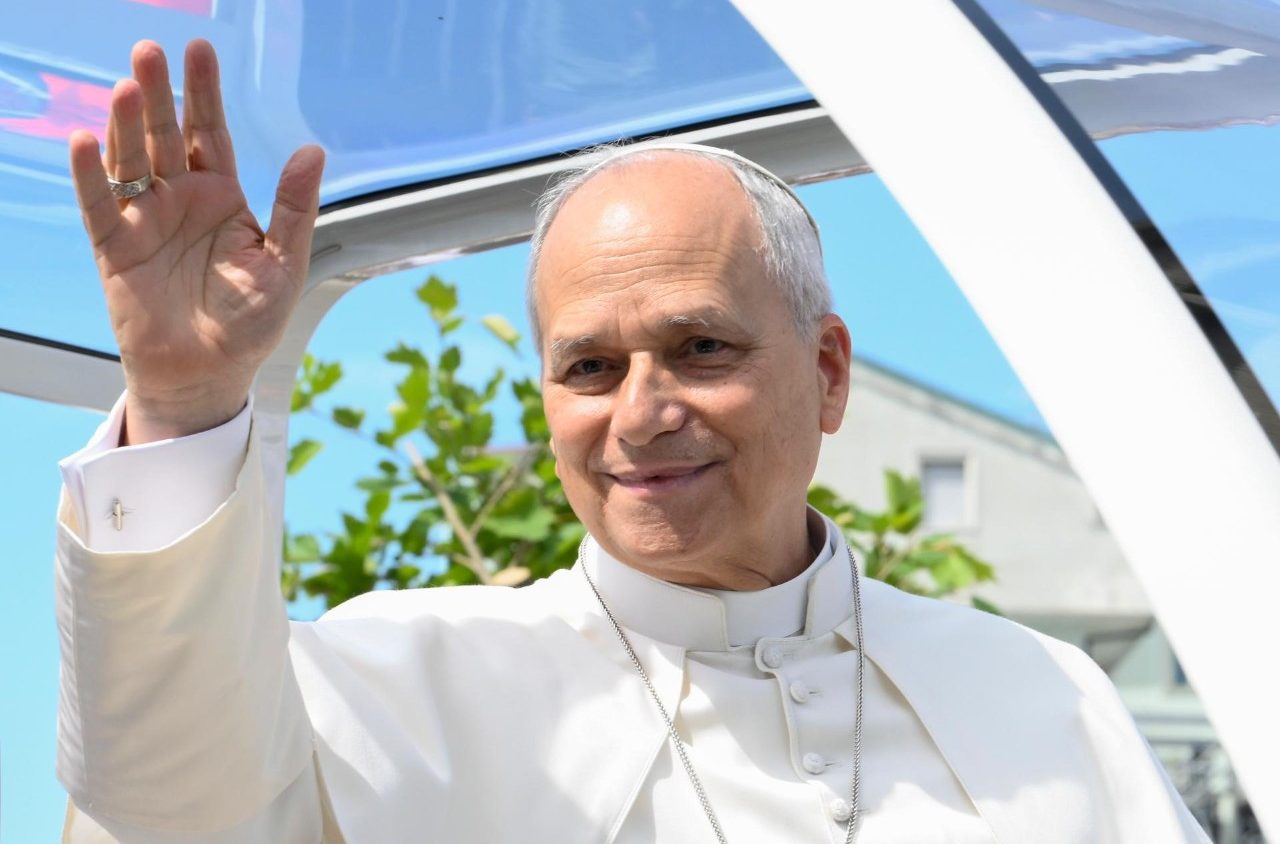
Pope Leo XIV has appointed Maria Montserrat Alvarado, currently President and Chief Operating Officer of EWTN News, as Prefect of the Dicastery for Communication, effective Nov. 1.
The appointment continues the reforms of Pope Francis to name lay people to positions of leadership and responsibility in the Roman curia. Alvarado is the first lay woman to be appointed prefect of a dicastery of the Holy See.
Pope Leo Prays Rosary for ‘a Just and Lasting Peace’ in the World
The Holy Father led a rosary for peace last Saturday, May 30 in the Vatican Gardens. Even in times of conflict in the world such as the present moment, peace is possible, he said.
In a separate address, the pope urged Catholics to draw on the Social Doctrine of the Church to respond to the issues that face society, including war, polarization, and social divisions.
The following day during his Angelus address, Pope Leo again prayed for peace.
“May divine wisdom enlighten the consciences of those who hold authority,” he said, “and guide their decisions towards the sincere pursuit of a just and lasting peace.”
Reflections on AI Development, Need for ‘Deep Moral Questions’
Experts in artificial intelligence and Church leaders continued to reflect on last week’s publication of Pope Leo XIV’s first encyclical, “Magnifica Humanitas.”
An audiobook of the encyclical is now available.
The director of AI for Microsoft Corp., Taylor Black, said the encyclical was valuable for ongoing development of the technology. Since users are co-creating their experiences with every prompt of AI, the AI products developed must be based on a good understanding of the user’s way of thinking, said Black, who is also an ordained permanent deacon.
Another American tech expert, Eli Pariser, said AI can still be developed that serves humanity. “The world is deeply in need of moral leadership,” he said, urging people to spend “time thinking about the deep ethical and moral questions” of AI’s development.
The pope’s encyclical reaffirms the Church’s social doctrine and helps everyone “to recognize, understand, interpret, discern, and ultimately confront the many challenges—not only those linked to artificial intelligence—that threaten our humanity or … constitute serious obstacles to integral human development,” said Canadian Cardinal Michael Czerny, Prefect of the Dicastery for Promoting Integral Human Development, in a video to the bishops of Switzerland.
Meanwhile, Pope Leo urged leaders of the World Medical Association to strengthen ethical safeguards for health databases and biobanks, highlighting the protection of human dignity in an age of rapidly evolving technology.
Rome Consistory of Cardinals to Focus on Four Key Issues in Church
In the consistory meeting in Rome set for June 26-29, the world’s cardinals and Pope Leo will focus on the international situation and the life of local Churches, discuss key themes in the encyclical Magnifica Humanitas, and review an update on the implementation of the Synod.
Pope Leo Set for 7-Day Pilgrimage to Spain
Pope Leo will travel to Spain June 6-12. See a preview of his pilgrimage to Madrid, Barcelona, and the Canary Islands in which he will address the themes of peace, disarmament, unity, youth, culture, new technologies, and migration.
Keep Hosting Corpus Christi Processions, Pope Says
This Sunday is the Solemnity of the Most Holy Body and Blood of Christ, also known as Corpus Christi Sunday. Traditionally, the day is marked by public processions with the Eucharist, a tradition that Pope Leo encouraged.
“An expression of popular eucharistic devotion is found in the processions with the Blessed Sacrament that take place in the streets of many towns and countries,” he said Wednesday during his General Audience. “In this regard, I encourage you to keep alive this beautiful manifestation of public witness to the faith.”
Don’t Be ‘Silent Spectators’ at Mass, Pope Teaches
The Holy Father also on Wednesday continued his series of talks on the reforms of the Mass implemented by the Second Vatican Council.
The rite of the liturgy “gives shape to liturgical action” and thus to our lives by “generating in us a spiritual sensibility that makes us capable of savoring the presence of God through Jesus Christ,” Pope Leo explained.
But he noted that this can only happen if we participate actively in the liturgy “with our full selves – body, mind and heart” and avoid being “strangers or silent spectators.”
June Prayers to Highlight Joy, Values of Sports
Pope Leo announced that his June prayer intention is for “the values of sports.”
The pope’s Worldwide Prayer Network produced a video of the Holy Father in which he thanked the Lord for “the gift of sport, for those who glorify God through the exercise of their bodies, for the friendships born on the field, and the joy of playing as a team.”
Share this story
Facts Only
Pope Leo XIV appointed Maria Montserrat Alvarado as Prefect of the Dicastery for Communication, effective November 1.
Alvarado is the first lay woman to be appointed prefect of a dicastery of the Holy See.
Pope Leo led a rosary for peace in the Vatican Gardens on May 30.
The pope urged Catholics to apply the Social Doctrine of the Church to contemporary issues.
Pope Leo's encyclical, "Magnifica Humanitas," addresses ethical questions related to artificial intelligence.
An audiobook of the encyclical is now available.
Taylor Black, Director of AI for Microsoft Corp., praised the encyclical for its insights on AI development.
Eli Pariser, a tech expert, emphasized the need for moral leadership in AI development.
Cardinal Michael Czerny highlighted the encyclical's role in addressing challenges to human dignity.
Pope Leo urged the World Medical Association to strengthen ethical safeguards for health databases and biobanks.
A consistory of cardinals is scheduled for June 26-29 to discuss global issues, the encyclical, and Synod implementation.
Pope Leo will travel to Spain from June 6-12, addressing themes such as peace, disarmament, and migration.
The pope encouraged the continuation of Corpus Christi processions as a public expression of faith.
Pope Leo's June prayer intention is focused on the values of sports.
Executive Summary
Full Take
The appointment of Maria Montserrat Alvarado as Prefect of the Dicastery for Communication is a notable step in Pope Francis' ongoing reforms to include lay people in leadership roles within the Roman Curia. This move reflects a broader trend within the Church to modernize its governance structures and incorporate diverse perspectives. The pope's emphasis on peace, both through his rosary and public statements, underscores a commitment to addressing global conflicts and social divisions through the lens of Catholic social doctrine. The encyclical "Magnifica Humanitas" has sparked important conversations about the ethical implications of artificial intelligence, with experts like Taylor Black and Eli Pariser highlighting the need for moral leadership in technology development. This aligns with the Church's historical role in engaging with contemporary issues and providing ethical guidance. The upcoming consistory of cardinals and the pope's pilgrimage to Spain further demonstrate a proactive approach to addressing global challenges and promoting unity within the Church. The encouragement of Corpus Christi processions and the focus on the values of sports in June's prayer intention reflect a commitment to public expressions of faith and the holistic development of individuals.
Patterns detected: none
The narrative presented here is largely positive and constructive, focusing on the Church's efforts to modernize, engage with contemporary issues, and promote peace and ethical leadership. The appointment of a lay woman to a high-ranking position is a significant step forward, and the discussions around AI ethics and social doctrine are timely and relevant. The pope's emphasis on peace and unity, as well as his engagement with global issues, reflects a commitment to the Church's mission of promoting human dignity and integral development. The upcoming consistory and pilgrimage further demonstrate a proactive approach to addressing global challenges and fostering unity within the Church.
Bridge questions: How might the appointment of lay people to leadership roles within the Church impact its governance and decision-making processes? What specific ethical guidelines for AI development might emerge from the discussions sparked by "Magnifica Humanitas"? How can the Church's emphasis on peace and social doctrine be effectively translated into actionable policies and initiatives?
Counterstrike scan: If this narrative were part of a coordinated influence campaign, it would likely emphasize the Church's progressive reforms and ethical leadership to enhance its global image and influence. However, the content presented here does not match this pattern, as it appears to be a genuine reflection of the Church's ongoing efforts to modernize and engage with contemporary issues.
Sentinel — Human
The text exhibits the structure and detached tone of professional journalistic reporting, indicating a likely human origin, although the content itself is a compilation of formal statements.