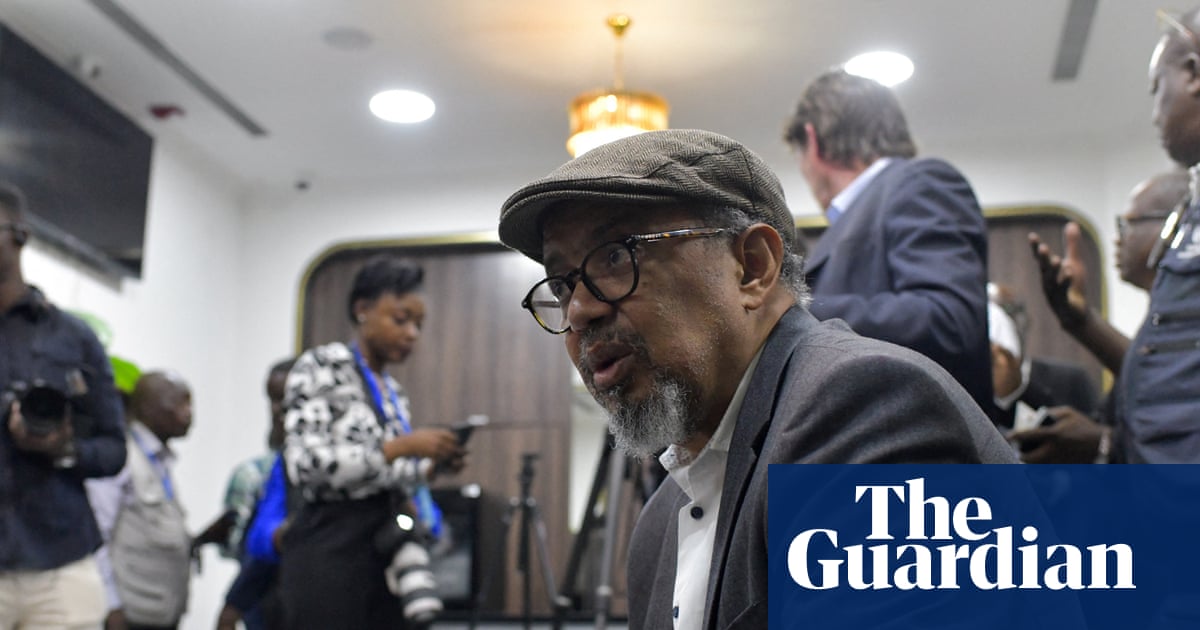
The deadly Ebola outbreak in the Democratic Republic of the Congo can be stopped, the World Health Organization (WHO) head, Tedros Adhanom Ghebreyesus, said as he arrived in Kinsasha.
Tedros landed in the DRC on Thursday evening and was due on Friday to travel to Ituri province in the north-east, where the epidemic is centred.
“That thing can be stopped,” Tedros said, adding that the WHO did not support travel bans to combat the outbreak because they “don’t help much”.
“Together, we will overcome this outbreak,” he said earlier, vowing to do “everything in my power to help you”.
The WHO has recorded 10 confirmed and 223 suspected Ebola deaths in the DRC since the outbreak was declared on 15 May, out of more than 1,000 confirmed and suspected cases, according to its figures up to 24 May, the latest available.
The true spread of the virus is likely much wider as it is thought to have circulated under the radar for some time, the WHO has warned.
This is the 17th recorded Ebola outbreak in the big central African country, which has a population of more than 100 million people.
Complicating medical relief efforts, the epidemic is centred in a mineral-rich region fought over by armed groups. “Conflict and displacement make everything harder,” Tedros said. “I am making a direct appeal to all warring parties in this region: please, declare a ceasefire.
“No cause, no conflict, no grievance is worth condemning innocent people to death from a preventable disease.”
No vaccine or treatment yet exists for the Bundibugyo strain of Ebola causing the current outbreak. The WHO said on Thursday that its advisory groups had recommended clinical trials for vaccines and treatments.
The head of the African Union’s health agency, Jean Kaseya, said on Thursday that a vaccine should be ready by the end of the year.
Neighbouring Uganda, with one recorded death from Ebola and six additional cases, announced it was shutting its border with the DRC with immediate effect.
The US said it would deny entry to anyone infected and was working to open a treatment facility for affected US citizens in Kenya. A Kenyan rights group has gone to court seeking to limit operations at any such facility, while health officials have warned it could burden Kenya’s stretched health system.
Ebola has killed more than 15,000 people in Africa over the past 50 years. The deadliest outbreak in the DRC claimed nearly 2,300 lives out of 3,500 cases between 2018 and 2020.
The WHO said it had received 4.6 tonnes of aid at the airport in Bunia, capital of Ituri province, while Unicef, the UN children’s agency, said it was sending 100 tonnes of aid to the DRC.
With Agence France-Presse
Facts Only
* Tedros Adhanom Ghebreyesus arrived in the DRC on Thursday evening.
* The Ebola outbreak is centered in the Ituri province of the DRC.
* The outbreak was declared on May 15.
* Since the declaration, the WHO has recorded 10 confirmed and 223 suspected Ebola deaths.
* There have been more than 1,000 confirmed and suspected cases recorded up to May 24.
* No vaccine or treatment currently exists for the Bundibugyo strain of Ebola.
* Advisory groups have recommended clinical trials for vaccines and treatments.
* The epidemic is centered in a mineral-rich region fought over by armed groups.
* The WHO received 4.6 tonnes of aid at the airport in Bunia.
* UNICEF is sending 100 tonnes of aid to the DRC.
* Uganda announced the immediate closure of its border with the DRC.
* The US denied entry to anyone infected.
* The deadliest outbreak in the DRC claimed nearly 2,300 lives out of 3,500 cases between 2018 and 2020.
Executive Summary
Full Take
The narrative surrounding the Ebola crisis highlights the complex intersection of infectious disease, armed conflict, and geopolitical response. The framing immediately positions the disease not merely as a biological threat but as a consequence of systemic failure and human suffering caused by conflict and displacement. The WHO’s direct appeal for a ceasefire among warring parties is a critical pivot; it shifts the responsibility from purely medical containment to addressing the root cause—the conflict and displacement that complicate medical relief. This introduces a tension between the humanitarian imperative (stopping the disease) and the political reality (armed groups controlling resources and access).
The discussion of aid and travel bans introduces a systemic tension. While the WHO advises against travel bans because they offer limited benefit, the actions of external actors (US denial of entry, Uganda closing borders) highlight the failure of international cooperation to guarantee safe access or equitable distribution of resources. The focus on the lack of a vaccine underscores a profound moral failure: innocent people are dying from a preventable disease while global bodies struggle to implement research and development.
This situation is a potent example of the systemic nature of health crises in fragile states. The fact that the epidemic is tied directly to mineral wealth and armed conflict suggests that the humanitarian response must integrate peacebuilding. The narrative implicitly challenges the notion that disease management can be separated from political accountability. We must ask: if conflict is the primary driver of spread, how can health interventions succeed without addressing the political and structural grievances that fuel the violence? Furthermore, the emphasis on aid delivery, while necessary, must be scrutinized to ensure that the distribution is not merely transactional, but truly rooted in the principles of dignity and equitable access for affected populations.
Patterns detected: ARC-0043 Motte-and-Bailey, ARC-0024 Ambiguity, ARC-0077 Moral Panic, ARC-0104 Authority Games
Sentinel — Human
This text exhibits characteristics of high-quality, fact-based journalistic reporting, balancing statistical data with complex geopolitical context, suggesting a human editorial origin.