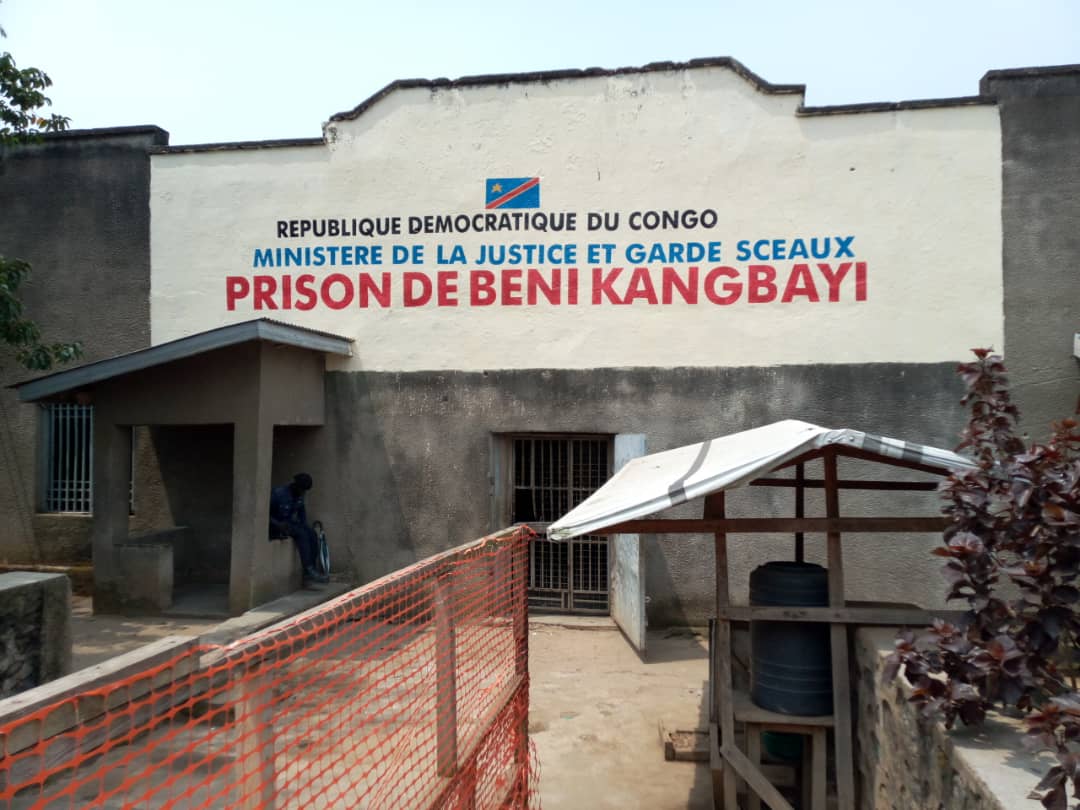
Le tribunal militaire de garnison de Beni, dans la province du Nord-Kivu, a lancé depuis jeudi 26 mars l’examen d’au moins 300 dossiers dans le cadre des audiences foraines organisées à la prison urbaine de Beni.
Ces audiences, appuyées logistiquement et techniquement par le Bureau conjoint des Nations unies aux droits de l’homme (BCNUDH), s’étendront sur une période de deux mois.
Il s’agit de dossiers datant de 2020 à 2023, dont la majorité concerne des prévenus ayant largement dépassé la durée légale de détention préventive sans jugement. Certains sont même décédés en détention sans jamais avoir été fixés sur leur sort.
Lors de la session de jeudi dernier, 33 dossiers ont été examinés, dont huit impliquant des femmes, parmi lesquelles une capitaine des FARDC.
Au total, 21 jugements ont été rendus pour des infractions telles que :
- viol d’enfant,
- participation à un mouvement insurrectionnel,
- propagation de faux bruits.
Une trentaine d’autres dossiers impliquant des prévenus hommes — parmi lesquels des militaires des FARDC restent à examiner.
Les infractions concernées incluent :
- viol d’enfant,
- meurtre,
- tentative de viol,
- participation à un mouvement insurrectionnel,
- perte d’arme.
A travers ces audiences foraines, les autorités judiciaires cherchent à accélérer le traitement des dossiers en souffrance et à désengorger la prison urbaine de Beni.
Construite pour 250 détenus, cette prison en accueille aujourd’hui plus de 2 000, dans des conditions de promiscuité extrême.
Facts Only
The military tribunal of Beni, North Kivu, is conducting mobile court sessions at the Beni urban prison.
The hearings began on March 26 and will continue for two months.
Approximately 300 cases from 2020 to 2023 are being reviewed.
Many detainees have exceeded the legal pretrial detention period.
Some inmates have died in custody without trial.
The first session examined 33 cases, including eight involving women, one of whom is a FARDC captain.
Twenty-one verdicts were issued for crimes including child rape, insurrection, and spreading false information.
Remaining cases involve male detainees, including FARDC soldiers, accused of murder, attempted rape, and weapons loss.
The prison, built for 250 inmates, currently holds over 2,000.
The initiative is supported logistically by the UN Human Rights Office (BCNUDH).
Executive Summary
Full Take
The strongest version of this narrative highlights a systemic failure in the Congolese judicial system, where pretrial detainees languish for years without resolution, some even dying in custody. The mobile court initiative, backed by the UN, represents a rare attempt to address this backlog, though it also underscores the severity of the problem—overcrowding, delayed justice, and potential human rights violations. The inclusion of military personnel among the accused suggests institutional complicity or inefficiency, while the focus on crimes like child rape and insurrection points to broader societal instability.
Patterns detected: ARC-0024 Ambiguity (the article does not clarify why cases were delayed or whether systemic corruption is at play), ARC-0043 Motte-and-Bailey (the narrative frames the hearings as a solution without addressing root causes of judicial dysfunction).
Root cause: The paradigm here is one of institutional collapse under pressure—war, insurgency, and weak governance have eroded judicial capacity. The unstated assumption is that temporary measures like mobile courts can compensate for systemic failure, but without structural reform, the cycle will repeat.
Implications: For human dignity, the cost is immense—innocent or untried individuals suffer in inhumane conditions, while victims of crimes may never see justice. The beneficiaries are unclear, though the UN’s involvement suggests international actors are stepping in where local institutions fail. Second-order consequences could include normalized reliance on external intervention, further weakening domestic judicial sovereignty.
Bridge questions: What structural reforms are needed to prevent future backlogs? How does military involvement in the judiciary affect perceptions of fairness? What role do insurgent groups play in destabilizing legal processes?
Counterstrike scan: A bad actor might exploit this narrative to undermine trust in Congolese institutions, framing the UN as an overreaching force or the military as inherently corrupt. However, the article itself does not align with such a playbook—it presents facts without overt manipulation, though it lacks deeper critique of systemic failures.