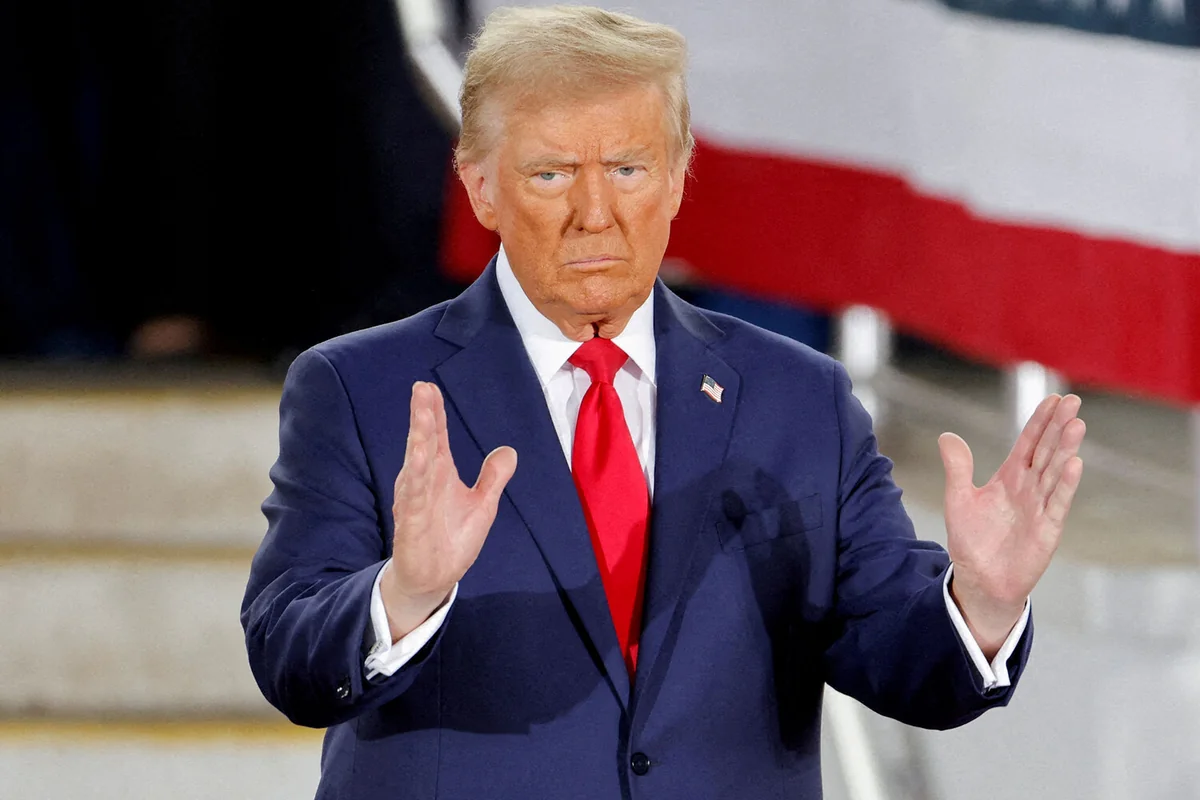
Donald Trump tha se rezervat e uraniumit të pasuruar të Iranit duhet ose të dorëzohen në Shtetet e Bashkuara ose të shkatërrohen nën mbikëqyrje ndërkombëtare, ndërsa negociatat për një marrëveshje të re me Teheranin vazhdojnë.
Në një postim në platformën Truth Social, presidenti amerikan tha se uraniumi i pasuruar i Iranit duhet ose të transferohet në Shtetet e Bashkuara për shkatërrim ose të shkatërrohet në një vend tjetër, në prani të vëzhguesve ndërkombëtarë.
Sipas raporteve amerikane, zyrtarët amerikanë kanë argumentuar se i gjithë rezerva e uraniumit të pasuruar të Iranit duhet të hiqet si pjesë e një marrëveshjeje të mundshme.
Teherani, nga ana e tij, këmbëngul se nuk do të diskutojë programin e tij bërthamor përpara se të zbatohet një armëpushim i mundshëm 60-ditor, i cili po negociohet si pjesë e marrëveshjes.
Kontaktet midis dy palëve po vazhdojnë, pa shenja të një marrëveshjeje përfundimtare deri më tani.
Postimi i Trump
“Uraniumi i pasuruar (“Pluhuri Bërthamor!”) ose do të dorëzohet menjëherë në Shtetet e Bashkuara për transferim dhe shkatërrim ose, mundësisht, në bashkëpunim dhe koordinim me Republikën Islamike të Iranit, do të shkatërrohet në vend ose në një vend tjetër të pranueshëm, me Komisionin e Energjisë Atomike ose ekuivalentin e tij që mbikëqyr procesin”, shkroi Trump.
Ai nuk sqaroi nëse po i referohej ekskluzivisht afërsisht 440 kilogramëve uranium të pasuruar shumë që zotëron Irani apo të gjithë rezervave të uraniumit të pasuruar të vendit.
Facts Only
Donald Trump proposed that Iran's enriched uranium must either be transferred to the U.S. for destruction or destroyed on-site under international supervision.
The proposal was made in a post on the Truth Social platform.
Trump suggested the destruction could occur in Iran or another acceptable location, with oversight from the IAEA or equivalent body.
U.S. officials have reportedly argued for the removal of all enriched uranium as part of a potential agreement with Iran.
Iran has stated it will not discuss its nuclear program until a 60-day ceasefire is implemented.
The ceasefire is part of ongoing negotiations between the U.S. and Iran.
Negotiations are continuing, with no final agreement reached.
Trump did not clarify whether his demand applied to Iran's entire enriched uranium stockpile or only the approximately 440 kg of highly enriched uranium.
The U.S. and Iran remain in contact but have not resolved key differences.
Iran maintains its nuclear program is non-negotiable without prior concessions.
The U.S. position includes demands for stringent limits on Iran's nuclear capabilities.
Previous nuclear agreements, such as the JCPOA, have collapsed, complicating current negotiations.
Executive Summary
Donald Trump has proposed that Iran's enriched uranium reserves must either be transferred to the United States for destruction or eliminated under international supervision. This statement was made via a post on Truth Social, where he outlined two options: immediate transfer to the U.S. or on-site destruction with oversight from entities like the International Atomic Energy Agency (IAEA). U.S. officials have reportedly argued for the removal of all enriched uranium as part of potential negotiations with Iran. Meanwhile, Iran insists it will not discuss its nuclear program until a proposed 60-day ceasefire is implemented, a condition tied to broader negotiations. The talks between the two sides remain ongoing, with no final agreement yet reached. Trump's post did not specify whether his demand applied to Iran's entire stockpile or only the highly enriched uranium (approximately 440 kg).
The situation reflects a stalemate in negotiations, with the U.S. pushing for stringent measures to limit Iran's nuclear capabilities while Iran conditions further discussions on preliminary concessions. The lack of clarity in Trump's statement—particularly regarding the scope of uranium in question—adds ambiguity to the U.S. position. The broader context involves long-standing tensions over Iran's nuclear program, with previous agreements like the JCPOA having collapsed and renewed efforts to broker a new deal facing significant hurdles.
Full Take
This narrative presents a classic high-stakes negotiation framed through the lens of coercive diplomacy. The strongest version of the U.S. position—articulated by Trump—is that Iran's enriched uranium poses an unacceptable proliferation risk, necessitating its elimination under strict oversight. This aligns with long-standing U.S. nonproliferation goals and leverages the IAEA's authority to lend legitimacy. However, the ambiguity in Trump's statement—whether targeting all enriched uranium or just the highly enriched portion—creates a motte-and-bailey dynamic: the broader demand (total removal) can be retreated to a narrower one (highly enriched uranium) if challenged.
Pattern scan: The framing of the issue as a binary choice (transfer to the U.S. or destruction) echoes a false dilemma, ignoring potential intermediate solutions like third-party storage or phased reductions. The emotional weight of terms like "Pluhuri Bërthamor!" (nuclear dust) in Trump's post suggests an appeal to fear, though it stops short of outright alarmism. The lack of clarity on the scope of uranium in question could serve as a negotiating tactic, allowing flexibility in interpretation.
Root cause: The underlying paradigm is one of distrust and zero-sum security calculations. The U.S. assumes Iran's nuclear program is inherently destabilizing, while Iran views concessions as surrender unless reciprocated. This mirrors Cold War-era brinkmanship, where symbolic gestures (like uranium destruction) carry outsized political weight.
Implications: For human agency, this narrative reduces complex diplomatic processes to a transactional demand, potentially undermining trust-building. The beneficiaries of prolonged stalemate are hardliners on both sides, while ordinary citizens in Iran and the broader region bear the costs of sanctions and instability. Second-order consequences could include accelerated nuclear proliferation if Iran perceives negotiations as futile, or a precedent for coercive disarmament demands elsewhere.
Bridge questions: What alternative verification mechanisms could satisfy both U.S. security concerns and Iran's sovereignty claims? How might a phased approach—tying uranium reductions to reciprocal sanctions relief—alter the negotiation dynamics? What historical examples of nuclear diplomacy (e.g., South Africa, Libya) offer lessons for breaking this impasse?
Counterstrike scan: If this were part of a coordinated influence campaign, the playbook would involve amplifying binary choices, exploiting fear of nuclear proliferation, and framing Iran as intransigent to justify maximalist demands. The actual content partially aligns with this pattern—particularly the binary framing and fear appeal—but lacks the hallmarks of a full-scale disinformation effort (e.g., fabricated evidence, coordinated amplification). The ambiguity in Trump's statement could be strategic, but it doesn't rise to the level of systematic manipulation.
Patterns detected: ARC-0024 Ambiguity, ARC-0043 Motte-and-Bailey (potential)
Sentinel — Human
The analysis is highly factual and balanced, structured like standard journalistic reporting, indicating a likely human origin based on the synthesis of official positions.