KABUL, Afghanistan — On Monday night, residents living near the Omid Addiction Treatment Hospital in the Afghan capital heard a sharp sound tearing through the sky, followed by an explosion.
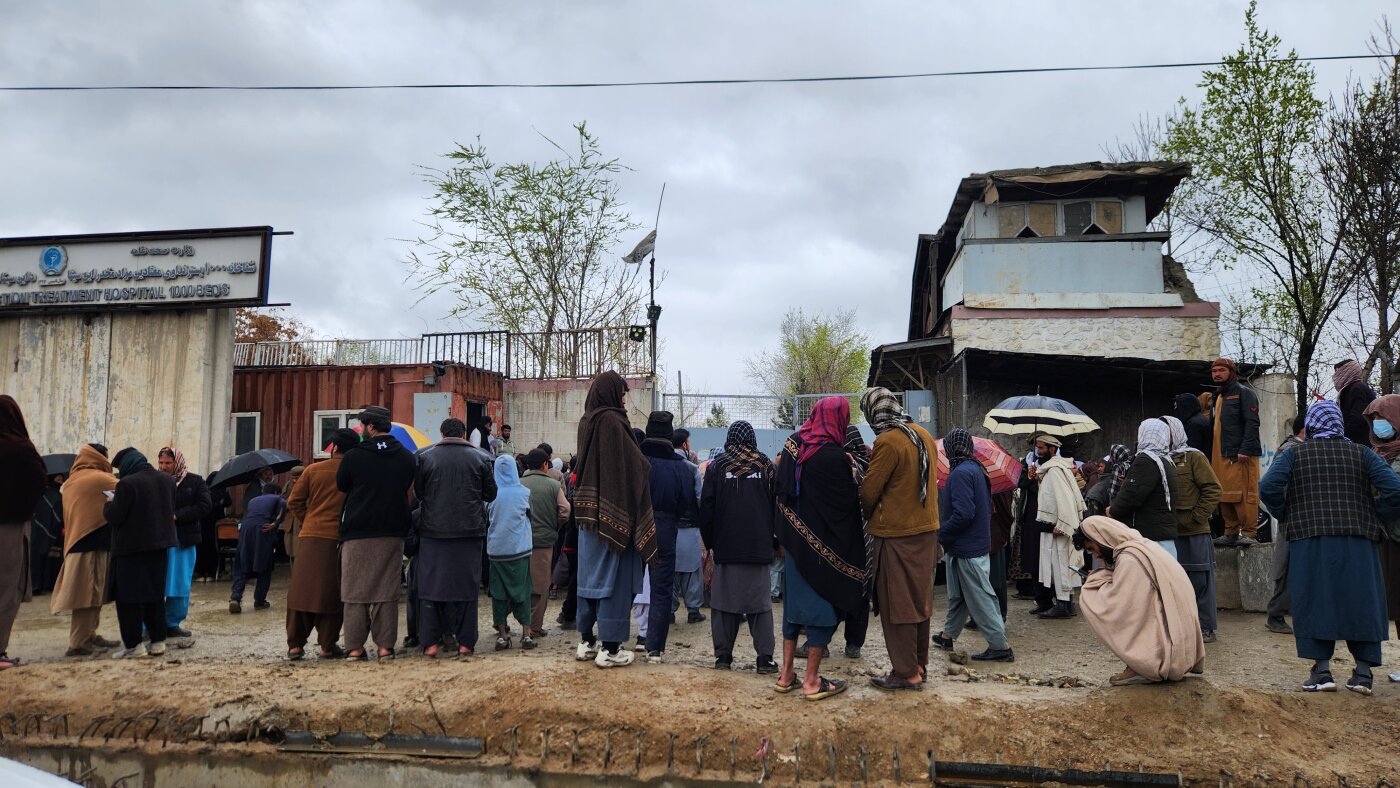
Two days later, Abdul Basir Watan joined dozens of inmates' families crowding outside the hospital in central Kabul. They listened to doctors donning white medical gowns read out the names of survivors over a megaphone. A faint smell of burnt wood and plastic hung in the air. Through the bars of the iron gates, they saw a mound of concrete and metal where a building once stood.
Watan said his cousin Zamarek was seeking drug addiction treatment at this facility for the past four months. "He is not on the list of wounded. He is not on the list of dead," said Watan. Someone had told him of bulldozers digging mass graves at a Kabul cemetery for those who couldn't be identified. "I will go and pray there," he says.
Taliban officials say a Pakistani airstrike hit the hospital, killing more than 400 people and injuring more than 250. According to estimates provided by the United Nations Assistance Mission in Afghanistan, at least 143 people died and 119 were wounded in the attack.
Pakistan says it had struck only a "military and terrorist infrastructure."
But Georgette Gagnon, officer-in-charge of the U.N. mission, told NPR that the facility was "a well-known rehabilitation center" run by the Taliban's interior ministry. "Our colleagues who visited the place found widespread destruction, including complete destruction of one block that housed adolescents receiving drug treatment."
As Taliban spokesperson Zabihullah Mujahid vowed retaliation following the strike, further escalations seemed imminent. But by Wednesday, both neighboring countries announced a five-day ceasefire for the celebration of the Muslim holiday of Eid.
The hospital attack was the deadliest in the three-week fighting between the two countries. Islamabad accuses the Taliban regime of giving safe haven to Islamist groups like the Tehreek-e-Taliban Pakistan (TTP) and the separatist Balochistan Liberation Army (BLA) that carry out armed attacks in Pakistan. In retaliation, Pakistan has closed borders, halted trade and expelled millions of Afghans over the past year.
Tensions peaked last October as the two countries carried out cross-border strikes. At the time, Qatar and Turkey mediated a fragile ceasefire. But negotiations broke down shortly after.
Militant attacks in Pakistan surged again earlier this year, including a suicide bombing at a Shia mosque in Islamabad that killed more than two dozen people. Islamabad said the attackers were supported by Taliban officials and "Indian proxies." Both Kabul and New Delhi denied this.
"While Pakistan's goals in degrading and punishing the Taliban government seem clear enough, it is unclear how they link to the TTP's presence in Afghanistan," says Ibrahim Bahiss, an Afghan expert with the International Crisis Group.
"Pakistan claims there's a sprawling network of the TTP in Afghanistan. But we have not seen clear proof of any senior TTP bases or leaders being targeted. Oftentimes, the target is either the Afghan Taliban military installations or Afghan security military installations," he says.
At the heart of the issue, says Bahiss, is Pakistan's linking of many internal conflicts to powers beyond its borders.
"They've lumped everything together. The TTP is a Taliban proxy. The BLA is an Indian proxy. And then the Taliban are Indian proxies," he says. "But when you're looking at it from an analytical point of view, it is a slightly confusing picture."
Meanwhile, families in Kabul continue to count this war's cost.
At the Emergency Hospital in Kabul, dozens crowded around a thick book to check the names of the victims. Sahil, who goes only by one name, ran his finger down a page, searching for his brother Mohammad Yahya. Unable to find him, he walked along a cement path to the morgue.
Three bodies lay on metal beds. They were charred, covered in cotton sheets. Sahil couldn't identify his brother in any of them.
By the time he left the morgue, the skies had darkened. He walked past women in veils, crying out the names of the ones they lost, and headed to another hospital. There were two left to search.
Fazelminallah Qazizai contributed to this report from Kabul and Omkar Khandekar from Mumbai.
Facts Only
* Pakistan accuses the Taliban of harboring Islamist groups.
* A Pakistani airstrike reportedly hit the Omid Addiction Treatment Hospital.
* Over 400 people are reported killed and 250 injured by Pakistani authorities.
* The UN Assistance Mission reports at least 143 deaths and 119 injuries.
* Bulldozers are reportedly digging mass graves in Kabul cemeteries.
* A five-day ceasefire has been announced by Pakistan and Afghanistan.
* The hospital was a "well-known rehabilitation center" run by the Taliban's interior ministry (according to the UN).
* Zamarek Watan, a cousin, was seeking addiction treatment at the facility.
* The smell of burnt wood and plastic remains at the site.
* The incident occurred in central Kabul.
* The hospital was destroyed by the airstrike.
* Tensions between Pakistan and Afghanistan have escalated over border attacks.
Executive Summary
Full Take
Sentinel — Likely Human
This article presents a factual account of the Omid Hospital attack and the subsequent tensions between Pakistan and Afghanistan, relying primarily on reporting from multiple sources. While the text is well-structured and informative, its reliance on generalized expert opinions and lack of specific sourcing suggests a high probability of human authorship, though a small risk of synthetic influence remains due to the style of attribution.