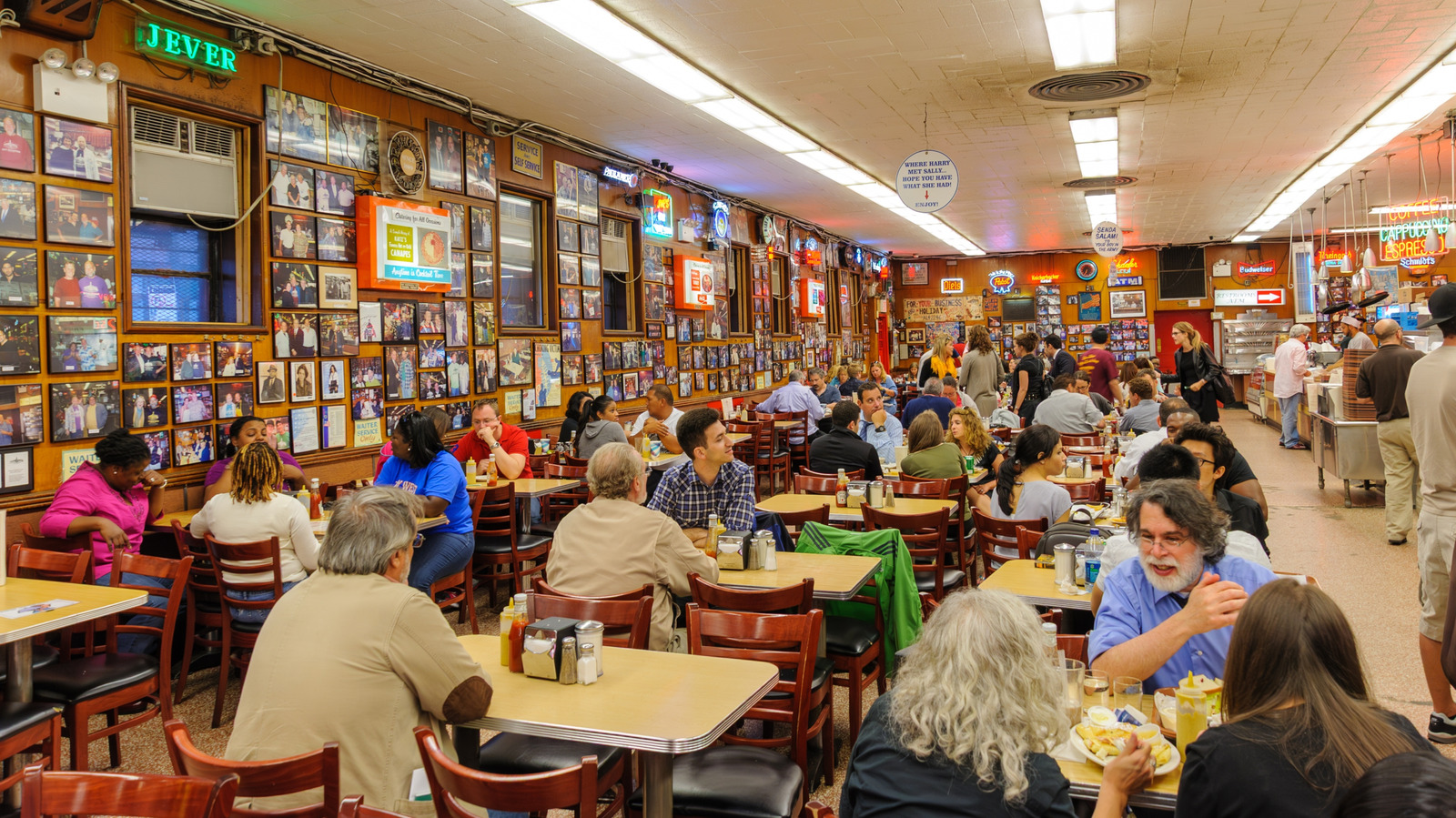
The Jewish deli is an institution in many cities, but if we had to name the most iconic one, it'd undoubtedly be Katz's in New York. Famed for its towering (and pricy) pastrami on rye, its hilarious cameo in "When Harry Met Sally," and being Anthony Bourdain's favorite sandwich spot, it's safe to say that this legendary spot knows a thing or two about sandwiches. But if you're planning on visiting Katz's, or any Jewish Deli for that matter, staff have revealed unwritten etiquette: don't order white bread.
"If you want to be made fun of, just start asking for white bread and mayo or avocado or bean sprouts or c**p like that," one staff member said in a YouTube video. "That's not what we do here, all right. This is a traditional New York deli, pastrami on rye, mustard's the best condiment."
This is why you'll only find two types of bread options available at Katz's deli — rye and club. Rye is made with rye flour, which gives it a dense and firm texture. Similarly, club bread is a white bread, but with a crusty exterior and a similarly sturdy interior. The reason why these are the breads of choice at Katz's is because of how they hold the fillings. Typically, bread isn't toasted at Jewish delis, meaning that the bread needs a dense texture that can hold all the juicy meats. Imagine putting a towering pile of pastrami on two slices of your average un-toasted white bread — it would be falling apart before it even reaches the table.
How certain foods became Jewish deli staples
No matter where you are in the world, there are some things you'll always reliably find at a Jewish deli. For starters, rye bread is a must. Ashkenzai Jews brought this bread type to America in the late 19th and early 20th centuries from Eastern Europe, where rye bread is a staple grain. There's even a special category of rye bread called "Jewish rye bread," which is what Katz's uses. It's characterized by its sour taste from the sourdough starter (roshtshine) and caraway seeds sprinkled throughout the bread. It also tends to use less rye flour than other varieties like Scandinavian rye. Rye is super water absorbent, so too much flour will quickly cause it to become overly dense.
In the YouTube video, the Katz's worker also suggested going for mustard. There are many reasons why this condiment is the top choice for Jewish delis. For starters, mustard has been used in Jewish cooking for millenia. It's also dairy-free (parve), meaning that it doesn't break kosher by combining meat and dairy. From a taste perspective, it fits the bill perfectly. In a standard pastrami or corned beef sandwich, mayo would quickly be overshadowed, whereas the sharp pungency of mustard cuts through the fatty, juicy flavors of the meat.
Facts Only
Katz's Deli is a famous Jewish deli in New York known for its pastrami on rye sandwich.
Staff at Katz's advise against ordering white bread, suggesting it is not traditional.
The deli offers only rye and club bread as bread options.
Rye bread is made with rye flour, giving it a dense and firm texture.
Club bread is a white bread with a crusty exterior and sturdy interior.
Rye bread was brought to America by Ashkenazi Jews from Eastern Europe in the late 19th and early 20th centuries.
Jewish rye bread is characterized by its sour taste from sourdough starter and caraway seeds.
Mustard is the preferred condiment at Jewish delis due to its dairy-free status and ability to complement fatty meats.
Mayo is considered less suitable for deli sandwiches as it would be overshadowed by the meat's flavors.
The dense texture of rye and club bread helps hold the fillings of deli sandwiches.
Executive Summary
Full Take
The narrative around Katz's Deli and Jewish deli traditions presents a strong case for cultural authenticity and practicality in food choices. The emphasis on rye and club bread over white bread is rooted in both historical context and functional necessity—these breads can support the weight and juiciness of deli meats without falling apart. The preference for mustard over mayo is similarly justified by its compatibility with kosher dietary laws and its ability to enhance rather than overpower the meat's flavor. This narrative aligns with a broader pattern of preserving culinary traditions, which can be seen as a form of cultural resilience.
However, the dismissive tone toward those who might prefer white bread or other condiments could be interpreted as a form of gatekeeping, potentially alienating customers who are less familiar with Jewish deli customs. The article does not explore whether there are valid reasons someone might prefer white bread, such as dietary restrictions or personal taste, which could be seen as a missed opportunity for inclusivity.
Root Cause: The narrative is driven by a paradigm of tradition and authenticity, assuming that adherence to historical practices is inherently superior. This assumption may overlook the evolving nature of culinary preferences and the diversity of customer needs.
Implications: For human agency, this narrative reinforces the idea that certain culinary traditions are non-negotiable, which could limit individual choice. The beneficiaries are those who value tradition and cultural continuity, while the costs are borne by those who might feel excluded or judged for their preferences.
Bridge Questions:
How can traditional establishments like Katz's balance authenticity with inclusivity for customers with different preferences?
What role does gatekeeping play in preserving cultural traditions, and when does it become counterproductive?
How might the narrative change if the focus shifted from tradition to adaptability in culinary practices?
Counterstrike Scan: If this narrative were part of a coordinated influence campaign, the playbook might involve emphasizing tradition to create a sense of exclusivity and cultural superiority, potentially alienating those who do not conform. However, the actual content does not appear to match this pattern, as it primarily focuses on practical and historical reasons for the traditions rather than promoting exclusion.
Patterns detected: none