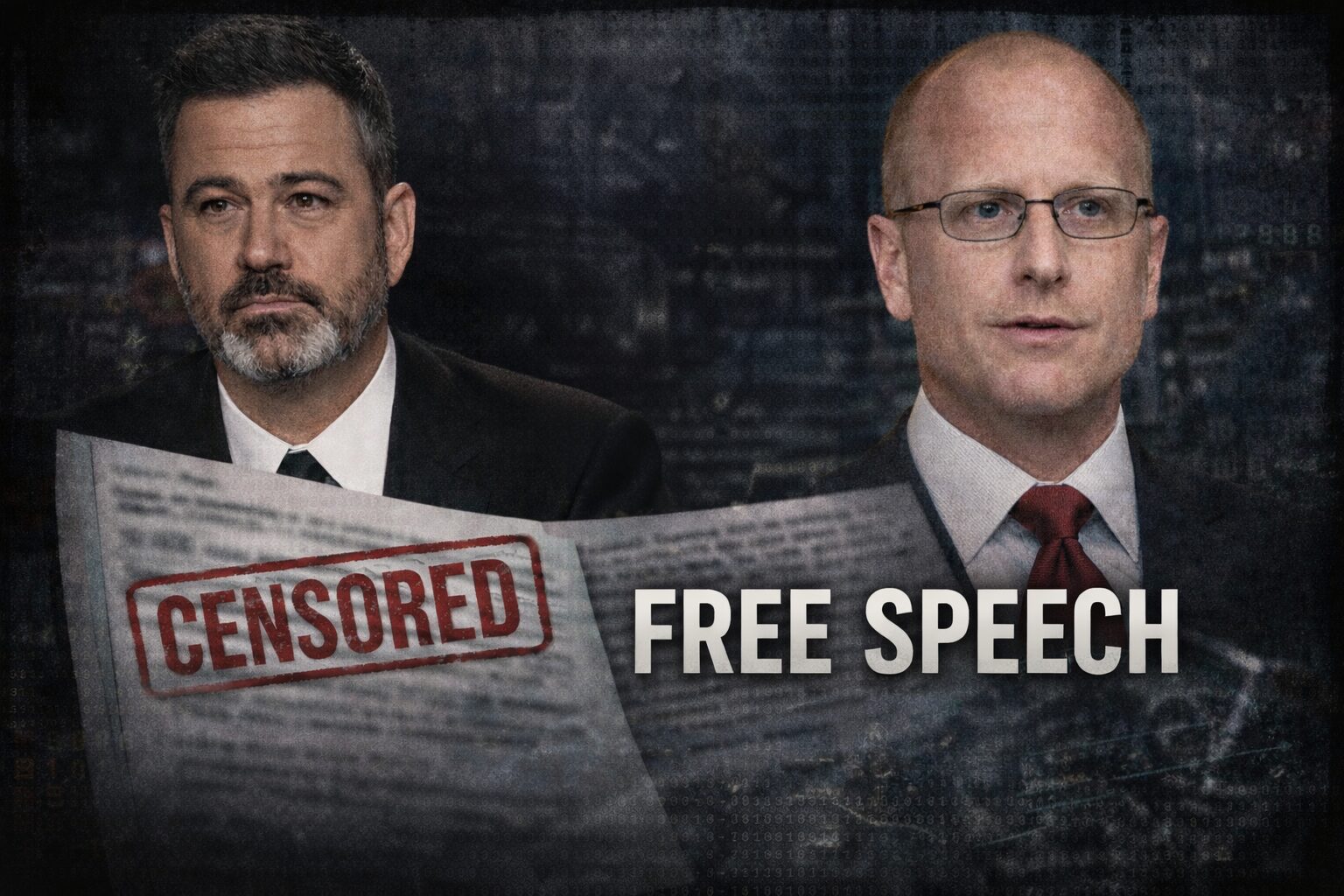
A newly released collection of records from the Federal Communications Commission (FCC), obtained through the Freedom of Information Act (FOIA), provides insight into how the agency handled public backlash, media inquiries, and internal discussions surrounding a controversy involving late-night host Jimmy Kimmel, Commissioner Brendan Carr, and broader First Amendment concerns.
The records, totaling hundreds of pages, span communications from mid-2025 through early 2026 and include internal FCC emails, press inquiries, and a substantial number of complaints submitted by members of the public.
Volume of Public Complaints
A significant portion of the release consists of complaints submitted directly to the FCC by viewers reacting to the controversy. These complaints frequently reference concerns about free speech, media bias, and the role of government oversight in late-night television.
Many of the submissions express strong opinions on both sides of the issue. Some argue that government officials should not attempt to influence or criticize political satire, while others contend that certain commentary crossed lines that warranted scrutiny.
In one complaint, a member of the public framed the issue as a constitutional concern, writing that actions by officials represented “a direct violation of First Amendment rights.” In contrast, other submissions supported calls for accountability in media, citing perceived bias or inappropriate content.
The volume and tone of these complaints illustrate the degree to which the issue resonated with the public and prompted direct engagement with the FCC.
Media Inquiries and Press Pressure
The records also show that the FCC received inquiries from major media outlets seeking comment on the situation. Journalists from organizations including Reuters, Politico, and The Hollywood Reporter reached out to FCC officials with questions about the agency’s position, its authority, and Commissioner Carr’s statements.
These inquiries often focused on whether the FCC had jurisdiction over late-night programming, the implications of public criticism from a sitting commissioner, and whether any formal action was under consideration.
Internal email exchanges reflect coordination on how to respond to these inquiries, suggesting that the issue generated notable media attention and required careful messaging from within the agency.
Internal Communications and Talking Points
Internal FCC communications included discussions about how to handle the influx of complaints and media attention. In one exchange, staff referenced the need for “approved talking points” to guide responses to public inquiries and ensure consistency in messaging.
While limited in scope, these internal emails indicate that agency personnel were actively working to manage both public-facing communications and internal coordination during the controversy.
Congressional Interest
Among the records is correspondence referencing congressional oversight concerns. A letter included in the release raises questions about the FCC’s role, the boundaries of its authority, and the broader implications of government officials commenting on media content.
This demonstrates that the controversy extended beyond public and media reaction, drawing attention from lawmakers and potentially elevating the issue within broader policy discussions.
Scope of the Records
The released documents primarily consist of emails, press inquiries, and public complaints. They provide a snapshot of how the FCC engaged with a fast-moving and politically sensitive issue involving media figures and First Amendment considerations.
While the records do not present a single unified narrative, they collectively illustrate the intersection of public opinion, media scrutiny, and internal government communication during a high-profile controversy.
###
Document Archive
FOIA Release Package [1,922, 11MB]
Follow The Black Vault on Social Media:
Facts Only
* The FCC released records related to a controversy involving Jimmy Kimmel, Commissioner Brendan Carr, and First Amendment concerns.
* The records span communications from mid-2025 through early 2026.
* The documents include internal FCC emails, press inquiries, and public complaints.
* A significant number of the complaints referenced concerns about free speech and media bias.
* Major media outlets, including Reuters, Politico, and The Hollywood Reporter, made inquiries to the FCC.
* The FCC’s internal communications reflect efforts to coordinate responses to media inquiries.
* The released materials encompass correspondence referencing congressional oversight concerns.
* The scope of the records primarily consists of emails, press inquiries, and public complaints.
* The released documents represent a snapshot of the FCC's engagement with a fast-moving issue.
* The total number of pages released is hundreds.
* The FOIA release package size is 1,922 MB.
Executive Summary
Full Take
Sentinel — Likely Human
This document provides a factual record of the FCC's response to the Jimmy Kimmel controversy, showcasing public complaints, media inquiries, and internal coordination efforts. While exhibiting features common in well-structured reporting, the text's balanced presentation and reliance on general terms warrant careful consideration regarding potential biases or subtle influences.