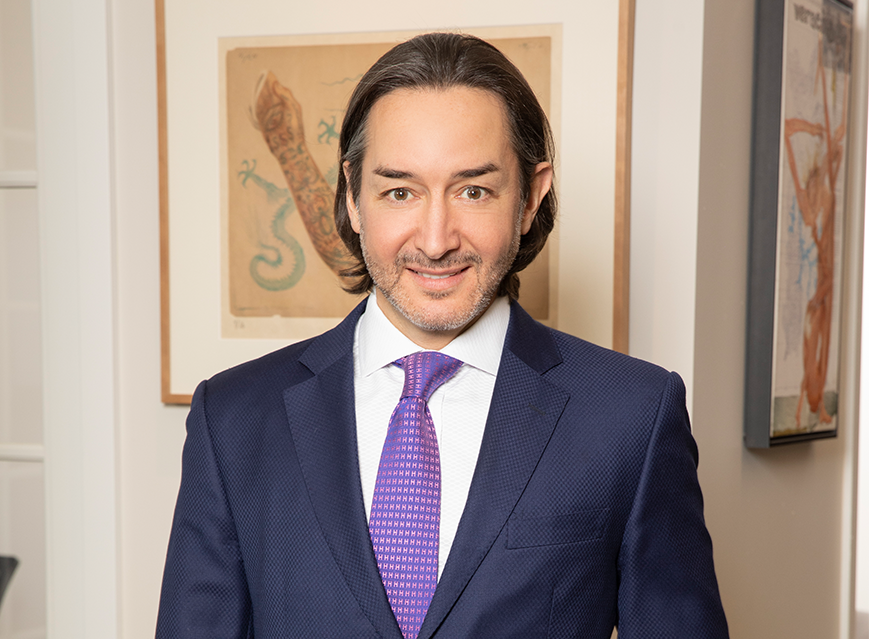
Multifamily office head Paul Karger tells Venture Capital Journal he tries to skip managers ‘swimming in crowded pools.’
Multifamily office head Paul Karger tells Venture Capital Journal he tries to skip managers ‘swimming in crowded pools.’
Copyright PEI Media
Not for publication, email or dissemination
Facts Only
Paul Karger is the head of TwinFocus, a multifamily office.
TwinFocus provides wealth management and advisory services to family office clients.
Karger expressed skepticism about venture capital as an asset class for these clients.
He stated a preference for avoiding venture capital managers who are "swimming in crowded pools."
The comments were made in an interview with Venture Capital Journal.
TwinFocus aims to skip managers operating in highly competitive investment spaces.
The firm's approach suggests a focus on less crowded, potentially lower-risk opportunities.
The interview was conducted by PEI Media, which holds the copyright for the content.
The content is not intended for publication, email, or dissemination.
Executive Summary
Full Take
Paul Karger’s skepticism about venture capital for family office clients reflects a broader pattern of caution in wealth management, particularly in an environment where venture capital has become increasingly crowded and competitive. The strongest version of this narrative is that TwinFocus is adopting a disciplined, risk-averse strategy by avoiding overhyped or saturated investment spaces, which could protect clients from potential downside risks. This aligns with a growing trend among wealth managers who prioritize capital preservation over speculative high-growth bets, especially in volatile markets.
However, this perspective also raises questions about the assumptions underlying Karger’s stance. Is the avoidance of "crowded pools" a prudent strategy, or does it risk missing out on high-return opportunities that require navigating competitive landscapes? The narrative implicitly assumes that less crowded spaces are inherently better, but this may not always hold true—some of the most successful venture investments have emerged from highly competitive sectors. Additionally, the framing of venture capital as "dubious" could reflect a broader skepticism about the asset class’s ability to deliver consistent returns, particularly for family offices with long-term horizons.
The root cause of this narrative likely stems from a paradigm shift in wealth management, where the focus is increasingly on risk mitigation rather than aggressive growth. This echoes historical patterns where institutional investors retreat from speculative assets during periods of uncertainty. The implications for human agency and dignity are subtle but significant: if family offices adopt overly conservative strategies, they may limit their ability to fund innovative startups that could drive societal progress. Conversely, if venture capital remains accessible only to the most risk-tolerant investors, it could exacerbate inequality in access to high-growth opportunities.
Bridge questions to consider: What metrics would justify Karger’s skepticism about venture capital, and under what conditions might his stance change? How do other multifamily offices balance risk and reward in their venture capital allocations? What role should family offices play in funding innovation, and how does this align with their fiduciary duties?
Counterstrike scan: If this narrative were part of a coordinated influence campaign, the playbook might involve amplifying skepticism about venture capital to discourage investment in disruptive industries, potentially benefiting incumbent players. However, the content does not appear to match this pattern, as Karger’s comments seem to reflect a genuine strategic preference rather than a manipulative agenda.
Patterns detected: none
Sentinel — Human
The text displays the style and structure of human journalistic reporting, characterized by a direct quote and factual lead, with very low indication of synthetic generation.