US farmers, long one of Donald Trump’s most loyal constituencies, are increasingly worried by the Iran war as soaring fertilizer and fuel prices hammer them just as they are about to start planting crops for the year.
“Is the war going to be short term or is it going to be drug out?” asked Pam Johnson, who has a family farm with her two sons, growing corn and soybeans in northern Iowa. “The longer it goes, the harder it’s going to be on just everybody.”
Farmers are anxious about how they will pay for or even obtain fertilizer for their fields as well as the cost of fuel for tractors, combines and other farm equipment, said Johnson, a past president of the National Corn Growers Association who remains in contact with producers across the country.
The new financial strain on American agriculture driven by the war — if it persists — could have significant ramifications for the struggle over control of Congress in midterm elections later this year. Farmers are already dealing with disruptions in export markets spurred by the president’s tariffs and have been wrestling for years with higher costs for essential supplies.
That potentially gives Democrats an opening to make appeals to voters in Iowa, a state that just a decade ago was considered swingy.
Added expenses for farmers eventually also would likely accelerate food inflation, potentially exacerbating widespread public frustration with the high cost of living even as Americans also pay more for gasoline as a consequence of the war.
Fertilizer prices have surged, particularly for nitrogen-based urea that’s heavily used by corn growers concentrated in the Midwest. Spot urea prices climbed 28% in just two weeks, hitting the highest level since early in the Ukraine War. Attacks on Middle East shipping are threatening supplies, with a third of the world’s fertilizer shipments passing through the Strait of Hormuz, according to the United Nations.
Diesel fuel, meanwhile, is up 33% since hostilities began through Sunday.
Farmers were souring on their situation before the price spike. In February, Purdue University’s Agricultural Economy Barometer, based on a monthly national survey of farmers, was down 24% from a year earlier.
In Iowa, the nation’s largest corn producer, an open US Senate seat being vacated by Republican Joni Ernst is up for grabs in November. Democrats are also targeting three of the state’s four US House seats.
Any shift in enthusiasm for Trump among farmers and rural residents also could play an important role in other competitive US Senate and House races across the country, including in Georgia, North Carolina, Ohio and Texas.
“It’s very difficult for the Republican party to navigate this,” said Michael Lewis-Beck, a political science professor at the University of Iowa, who expects turnout among traditionally GOP farmers to sag this November. “Even before the Iran war, the party was struggling because of the economy.”
Motivating voters to go to the polls is especially important in midterm congressional elections, which lack the excitement of well-known presidential candidates on the ballot.
White House spokeswoman Anna Kelly said Trump “has stood up for our farmers more than anyone,” citing $12 billion in extra farm aid to offset losses from tariff fights, estate tax reductions in his signature tax law and trade deals to open export markets.
Agriculture Secretary Brooke Rollins said the administration is “very close” to announcing action to “keep the fertilizer costs down.”
The American Farm Bureau Federation sent a letter to Trump urging him to deploy the US Navy to escort fertilizer shipments through the Strait of Hormuz. War-related price shocks are driving the cost of crucial farm supplies “even higher at a time when farm margins are already extremely tight and many farmers are underwater,” the group told him.
Tariffs imposed by Trump also raised fertilizer prices for much of last year, until the president exempted them from duties in November following lobbying by farm groups.
About a quarter of annual US fertilizer imports typically come into the country during March and April, said John Newton, vice president of public policy and economic analysis at the American Farm Bureau Federation.
While some farmers locked in fertilizer prices early by pre-ordering months ahead of planting season, this year many didn’t because of the “tight economic environment,” Newton said.
“For a lot of producers, they don’t have their fertilizers booked,” said Lance Lillibridge, a corn and cattle farmer in Benton County in eastern Iowa. “So there’s a lot of panic there with what’s going on.”
Even so, Lillibridge, a three-time Trump voter who ran for county supervisor two years ago in a Republican primary, isn’t wavering in his support of the president, calling the conflict with Iran “a necessary evil.”
In Texas, Dee Vaughan, a Trump supporter who grows corn, sorghum, cotton and wheat, said he is just 30 to 45 days away from planting on his farm about 40 miles north of Amarillo.
The war is “creating a quite a bit of uncertainty — especially at a kind of a bad time right now,” Vaughan said. Yet he also backs Trump on attacking Tehran.
Farmers have options to adjust, including shifting from corn to soybeans. Soybeans require only about a third as much fertilizer, according to the University of Illinois’ estimated crop budget.
But that carries its own risks. The US is already expected to plant more soybeans this year than corn, meaning that any additional shift would further crowd the market for soybeans.
China, the world’s largest soybean buyer, largely exited the US market last year amid trade tensions. While Beijing has resumed purchases, any future disruption could hit farmers who alter production toward soybeans.
Some Republican lawmakers are already calling for more federal aid to farmers, including Senate Agriculture Committee Chairman John Boozman of Arkansas.
“If you’re growing something in the ground right now, you’re losing money,” Boozman said.
Senator Chuck Grassley, an Iowa Republican whose family operates a 750-acre farm, offered a gruff response to a Bloomberg reporter on the best path forward: “Get the war in Iran over — but win it.”
For now, farmers are being forced to adapt to a far-away conflict with unpredictable consequences, said Pam Johnson, the northern Iowa corn grower.
“What’s the goal, what’s the end game?” she asked. “Lay that on top of tariffs and trade uncertainties, and what’s the world going to look like when this is, quote, ‘all over?'”
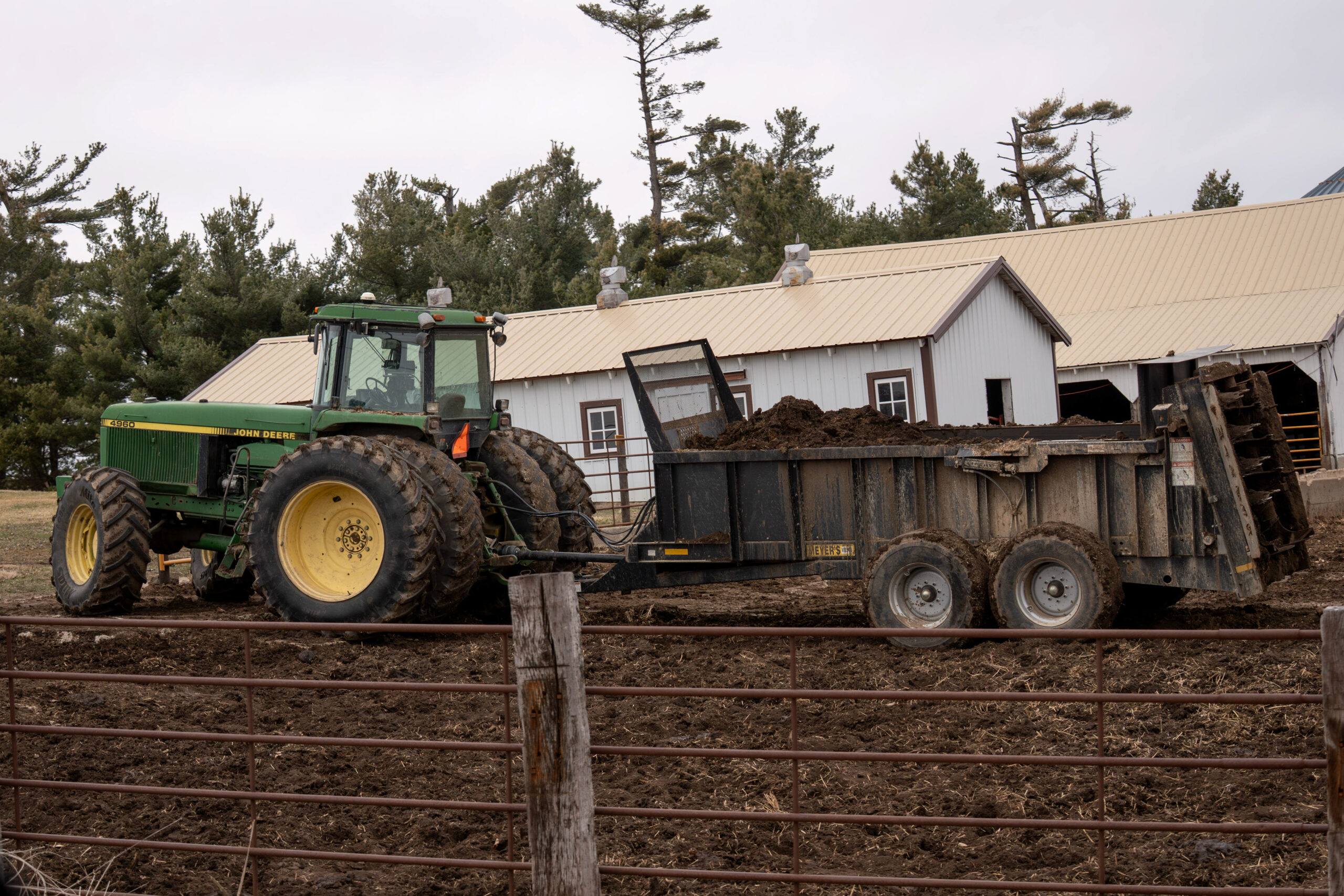
Photo: Fertilizer prices have surged, particularly for nitrogen-based urea that’s heavily used by corn growers concentrated in the Midwest. (Bloomberg)
Topics Agribusiness
Was this article valuable?
Here are more articles you may enjoy.
Facts Only
* Donald Trump’s loyal farming constituency is concerned about the Iran war’s impact.
* Fertilizer and fuel prices are soaring.
* Planting season is approaching, increasing anxiety.
* Pam Johnson, a corn and soybean farmer in northern Iowa, expressed concerns about the war’s duration.
* Urea prices have increased 28% in two weeks.
* The UN reports that a third of global fertilizer shipments pass through the Strait of Hormuz.
* Diesel fuel prices have risen 33% since hostilities began.
* Farmers are dealing with disruptions from past tariffs.
* Democrats could benefit in upcoming elections.
* Food inflation is a potential consequence.
* About a quarter of US fertilizer imports occur in March and April.
* Lance Lillibridge, a corn and cattle farmer, reports widespread panic among producers.
* Dee Vaughan, a farmer in Texas, also expressed uncertainty about the conflict’s impact.
* Senator John Boozman called for more federal aid.
Executive Summary
Full Take
Sentinel — Likely Human
This article presents a balanced overview of the impact of the Iran war on US farmers, incorporating concerns about fertilizer and fuel prices alongside political considerations. While it effectively conveys information, the reliance on generalized statements and expert opinions, coupled with moderate sentence variance, suggests a human-generated account rather than an AI-driven report.